
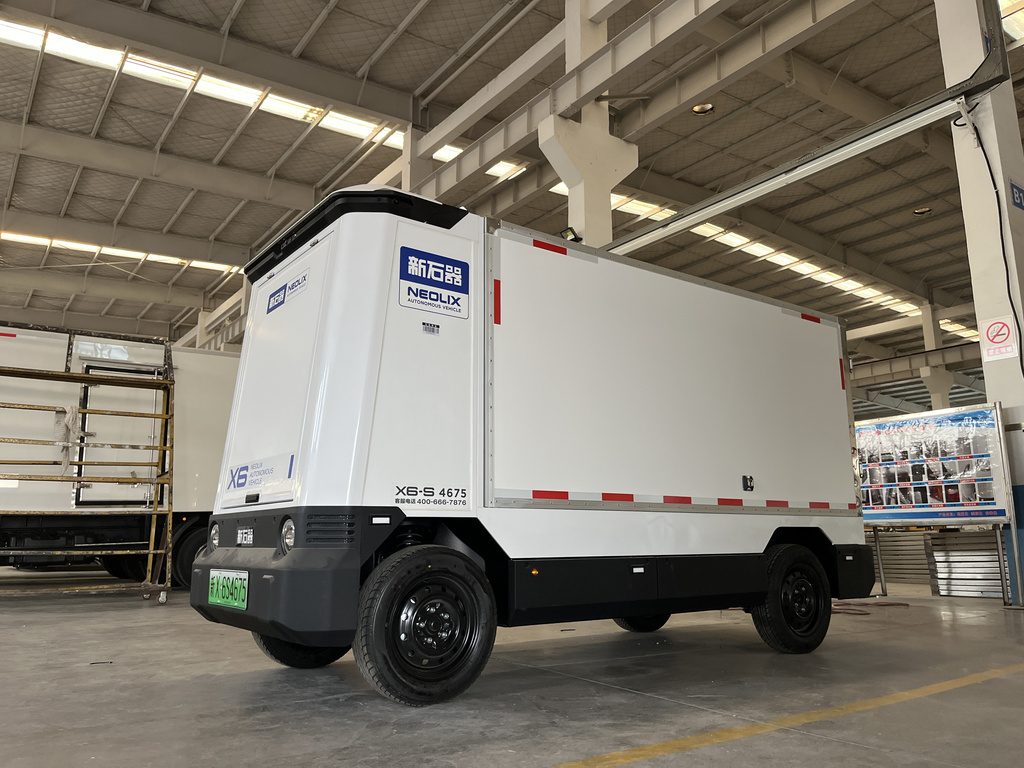
Quick Commerce Is Rewriting Last-Mile Cold Chain—Is Your Fleet Ready?
In short: Rapid urban delivery inverts the priorities of refrigerated vehicle design. Long-haul bodies are optimised for steady-state efficiency over hours; quick commerce needs recovery in seconds, across dozens of door events an hour, on routes measured in city blocks. Most fleets that struggle are not short of refrigeration — they are equipped for the wrong duty cycle.


What Is Quick Commerce Cold Chain?
Quick commerce cold chain is the refrigerated handling that supports delivery within minutes rather than hours, typically from urban dark stores or micro-fulfilment sites. It has a distinctive profile: small order batches, mixed temperature baskets, very short legs between stops, and a driver who opens and closes the cargo space constantly.
The consequence is that the vehicle stops being long-term storage and becomes a mobile buffer. Cargo sits inside for minutes, not days. What matters is how fast the space returns to temperature after each opening, and how well the last few hundred metres are protected.
Why This Debate Matters
Urban grocery demand has pushed refrigerated delivery into a duty cycle the equipment market did not design for. A body that performs well on a regional run, holding setpoint over many hours with two or three door events, can look weak on a city route with forty stops and a door opening every few minutes.
That mismatch produces familiar symptoms: ice build-up on evaporators, afternoon alarms, condensation on packaging, and drivers who leave the door open because closing it slows them down. Fleets buy a larger unit, which helps recovery but not the real driver — how much humid air the body admits. Whether to invest in vehicles or in packaging and process is the central economic question.
Key Facts at a Glance
- Chilled fresh goods are typically held in a 0 °C to 4 °C band, frozen goods around -18 °C or colder; a mixed basket may need both, which is a vehicle layout question before it is a refrigeration question.
- Each door opening admits humid ambient air; the moisture must be removed at the evaporator, adding latent load and encouraging defrost cycles and ice build-up.
- Recovery speed, not steady-state capacity, is the limiting factor on multi-drop work — a large unit that takes minutes to respond behaves like a small one.
- A 4.2 m refrigerated body can weigh around 670 kg, and smaller urban bodies save both weight and street width, at the cost of fewer orders per run.
- Polyurethane integral foam with closed-cell content of at least 95% and conductivity near 0.022 W/(m·K), and FRP sandwich dry-bonding, are both mature constructions; thinner urban bodies trade thermal margin for payload.
- The final handover — insulated bags, boxes or lockers — is part of the cold chain, not an accessory, because the vehicle cannot follow the order to the door.
Two Sides: Vehicle-Centric vs Bag-Centric
- Where control is won — Vehicle camp: most of the elapsed time is inside the body, so thermal design dominates; Bag camp: the highest-risk minutes are the walk from vehicle to customer, which no body specification addresses.
- Cost per order — Vehicle side: a properly specced urban body costs more but carries more orders per run; Bag side: better packaging and route batching raise throughput without new assets.
- Door discipline — Vehicle side: recovery capacity and air curtains absorb frequent openings; Bag side: fewer, larger door events beat any hardware, and route sequencing is free.
- Temperature evidence — Vehicle side: on-board logging gives continuous proof for audits and disputes; Bag side: per-bag indicators close the gap vehicle data cannot see.
- Scaling — Vehicle side: each new zone needs a vehicle and a driver; Bag side: satellite micro-sites with insulated handover scale faster in dense areas.
- Failure mode — Vehicle side: a unit fault takes out a whole run; Bag side: a compromised bag affects one order, limiting the blast radius.
Step-by-Step: How to Design an Urban Cold Fleet
- Map the real order profile. Record basket size, share of frozen versus chilled, and stops per hour. Design decisions follow from this, not from a vehicle catalogue.
- Size the body from stop density, not maximum payload. A smaller body that turns over faster often delivers more orders per hour than a large one that is hard to park.
- Specify recovery and air management. Prioritise airflow that reaches the load, short defrost cycles that suit frequent openings, and door hardware that a driver can operate quickly with one hand.
- Decide the temperature architecture early. A single band with well-separated zones is simpler than a multi-temperature body; a partitioned body is better when frozen and chilled volumes are both significant.
- Sequence routes to reduce door events. Group orders by temperature and by building, and hand over in batches. This costs nothing and reduces load more reliably than any equipment upgrade.
- Measure at the door, not only in the body. Add per-bag indicators or a probe at handover so the last hundred metres are covered by evidence rather than assumption.
FAQ
Q: Do quick commerce fleets need refrigerated vehicles at all?
A: For anything beyond very short distances, yes — insulated bags alone cannot hold a chilled band across a multi-stop urban route. The vehicle provides the thermal buffer; the bag covers the final metres.
Q: Is a larger refrigeration unit the answer to frequent door openings?
A: It helps recovery but does not reduce the moisture entering the body. Door management, air curtains and route sequencing usually deliver more per unit of cost.
Q: What body size suits dense urban delivery?
A: It depends on parking constraints and order density more than on payload. Many operators find a smaller body with fast turnaround beats a large one that cannot reach the kerb.
Q: How do I handle mixed frozen and chilled orders?
A: Either partition the body into zones with separate airflow, or run separate runs. Trying to hold both bands in one undivided space usually satisfies neither.
Q: What should I monitor in an urban cold fleet?
A: Door events per stop and duration, return air temperature, and handover temperature. Those three explain most of the variance between good and bad days.
The Bottom Line
Quick commerce does not need better long-haul refrigeration; it needs equipment designed around frequent openings and short dwell times, plus a handover process that treats the last hundred metres as part of the chain. Fleets that import regional specifications into city routes keep buying capacity when the constraint is air management.
If your busiest route had forty stops, would your current body still hold band by the last one?
Electric Chick Trucks on Short Routes: Realistic or Wishful Thinking?
Oct 24, 2026
Can Cold Chain Growth Be Sustainable—or Is Lightweighting Just Greenwashing?
Oct 24, 2026
Related Articles
Author

Cybercoldchain
Content Writer
Recent Posts
-
GMP+ and FAMI-QS: Is Transport the Weak Link in Feed Safety?
Oct 31
-
Driver Shortages vs Delivery Windows: What Gives First?
Oct 31
-
Telematics for Bulk Feed: Is Bin-Level Data Worth the Investment?
Oct 31
-
Can Reefers Keep Up With 45°C+ Markets—or Do Specifications Need a Rethink?
Oct 31
-
The Hidden Cost of a Late Chick Delivery—Who Should Bear It?
Oct 31