
Electric Chick Trucks on Short Routes: Realistic or Wishful Thinking?
In short: On genuinely short routes with reliable depot charging, electrification is realistic today, with one caveat that decides everything: the cooling system draws from the same battery that drives the vehicle. Where the route is long, ambient is high, or charging is uncertain, the case weakens quickly. It is a route question before a vehicle question.

What Is an Electric Chick Truck?
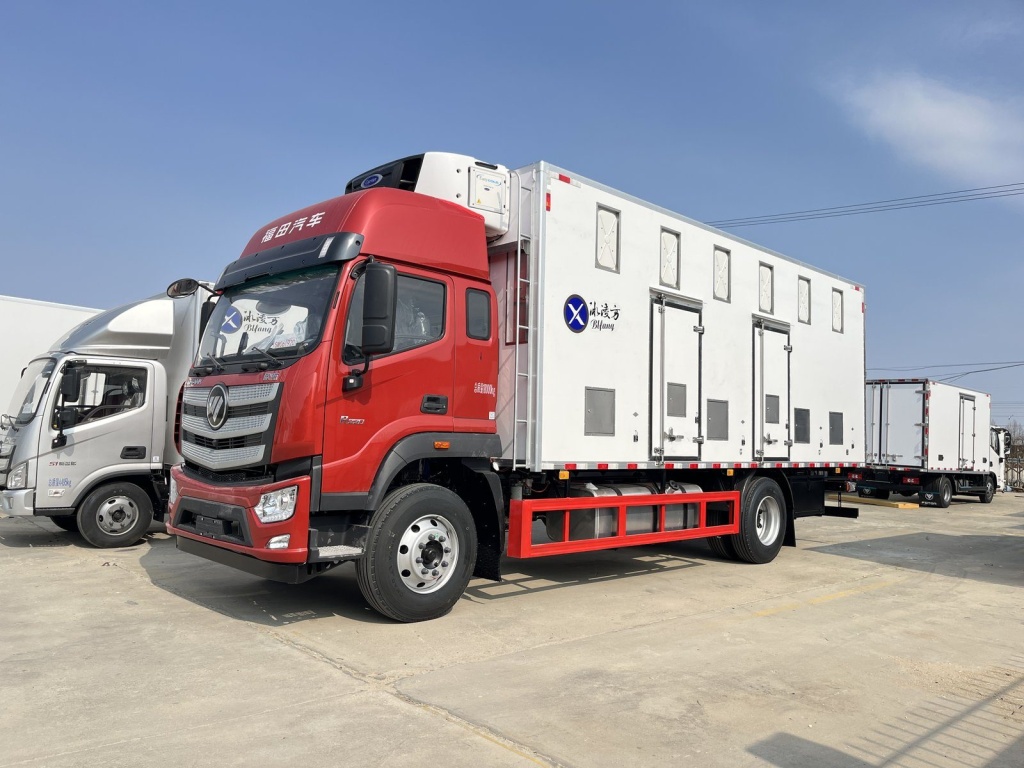
An electric chick truck is a battery-electric chassis carrying a chick transport body, with ventilation or active cooling powered from the traction battery or a dedicated auxiliary pack. The important difference from a diesel equivalent is not the drivetrain but the energy budget: traction, cooling, fans and lighting all compete for one stored supply.
That single budget is why the conversation differs from passenger EVs. A delivery van can arrive nearly empty; a chick truck must hold a narrow thermal band for the whole journey, including queuing, waiting at a farm gate and standing at a loading bay.
Why This Debate Matters
Urban access rules, noise limits and fuel cost volatility are pushing fleet operators to consider electrification, and poultry distribution is not exempt. Around cities, chick movements are often short and repetitive — hatchery to nearby farms, several drops, same route each week — which is exactly the duty cycle batteries handle well.
But the chick load is a hard constraint: 22–26 °C with CO₂ below 3000 ppm, which in hot weather requires real cooling rather than ventilation alone. A ventilated body draws little; an actively cooled body with an independent engine draws far more, and on an electric chassis that engine becomes an electric compressor.
So the debate is not "electric versus diesel" in the abstract, but whether a route, climate and charging arrangement can afford the energy the load requires — including reserve for an unplanned delay.
Key Facts at a Glance
- The cargo space must be held at 22–26 °C, and CO₂ at or below 3000 ppm with 2800 ppm as an operating target, for the whole journey including stops.
- Equipment is specified for −35 °C to +40 °C ambient; at the top of that range, cooling demand is continuous.
- Ventilated bodies use fans and ventilation windows, with an optional auxiliary cooling unit of limited effect — a low electrical load, and also a limited ability to control temperature in heat.
- Constant-temperature bodies add active cooling, heating and controlled air exchange with an independent engine; replacing that engine with battery power changes the energy budget fundamentally.
- Capacity affects energy per trip: 232 boxes at 4.2 m, 464 at 6.8 m, 536 at 7.8 m, 672 at 9.6 m on ventilated units, and 624 boxes as 24 carts on a 9.6 m constant-temperature unit.
- A diesel constant-temperature unit's backup is a chassis generator driving fans only plus a battery for roughly two hours — a reminder that fan power, not cooling, is what backup usually covers.
Two Sides: A vs B
- Where it works — Optimist view: short urban routes, fixed depots, overnight charging and predictable loads are an ideal battery duty cycle. Sceptic view: the same route in a hot month, with a traffic delay, turns a comfortable margin into a thermal emergency.
- Cooling energy — Optimist view: electric compressors are efficient and can be modulated precisely. Sceptic view: modulating precisely still requires energy, and the load must be protected during stationary periods too.
- Cost structure — Optimist view: lower energy cost per kilometre and less maintenance on the drivetrain. Sceptic view: higher purchase price, battery degradation, and the need for depot charging infrastructure that many hatcheries do not have.
- Operational flexibility — Optimist view: quiet operation allows early-morning deliveries in noise-restricted areas. Sceptic view: a vehicle tied to a charging base cannot cover a diverted route or a rescue load for another depot.
- Risk of a delay — Optimist view: short routes have short delays. Sceptic view: a stopped electric truck loses cooling margin faster than a diesel one, with no idle engine to fall back on.
Step-by-Step: How to Test the Case Properly
1. Measure the real duty cycle for four weeks. Log distance, stops, stationary time and ambient temperature. The average route is not the design case; the worst day is.
2. Calculate cooling energy separately from traction energy. Treat the body as its own load. If the numbers are combined into a single "range" figure, the estimate is not usable.
3. Add a delay reserve. Assume at least one unplanned stop per trip and confirm the load stays inside the band without moving.
4. Check charging where the truck actually sleeps. Depot power capacity, timing and whether the vehicle can charge while loaded are the practical constraints.
5. Compare against a ventilated diesel alternative on the same route. For short, mild-weather work, a simple ventilated body may already be sufficient — and cheaper to electrify, because its electrical load is smaller.
6. Pilot one route, one season. Run a single vehicle through the hottest month before committing a fleet.
FAQ
Q: Can an electric truck run active cooling for a full shift?
A: It depends on battery size, ambient and insulation. The honest answer is that the cooling budget must be calculated for the specific route; a generic range figure tells you nothing about thermal endurance.
Q: Are ventilated bodies a better fit for electrification?
A: Often yes, because fans draw far less than active cooling. The trade-off is that ventilation alone has limited ability to hold 22–26 °C in high ambient.
Q: What happens during a traffic delay?
A: The load keeps producing heat and CO₂ while the vehicle is stationary. On a diesel unit the engine can keep working; on a battery vehicle, that time comes directly out of the reserve.
Q: Is electrification mainly a sustainability decision?
A: It is often presented that way, but the operational case comes first. If the route and charging fit, the emissions benefit follows; if they do not, no sustainability target compensates for a spoiled load.
The Bottom Line
Electrification is realistic for short, repetitive chick routes with dependable depot charging, and wishful for long, hot or unpredictable ones — at least while cooling energy remains the dominant constraint. The operators who will get it right are those who size the battery around the thermal load rather than around the trip distance. The technology is ready for a narrower set of routes than the marketing suggests, and that is not a criticism; it is a specification. So, for anyone running or planning an electric pilot: what did your worst day do to the range estimate?
Aquaculture Feed: Why Is Bulk Transport Still So Difficult?
Oct 24, 2026
Quick Commerce Is Rewriting Last-Mile Cold Chain—Is Your Fleet Ready?
Oct 24, 2026
Related Articles


Author

Cybercoldchain
Content Writer
Recent Posts
-
GMP+ and FAMI-QS: Is Transport the Weak Link in Feed Safety?
Oct 31
-
Driver Shortages vs Delivery Windows: What Gives First?
Oct 31
-
Telematics for Bulk Feed: Is Bin-Level Data Worth the Investment?
Oct 31
-
Can Reefers Keep Up With 45°C+ Markets—or Do Specifications Need a Rethink?
Oct 31
-
The Hidden Cost of a Late Chick Delivery—Who Should Bear It?
Oct 31