
Aquaculture Feed: Why Is Bulk Transport Still So Difficult?
In short: Because fish feed is engineered to be light, porous and structurally delicate, while bulk transport is engineered to move dense, forgiving material quickly. Extruded pellets float only if they keep their internal structure intact, and every handling step — blowing, augering, dropping — is an opportunity to break it. The result is a cargo where the transport method matters as much as the formulation.


What Is Aquaculture Feed Transport?
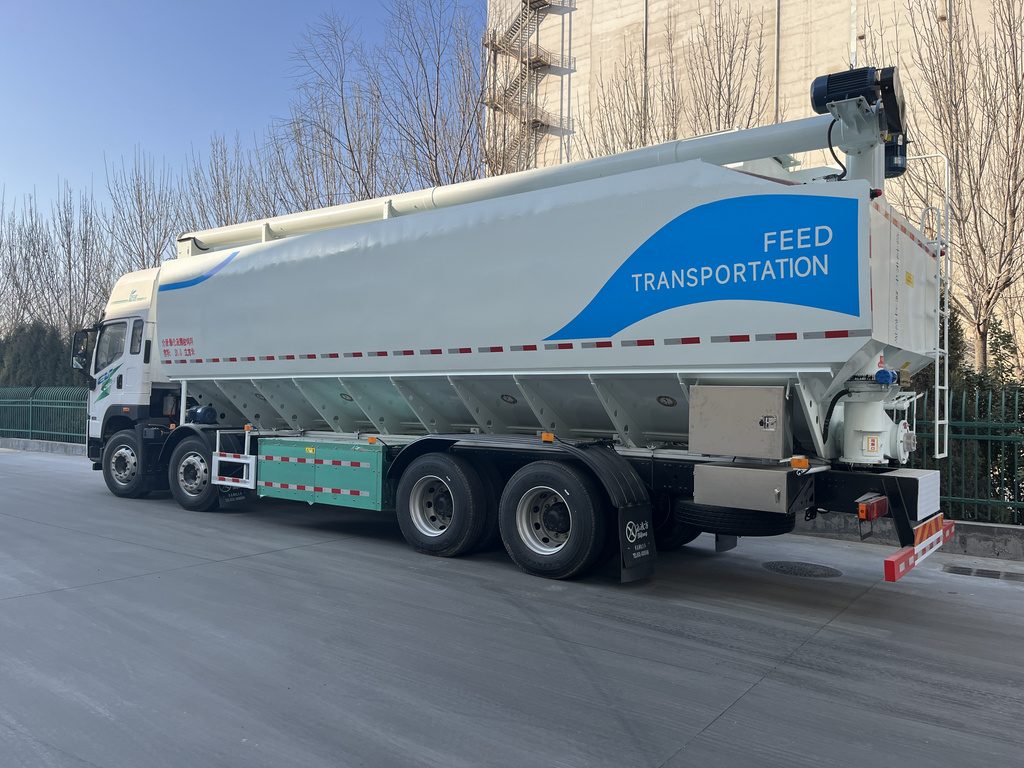
Aquaculture feed transport is the bulk movement of formulated fish and shrimp feed from the extruder and dryer to the farm, hatchery or feed barge. It differs from terrestrial feed logistics in three ways: the product is usually extruded rather than pelleted and crumbled, its bulk density is low relative to its volume, and much of the receiving infrastructure sits at the water's edge in humid conditions. Bulk delivery therefore has to reconcile a fragile, low-density cargo with equipment designed around heavier meals and mash.
Why This Debate Matters
Aquaculture is expanding while capture fisheries remain flat, and much of that growth is in regions where feed travels long distances from a small number of extrusion plants to many dispersed farms. Feed is usually the largest operating cost on a fish farm, so damage in transit is not cosmetic — broken pellets become fines, fines sink or drift, and feed conversion suffers. At the same time, farms are adopting automatic feeding systems and demand consistent pellet size and durability. A lorry that delivers the right tonnage in the wrong physical condition has technically met its contract and commercially failed the customer.
Key Facts at a Glance
- Extruded aquafeed is deliberately low in bulk density, so a trailer fills by volume before it reaches its weight limit — the opposite of the usual bulk cargo constraint.
- Pellet durability is a measurable product property, and mechanical handling during loading and discharge is one of the main things that reduces it.
- Pneumatic blowing is fast and flexible over distance but subjects pellets to impact and friction; gravity and gentle auger transfer are slower but kinder.
- Moisture migration is the second enemy: humid ambient air, warm cargo and cool nights combine to create condensation inside a compartment.
- Fines generated in transit concentrate at the bottom of a compartment and can clog discharge equipment or cause uneven feeding.
- Receiving points are often constrained by narrow access roads, tidal schedules and storage silos sized for weekly rather than daily delivery.
Two Sides: A vs B
- Discharge method — Pneumatic blowing is defended for reach, speed and the ability to fill tall silos; gravity or gentle mechanical transfer is defended for preserving pellet integrity, at the cost of time and layout flexibility.
- Vehicle type — Pressurised tankers suit long hauls and high-volume silos; tipper or belt-equipped bodies suit farms that need gentle handling and can accept slower unloading.
- Moisture strategy — Some operators rely on sealed, insulated compartments and accept ambient humidity as unavoidable; others argue for active protection and strict loading conditions, treating condensation as a design problem rather than weather.
- Delivery frequency — Frequent small deliveries reduce on-farm storage risk and moisture exposure but multiply transport cost per tonne; infrequent large deliveries do the reverse.
- Product mix — Multi-compartment trailers allow several pellet sizes on one run, which suits large farms; single-product loads simplify cleaning and reduce fines cross-contamination but limit route flexibility.
- Who carries the risk — Some contracts place pellet durability at the feed mill's door; others argue that durability is only meaningful at the point of consumption and therefore belongs to the transport chain.
Step-by-Step: How to Move Aquafeed Without Ruining It
- Match the body to the discharge point. Confirm silo height, hose distance, power availability and access before specifying pneumatic or mechanical unloading.
- Load dry and cool. Avoid loading feed straight from the cooler into a warm, humid compartment; temperature differentials are what drive condensation.
- Control the fill. Avoid over-packing compartments, which increases compaction and fines at the base of the load.
- Reduce drop heights. Every free fall adds impact; transfer points should be designed so the product slides rather than falls.
- Clean between products. Fines and residual oil from a previous load affect the next batch, and pellet size changes make residues visible to the customer.
- Inspect on arrival. Photograph the surface of the load and sample for fines before discharge, so responsibility for damage is established rather than argued.
FAQ
Q: Why can a bulk trailer be full but underweight with fish feed?
A: Because extruded aquafeed has low bulk density. The compartment reaches its volume limit before the vehicle reaches its legal weight limit, so payload is governed by product density rather than trailer size.
Q: Does pneumatic unloading damage pellets?
A: It can, depending on air velocity, distance and the number of bends in the line. Damage is not inevitable, but it is a known trade-off against the reach and speed that pneumatic systems provide.
Q: How does moisture get into a sealed compartment?
A: Through condensation. Warm feed loaded into a cool compartment, or warm humid air trapped with cool feed overnight, can produce free water inside a body that is otherwise closed.
Q: Are fines in the load a quality problem or a handling problem?
A: Both, and the distinction matters commercially. Some fines come from the mill, some are generated in transit, and separating the two requires sampling at loading as well as at delivery.
Q: Is bulk always cheaper than bagged for aquafeed?
A: Not automatically. Bulk reduces packaging and labour, but it demands receiving infrastructure and gentler handling. On small or remote farms, the balance can favour bagged delivery.
The Bottom Line
Aquafeed exposes the assumptions built into conventional bulk transport: that cargo is dense, robust and indifferent to humidity. Fish feed is none of those things, so the winning approach is usually the gentler one, chosen to match the farm rather than the fleet's convenience. The engineering answer is rarely a single feature; it is a chain of small decisions from extrusion to silo. Which part of that chain do you think causes the most damage in practice — the trailer, the blower, or the silo inlet?
Are Animal Welfare Audits Measuring the Right Things in Chick Transport?
Oct 24, 2026
Electric Chick Trucks on Short Routes: Realistic or Wishful Thinking?
Oct 24, 2026
Related Articles
Author

Cybercoldchain
Content Writer
Recent Posts
-
GMP+ and FAMI-QS: Is Transport the Weak Link in Feed Safety?
Oct 31
-
Driver Shortages vs Delivery Windows: What Gives First?
Oct 31
-
Telematics for Bulk Feed: Is Bin-Level Data Worth the Investment?
Oct 31
-
Can Reefers Keep Up With 45°C+ Markets—or Do Specifications Need a Rethink?
Oct 31
-
The Hidden Cost of a Late Chick Delivery—Who Should Bear It?
Oct 31