
Feed Truck Economics: Is Depreciation the Number Fleets Ignore?
In short: Yes, and predictably so. Purchase price is negotiated once and discussed for months; depreciation accrues quietly every day and is rarely modelled with the same rigour. For a bulk feed fleet, the asset's loss of value — shaped by specification, utilisation, maintenance and the resale market — often matters more to lifetime economics than the discount obtained at the dealership.


What Is Feed Truck Depreciation?
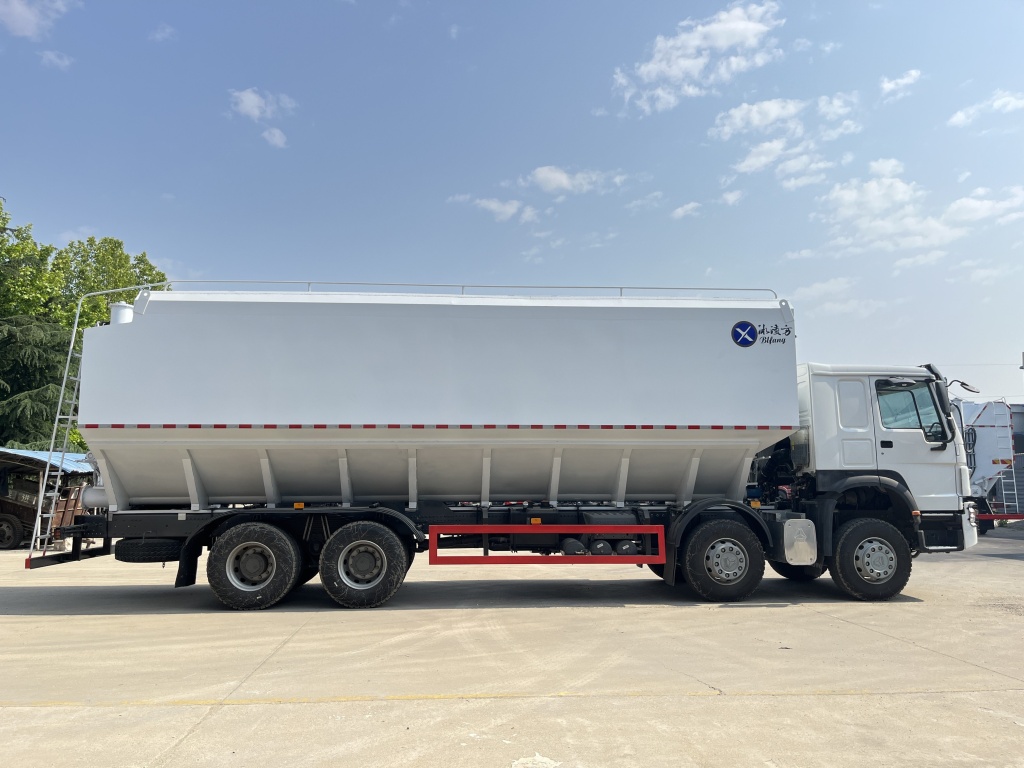
Feed truck depreciation is the decline in an asset's value from purchase to disposal, spread across its working life. It has two components that behave differently: the chassis, which follows the wider commercial vehicle market, and the body — compartments, discharge equipment, insulation, hydraulics — which is often customised to a specific duty and therefore has a narrower resale audience. Depreciation is not the same as a cash cost in any given month, but it is a real cost, and it becomes cash the day the vehicle is sold or traded.
Why This Debate Matters
Bulk feed trucks are expensive, task-specific assets operating in a sector with thin margins and volatile input costs. When a fleet evaluates a purchase, the conversation usually centres on price, payload and specifications, while the assumptions about service life and residual value stay unspoken. That is a problem because those assumptions do more arithmetic than the price does: a modestly more expensive specification that holds value and stays out of the workshop can outperform a cheaper one decisively. As financing costs and equipment prices move, fleets that model total cost rather than acquisition cost make better decisions — and discover, sometimes late, that the cheapest truck was the expensive one.
Key Facts at a Glance
- Depreciation is driven by age, mileage or hours, condition, brand support and, above all, how specific the specification is to one duty.
- A highly customised body narrows the buyer pool at resale, which can accelerate value loss even when the vehicle is mechanically sound.
- Utilisation spreads fixed depreciation over more tonnes; an underused truck carries the same capital cost across less work.
- Maintenance and repair costs typically rise with age, so the cheapest years to operate are usually the early ones.
- Body corrosion, seal condition and discharge equipment wear are the items that most affect a used feed truck's appeal.
- Residual value assumptions embedded in a purchase decision are rarely revisited, which means errors persist silently for years.
Two Sides: A vs B
- Buy cheap, run long — One approach minimises capital outlay and keeps vehicles until maintenance becomes painful; the other buys a higher specification and cycles earlier, accepting higher capital cost for better reliability and residual value.
- Standard versus custom — Standard bodies protect resale value and shorten build times; custom bodies fit the duty precisely and can raise productivity, at the cost of a thinner second-hand market.
- Own versus lease — Ownership exposes the fleet to residual value risk but captures the upside; leasing converts depreciation into a predictable payment and removes the disposal problem.
- Repair versus replace — Extending life reduces capital spend but increases downtime risk; replacing early protects service levels but writes off remaining asset value.
- What to capitalise — Some fleets expense small improvements as maintenance; others capitalise them, which changes both the asset base and the depreciation charge.
- How to measure — Cost per tonne delivered is the operationally honest metric; cost per kilometre is easier to collect but ignores payload and empty running.
Step-by-Step: How to Model Feed Truck Depreciation Properly
- Set a realistic holding period. Decide how long the vehicle will actually stay in the fleet, based on duty cycle rather than habit.
- Estimate residual value from evidence. Look at comparable used vehicles in your market, adjust for specification specificity, and record the assumption.
- Build total cost of ownership. Combine purchase price less residual value, financing, maintenance, tyres, fuel, insurance and downtime.
- Divide by productive output. Express the result per tonne delivered or per loaded kilometre, not per vehicle per year.
- Stress-test the assumptions. Rerun the model with a lower residual and higher maintenance; if the decision flips easily, it was marginal.
- Review annually against reality. Compare actual residual and maintenance with the original model and correct future assumptions.
FAQ
Q: Does a specialised body always lose value faster?
A: Not always, but it usually narrows the buyer pool. A body that suits a common regional duty — a standard compartment layout for a widespread feed type — can hold value well, while an unusual configuration may appeal to very few buyers.
Q: Is leasing better than owning?
A: It depends on how well the fleet can forecast utilisation and residual value. Leasing suits operators who value predictability and dislike disposal risk; ownership suits those with stable duty cycles and good resale channels.
Q: How does utilisation affect depreciation per tonne?
A: Directly. Depreciation accrues with time as well as use, so a truck that delivers fewer tonnes carries a higher depreciation cost per tonne, even if its absolute annual depreciation is unchanged.
Q: Should maintenance be included in the depreciation discussion?
A: Yes. They are substitute costs: a fleet can spend less on maintenance and lose more to downtime and residual value, or the reverse. Treating them separately hides the trade-off.
Q: What is the most common modelling error?
A: Assuming a residual value that matches the purchase price's optimism rather than the used market's reality, and then never checking whether it was right.
The Bottom Line
Depreciation is the largest cost most feed fleets never negotiate, because it is decided by specification and holding policy rather than by a dealer's discount. Modelling it honestly turns a vague sense of "this truck pays for itself" into a defensible number per tonne. It also reframes the purchase conversation: the question is not what the truck costs, but what it costs to own. When you last replaced a bulk feed truck, did you check whether your residual assumption turned out to be right?
Leasing vs Buying a Reefer Body: Which Actually Wins Over Five Years?
Oct 28, 2026
Vehicle Homologation: Why Do Importers Still Get Surprised?
Oct 31, 2026
Related Articles
Author

Cybercoldchain
Content Writer
Recent Posts
-
GMP+ and FAMI-QS: Is Transport the Weak Link in Feed Safety?
Oct 31
-
Driver Shortages vs Delivery Windows: What Gives First?
Oct 31
-
Telematics for Bulk Feed: Is Bin-Level Data Worth the Investment?
Oct 31
-
Can Reefers Keep Up With 45°C+ Markets—or Do Specifications Need a Rethink?
Oct 31
-
The Hidden Cost of a Late Chick Delivery—Who Should Bear It?
Oct 31