
Measuring Feed Loss in Transit: Do Fleets Even Know Their Real Loss Rate?
In short: Usually not. Most bulk feed operations can quote a delivery tonnage but cannot state, with evidence, how much feed left the mill and failed to arrive in usable condition. The gap is not mysterious — it is unmeasured residual, spillage, fines and moisture gain, all of which are individually small and collectively invisible. Until a fleet measures loss deliberately, any claim about efficiency is an assumption.


What Is Feed Loss in Transit?
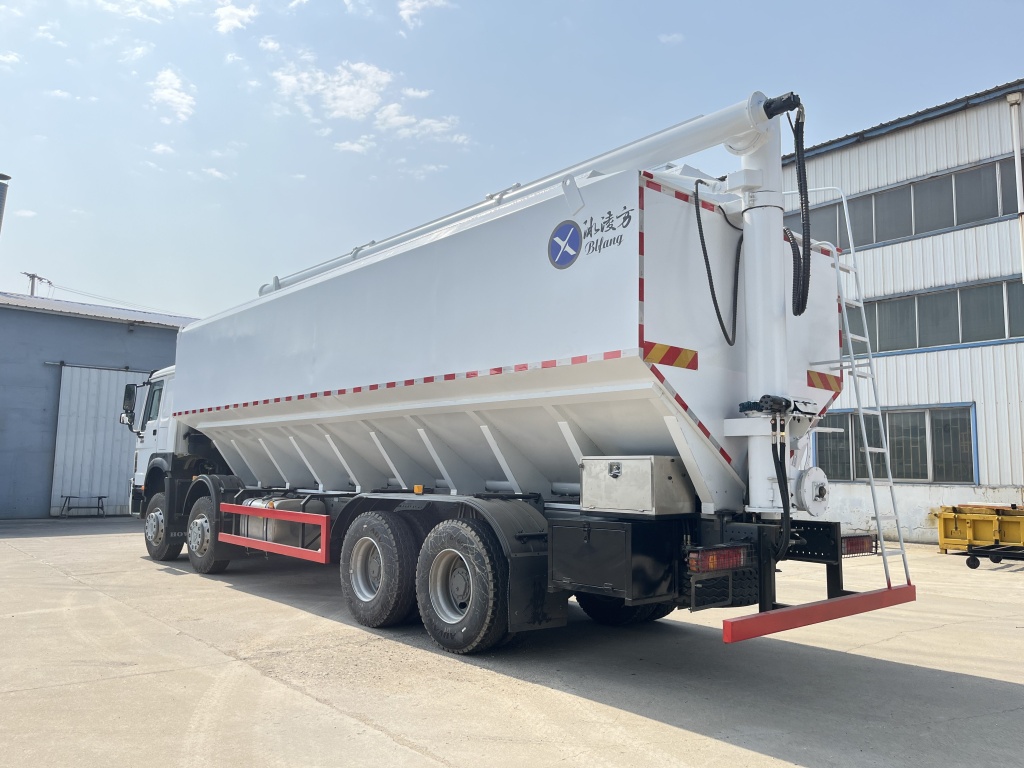
Feed loss in transit is the difference between the mass and quality of feed loaded at the mill and the mass and quality available at the farm, after accounting for legitimate moisture change. It includes product left in compartments and lines, spillage at the loading spout and silo inlet, fines that separate and become unusable, and material degraded by moisture. Shrinkage — the normal, permitted change in weight from moisture equilibration — is not the same thing, and conflating the two is how real losses hide inside an acceptable allowance.
Why This Debate Matters
Feed margins are thin, and a loss rate that sounds trivial per load becomes material across a fleet and a year. Buyers are also becoming more exacting: large integrators reconcile deliveries against invoices, and a farm that consistently receives slightly less than it was billed will eventually notice. Yet loss is difficult to attribute. The mill suspects the truck, the haulier suspects the mill's weighing, and the farm suspects both. Without a measurement protocol, the argument is settled by seniority rather than evidence, and the same loss continues for another season. In a market where feed cost dominates the customer's economics, being unable to quantify transport loss is an avoidable commercial exposure.
Key Facts at a Glance
- Residual feed remains in compartments, augers, pneumatic lines and discharge boots; the amount depends on body design, product type and how the load was discharged.
- Tare weight and gross weight are the basis of any credible measurement, and both depend on calibrated weighing equipment at a known location.
- A weighbridge comparison between loaded and empty states is the simplest fleet-level check, though it cannot separate spillage from residual.
- Compartment geometry matters: flat floors, square corners and long horizontal runs retain more product than smooth, sloped, drainable designs.
- Fines and dust behave differently from whole feed, so they concentrate in specific parts of the body and are easily over- or under-counted.
- Moisture gain can make a delivered load heavier than the loaded one, which masks real product loss unless moisture is measured at both ends.
Two Sides: A vs B
- Whether loss is worth measuring — One view says the quantities are too small to justify the effort and that effort is better spent on route productivity; the other says small systematic losses are exactly the kind that compound silently and are cheapest to fix.
- Weighbridge versus onboard weighing — A weighbridge gives an independent, defensible number at fixed points; onboard load cells give frequent data but require calibration discipline and drift management.
- Residual as loss or as cost of doing business — Some fleets treat retained product as an unavoidable operating cost and clean on a schedule; others treat every kilogram retained as a design flaw to be engineered out.
- Attribution — Mills tend to locate loss at discharge; hauliers tend to locate it at loading and at the farm's receiving equipment. Both are usually partly right.
- KPI design — A single loss percentage is simple to communicate but hides product and route differences; a segmented KPI is more honest but harder to explain to management.
- Customer transparency — Sharing loss data builds trust with large customers but creates a benchmark the fleet must then maintain; withholding it avoids the conversation but not the underlying cost.
Step-by-Step: How to Establish a Real Loss Baseline
- Define the boundary. Decide precisely what counts as loss — residual, spillage, fines, moisture — and state what is excluded, so numbers are comparable over time.
- Calibrate the scales. Verify weighbridge and onboard weighing against a known mass before collecting data; uncalibrated measurement produces confident nonsense.
- Sample the same routes repeatedly. Pick a small set of representative routes and products, and measure them consistently rather than surveying the whole fleet once.
- Weigh the residue. After discharge, weigh what remains in compartments and lines on a sample basis; this is the number most fleets have never seen.
- Record moisture at both ends. Without it, weight gain from humid air is misread as efficiency and weight loss is misread as theft.
- Publish a segmented KPI. Report loss by product type and route type, review monthly, and treat outliers as investigations rather than failures.
FAQ
Q: What is a normal feed loss rate in bulk transport?
A: There is no universal figure, because it depends on body design, product, discharge method and how the boundary is defined. Any published number that ignores those variables should be treated with caution, including your own first estimate.
Q: Can onboard weighing replace a weighbridge?
A: It can supplement it, not replace it. Onboard systems give frequency and trend; a weighbridge gives independent verification. Fleets that rely on only one tend to discover the difference during a dispute.
Q: Why does a delivered load sometimes weigh more than the loaded one?
A: Moisture. Feed equilibrates with ambient air, and in humid conditions it can absorb water. This is why moisture measurement at both ends is part of any honest loss calculation.
Q: Is residual feed a safety issue as well as a cost?
A: Yes. Material retained in a compartment can carry over into the next load, which matters when species or medication change. Cleaning frequency and loss measurement are therefore related problems.
Q: How many loads should be sampled?
A: Enough to see a pattern rather than an anecdote: a structured sample across several weeks and more than one route, not a single audit.
The Bottom Line
The uncomfortable answer is that most fleets do not know their loss rate, and the ones that do usually discovered it was larger than assumed. Measurement is unglamorous: calibrated scales, repeated sampling, and a definition everyone accepts. But it converts a permanent argument into a manageable number, and numbers can be improved. If you had to defend your fleet's loss figure to a major customer tomorrow, what evidence would you put on the table?
Vehicle Homologation: Why Do Importers Still Get Surprised?
Oct 31, 2026
The Hidden Cost of a Late Chick Delivery—Who Should Bear It?
Oct 31, 2026
Related Articles
Author

Cybercoldchain
Content Writer
Recent Posts
-
GMP+ and FAMI-QS: Is Transport the Weak Link in Feed Safety?
Oct 31
-
Driver Shortages vs Delivery Windows: What Gives First?
Oct 31
-
Telematics for Bulk Feed: Is Bin-Level Data Worth the Investment?
Oct 31
-
Can Reefers Keep Up With 45°C+ Markets—or Do Specifications Need a Rethink?
Oct 31
-
The Hidden Cost of a Late Chick Delivery—Who Should Bear It?
Oct 31