
GMP+ and FAMI-QS: Is Transport the Weak Link in Feed Safety?
In short: Often, yes — not because transport is unregulated, but because the chain of evidence thins out exactly where the feed leaves the mill's direct control. Certification schemes do reach the truck, yet the practical weak points are cleaning verification, changeover discipline and records that survive a busy day. The gap is usually procedural rather than malicious.


What Is Feed Transport Certification?
GMP+ and FAMI-QS are certification schemes built around feed safety, covering how feed and feed materials are produced, stored, handled and traded. Their transport requirements address the vehicle itself, the condition of the load space, cleaning and disinfection between loads, prevention of cross-contamination, and the documentation that allows a batch to be traced. Certification is not a single certificate hanging in an office; it is a set of documented controls that an auditor can sample and test. Transport sits inside that scope because a trailer is a food-contact surface in everything but name.
Why This Debate Matters
Feed safety incidents rarely start in the formulation department. They start where a previous load was something else entirely, or where a cleaning step was signed off without being done, or where a driver made a reasonable decision with incomplete information. Mills carry the audit burden and the reputational risk, but the physical transfer of feed happens on assets that may belong to a third party and operate far from the quality manager's desk. Meanwhile, buyers downstream — integrators, large farms, exporters — increasingly ask for evidence rather than assurances. When a scheme's scope and a fleet's daily reality diverge, the paperwork may still pass while the risk quietly accumulates.
Key Facts at a Glance
- Certification scope typically includes transport and storage as separate activities, with their own documented controls rather than automatic coverage under a production certificate.
- The previous load matters: residues from a prior cargo are the most common route by which unwanted material enters a bulk compartment.
- Cleaning and disinfection are separate steps, and drying matters as much as washing because residual moisture creates its own risk.
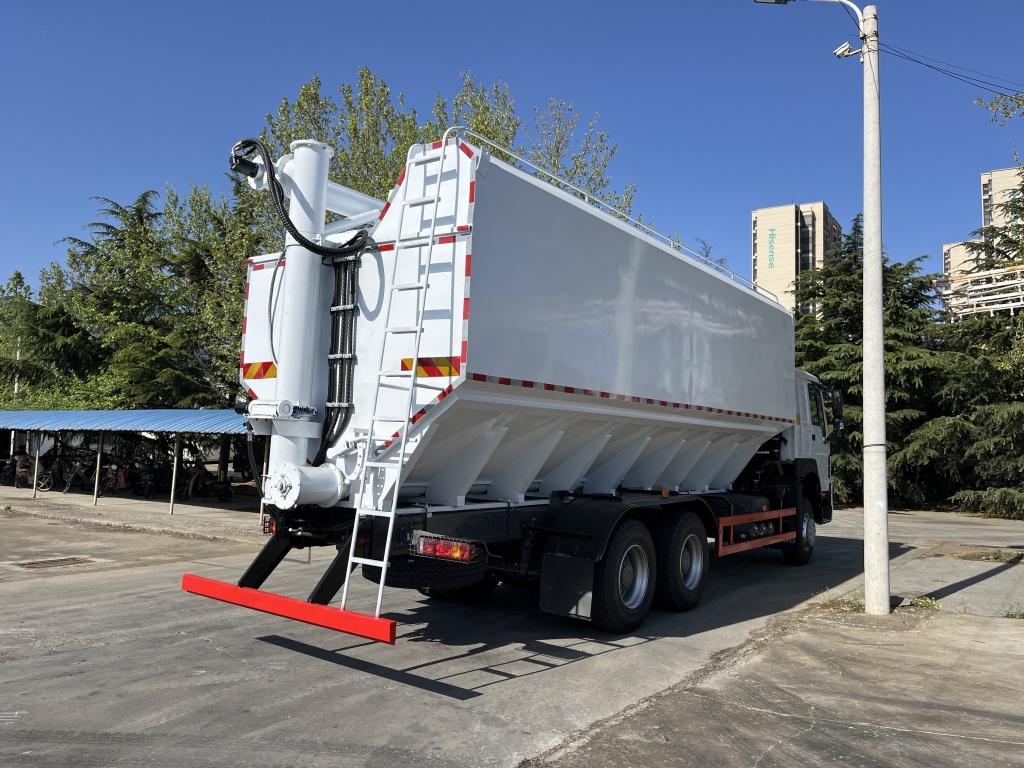
- Compartment design affects cleanability — smooth internal surfaces, accessible corners and drainable floors are easier to verify than complex internal structures.
- Traceability requires a link between the load, the compartment, the customer and the delivery time; a missing link breaks the chain for every batch on that truck.
- Records that are completed retrospectively, in bulk, at the end of a shift, are the first thing an auditor learns to distrust.
Two Sides: A vs B
- Scope of responsibility — One position holds that the mill owns feed safety end to end and should audit its hauliers as rigorously as its suppliers; the other holds that certified hauliers are certified precisely so the mill does not have to duplicate the audit.
- Cleaning verification — Some quality teams rely on visual inspection and signed checklists; others argue that visual inspection cannot detect what matters and that swabs or rinse tests are the strongest evidence.
- Dedicated versus flexible fleets — Dedicated trailers reduce changeover risk but raise cost and idle capacity; flexible fleets improve utilisation but make cleaning discipline the single point of failure.
- Documentation — Paper checklists are defended as robust in wet, dusty yards; digital capture is defended as tamper-evident and searchable, though it depends on connectivity and driver cooperation.
- Audit approach — Announced audits are defended as cooperative and improvement-oriented; unannounced sampling is defended as the most reliable way to see the operation as it truly runs.
- Where risk actually lives — Quality managers tend to focus on cleaning; logistics managers tend to focus on sealing and loading, arguing that a sealed compartment rarely gets contaminated in transit.
Step-by-Step: How to Close the Transport Gap
- Map every handover. Write down who is responsible for the compartment at each stage: last load, cleaning, sealing, loading, discharge and the empty return.
- Classify loads by risk. Separate feed from non-feed cargo, medicated from non-medicated, and species-specific from general, then set cleaning rules per transition rather than per truck.
- Make cleaning verifiable. Define what "clean and dry" means physically, and record who verified it, when, and by what method.
- Control the seal. Record seal numbers at loading and check them at discharge; an unbroken seal is stronger evidence than any written assurance.
- Keep records contemporaneous. Capture load, compartment, product, customer and time at the moment they happen, not at shift end.
- Audit your own hauliers. Sample a delivery unannounced and compare what you find with what the paperwork claims.
FAQ
Q: Does GMP+ certification cover transport automatically?
A: No. Transport and storage are generally treated as activities in their own right within the scheme's scope, so a haulier needs the relevant certification rather than inheriting coverage from the mill it serves.
Q: What is the biggest cross-contamination risk in bulk feed transport?
A: Residual material from a previous load. It is invisible from the outside, easy to miss in poor light, and can persist in corners and discharge equipment long after the compartment looks empty.
Q: Does a dedicated truck always make sense?
A: No, but dedication simplifies the problem. Where fleets must be flexible, the cleaning protocol and its verification carry most of the safety burden.
Q: How should a fleet prove cleaning was done?
A: With a contemporaneous record tied to a specific compartment and load, ideally supported by a verification method beyond a glance. The method can be simple; the discipline cannot.
Q: Do these schemes apply to export shipments?
A: Requirements vary by destination market and customer, and schemes are updated periodically, so the applicable version and scope should be confirmed for each trade lane rather than assumed.
The Bottom Line
Transport is not outside feed safety certification, but it is where certification is hardest to observe and easiest to satisfy on paper. The fleets that hold up under scrutiny treat cleaning and sealing as production steps with owners, not as chores with signatures. The schemes provide the frame; the daily discipline inside it is what actually protects the feed. If an auditor arrived at your yard unannounced tomorrow, would the trailer in the bay match the record on the clipboard?
Driver Shortages vs Delivery Windows: What Gives First?
Oct 31, 2026
No next article
Related Articles
Author

Cybercoldchain
Content Writer
Recent Posts
-
GMP+ and FAMI-QS: Is Transport the Weak Link in Feed Safety?
Oct 31
-
Driver Shortages vs Delivery Windows: What Gives First?
Oct 31
-
Telematics for Bulk Feed: Is Bin-Level Data Worth the Investment?
Oct 31
-
Can Reefers Keep Up With 45°C+ Markets—or Do Specifications Need a Rethink?
Oct 31
-
The Hidden Cost of a Late Chick Delivery—Who Should Bear It?
Oct 31