
Bulk Feed Truck Driver Training: A Practical Checklist
Bulk Feed Truck Driver Training: A Practical Checklist
In short: Bulk feed truck driver training should cover four things: the pre-trip inspection, safe setup and operation of the discharge system, conduct at the farm site, and clean-down with reporting. Unlike general haulage, the job involves working around overhead bins, rotating augers, pressurised air lines and confined feed spaces, so a written checklist that every driver signs is more useful than a verbal handover.


What Is Bulk Feed Driver Training?
Bulk feed driver training is the structured process of preparing a driver to operate a hopper-bodied feed truck safely and consistently, from the yard to the farm and back. It combines ordinary heavy-vehicle competence — licence, load security, driving hours, defensive driving — with tasks that are specific to bulk feed delivery.
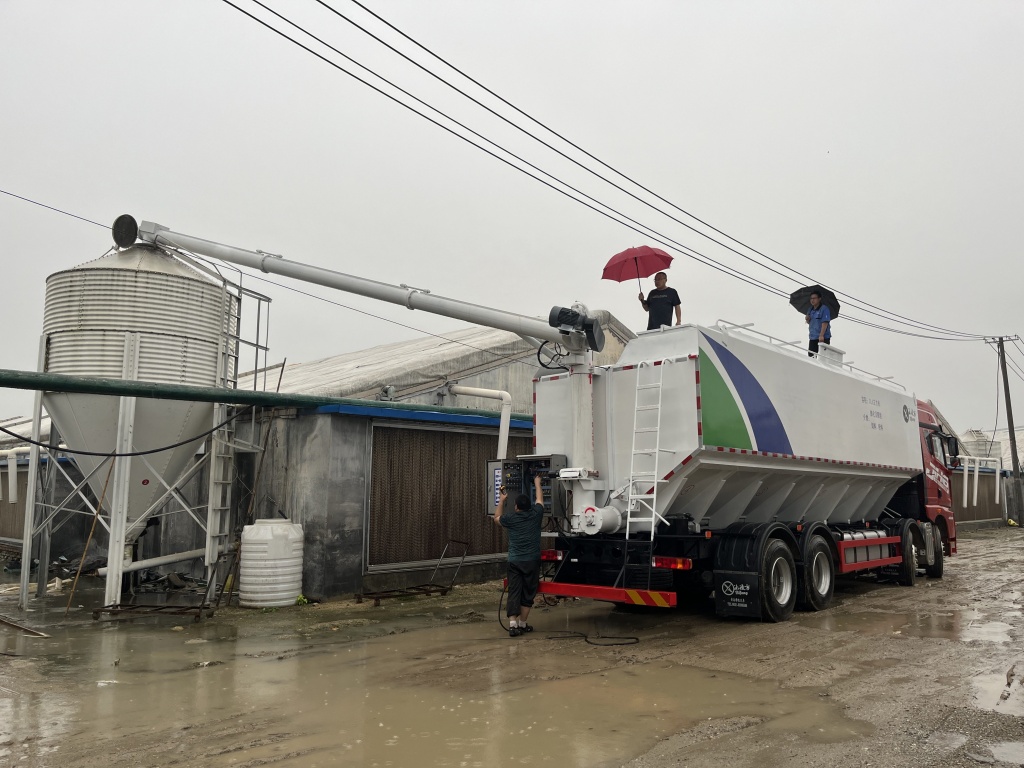
Those specific tasks are what supervisors usually underestimate. A feed driver has to position a heavy vehicle in a farmyard, judge whether the ground will take the weight, set up a discharge system without fouling overhead lines, monitor flow into a bin without standing under the hose, and clean the body afterwards. Each of these has a safe method, and each is learnable. The point of a checklist is to make the method consistent across a fleet, so safety does not depend on which driver is on the route that day.
Key Facts at a Glance
- Licence and hours — the driver must hold the correct licence class for the vehicle and combination, and work within local driving-hour and rest rules.
- Pre-trip items — tyres and pressures, brakes, lights, mirrors, hatches and seals, auger or blower drive, hoses and couplings, guards in place, and fire extinguisher present and charged.
- Load security — hatches latched, outlets closed, dividers intact, and the load plan confirmed against the day's delivery sequence.
- Site assessment — check ground bearing, overhead lines, gate width, turning circle, people and animals before committing the truck into a yard.
- Discharge discipline — keep clear of rotating augers, never reach into an outlet, never enter a hopper, and keep everyone out of the area under the open bin hatch.
- End-of-shift — empty and clean the system, report residue or damage, and record the load, the clean-down and the next product.
New Driver vs Experienced Driver Training
- Focus of pre-trip — A new driver needs a full guided walk-around with each item explained; an experienced driver needs a periodic refresh and specific attention to items that have changed on the vehicle.
- Discharge setup — New drivers should practise positioning, hose routing and bin approach under supervision before running a route alone; experienced drivers benefit from route-specific briefings on new sites.
- Site assessment — New drivers are often taught the formal checklist; experienced drivers may rely on habit, which is why unannounced site spot-checks matter.
- Hazard awareness — New drivers need the hazards named explicitly, including entrapment, pressurised lines and overhead power; experienced drivers need reminders about complacency on familiar farms.
- Failure response — New drivers should be trained to stop and call rather than improvise; experienced drivers should be trained on approved clearing methods and when to refuse a site.
- Refresher interval — New drivers need close supervision over their first routes; experienced drivers should still be given scheduled refreshers and post-incident reviews.
Step-by-Step: How to Run a Driver Training Session
1. Start with the vehicle walk-around. Walk the truck with the driver, naming each inspection point and what a failure looks like, then have the driver perform it unassisted.
2. Explain the discharge system on the ground. Show the controls, the flow path from hopper to hose, the guards, and the emergency stop before running anything under load.
3. Practise positioning in a controlled yard. Have the driver set up beside a bin, route the hose or auger safely, and confirm the approach angle and clearance.
4. Brief real farm sites. Ride along to each customer site and point out the specific hazards: soft ground, low branches, overhead lines, livestock, and bin positions that need a specific approach.
5. Set the rules that are not negotiable. Never enter a hopper, never reach into an outlet, never stand under an open bin hatch, and never clear a blockage while the system is under pressure.
6. Sign off and schedule refreshers. Have the driver confirm the checklist in writing, then set a refresher date and a spot-check routine.
FAQ
Q: What are the most serious risks in bulk feed delivery?
A: Entrapment or engulfment in feed, contact with rotating auger flighting, injury from pressurised air or a sudden release of bridged feed, falls from the body during hatch work, and vehicle incidents in confined farmyards. Each has a control method that belongs in the training checklist.
Q: How long does driver training take?
A: It depends on the driver's experience with the discharge system and the complexity of the routes. A reasonable structure is a guided walk-around, supervised practice runs, accompanied delivery routes, then a sign-off, with refreshers at set intervals afterwards.
Q: Should drivers clear blockages themselves?
A: Only using the approved method and access points, and never by entering the hopper or reaching into an outlet. Train drivers to shut down, depressurise, then decide whether they can clear it safely or should call for support.
Q: How do I check that training is being followed?
A: Use spot-checks on live routes, review clean-down and damage reports, and ask drivers to talk through what they did at a specific site. If habits drift, refresh the briefing rather than assuming the driver forgot.
Q: What should be included in an end-of-shift report?
A: The load carried, the discharge method used, any flow problems, damage or unusual wear observed, the clean-down carried out, and the next product to be loaded. A short written record makes faults visible before they become breakdowns.
Conclusion
Bulk feed delivery rewards consistency. A driver who inspects the truck, assesses the site, sets up the discharge system correctly and cleans it down afterwards will have fewer breakdowns and fewer incidents than one who improvises. Write the checklist, walk every route with new drivers, and refresh it regularly. If you are choosing a body for a mixed fleet, Binglingfang can talk through the discharge and clean-out arrangements that suit the way your drivers actually work.
Ventilation Windows vs Forced-Air Fans in Chick Transport Trucks
Sep 18, 2026
Why Refrigerated Truck Body Weight Matters for Payload and Fuel Use
Sep 21, 2026
Related Articles
Author

Cybercoldchain
Content Writer
Recent Posts
-
GMP+ and FAMI-QS: Is Transport the Weak Link in Feed Safety?
Oct 31
-
Driver Shortages vs Delivery Windows: What Gives First?
Oct 31
-
Telematics for Bulk Feed: Is Bin-Level Data Worth the Investment?
Oct 31
-
Can Reefers Keep Up With 45°C+ Markets—or Do Specifications Need a Rethink?
Oct 31
-
The Hidden Cost of a Late Chick Delivery—Who Should Bear It?
Oct 31