
Ventilation Windows vs Forced-Air Fans in Chick Transport Trucks
Ventilation Windows vs Forced-Air Fans in Chick Transport Trucks
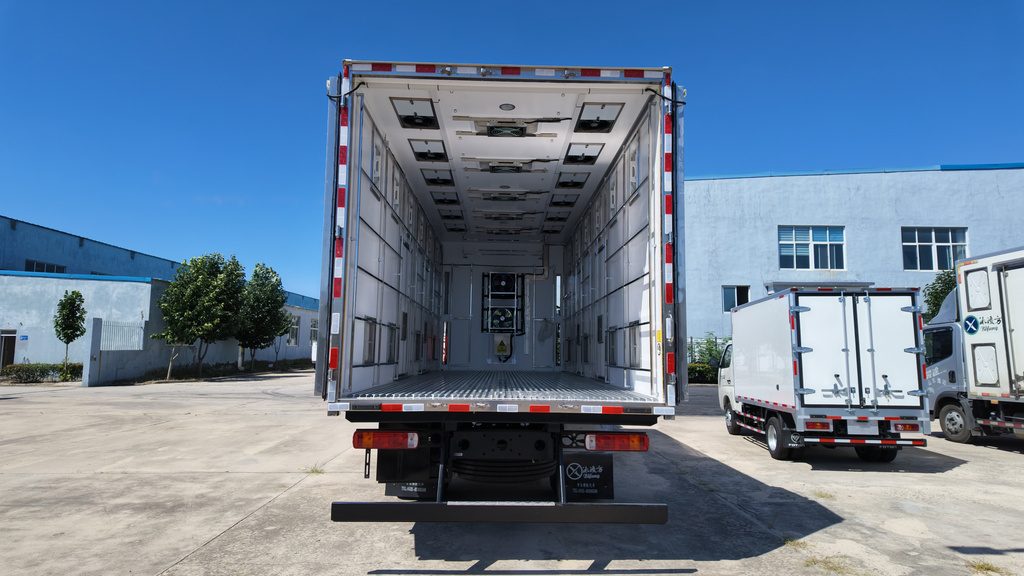
In short: Ventilation windows and forced-air fans are complementary, not competing, systems. Windows let air enter and leave the box through natural openings at the front, sides, roof and rear, while fans push air through the load when natural airflow is not enough. A ventilated chick truck uses both — front intakes, side and roof windows, and fans working with the rear door to create through-flow along the box.


What Is Ventilation in a Chick Transport Truck?
Ventilation in a chick transport truck is the managed movement of air through the cargo space to remove heat, moisture, CO₂ and ammonia and to replace them with fresh air. Air enters through intake openings at the front and exits through windows and exhaust openings along the sides, roof and rear. Two mechanisms drive that movement: natural ventilation, driven by vehicle motion, pressure differences and the buoyancy of warm air, and forced ventilation, which uses fans to move air regardless of speed. The design question is not which to choose — it is how much of each your routes require.
Key Facts at a Glance
- The front panel carries vertical air intakes on both sides plus a central intake at the fan position, each controlled by a manual damper.
- One fan is standard at the front intake position, with a second available as an option.
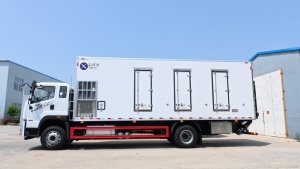
- Side panels carry ventilation windows at the top and lower ventilation windows, and these can be upgraded to stainless steel one-way opening types.
- Side doors carry ventilation openings — one per side at 4.2 m, up to five at 9.6 m depending on configuration.
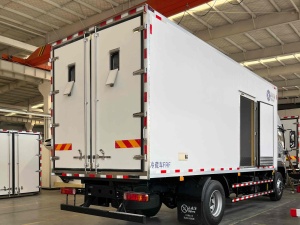
- The roof carries a central ventilation window plus exhaust openings and exhaust fans on both sides, and the rear uses a three-fold door with a louvred centre section that can be opened independently.
Natural Ventilation Windows vs Forced-Air Fans
- Driving force — Windows depend on vehicle motion, pressure differences and buoyancy; fans generate airflow independently of speed, so they keep air moving while the truck is stopped.
- Typical use — Windows are the baseline for every run; fans matter most on dense loads, hot days and any period where the truck is not moving.
- Power demand — Windows need no power; fans need a supply, which is why a ventilated truck can be fitted with an independent diesel generator.
- Installation — Windows are built into the body; fans and their power supply are specified options.
Step-by-Step: How to Set Up Airflow in a Chick Truck
1) Open the front intakes first. The two side channels and the central fan-position intake are where air enters the box. Set the manual dampers for the load and the weather rather than leaving them at default.
2) Set the side and roof openings as a pair. Air that enters must be able to leave. Open the side windows and the roof central window and exhaust openings so the box has a clear path from intake to exhaust, and adjust the lower windows for load height.
3) Decide the rear door position for through-flow. The rear three-fold door has a louvred centre section that opens independently. That creates a path from the front intakes along the length of the box — the classic through-flow arrangement for a loaded truck in motion.
4) Bring fans in when natural flow is not enough. One fan at the front intake is standard, with a second available. Use forced airflow on hot days, dense loads, slow traffic and long stationary periods, and confirm fan guards are clear of fluff before departure.
5) Confirm options that extend the envelope. Optional diesel or underfloor heating and an optional auxiliary air conditioning unit extend what a ventilated truck can handle — but the auxiliary AC has limited cooling effect and is no substitute for a constant-temperature truck.
6) Check the settings at each stop. Settings that were right at departure can be wrong two hours later as the weather changes or the truck sits in traffic. Make adjusting them part of the routine.
FAQ
Q: Do I need fans if the truck already has ventilation windows?
A: Fans and windows do different jobs. Windows exchange air while the truck is moving; fans create airflow at low speed and when stationary. One fan at the front intake is standard because it covers the situations where natural ventilation falls short.
Q: What is through-flow and why does it matter?
A: Through-flow means air enters at one end of the box and travels along the load before leaving at the other. On a chick truck this is achieved with the front intakes and fans feeding air along the box while the roof exhaust openings and the louvred rear door let it out. It matters because air that merely enters and leaves at the same opening does not cool the middle of the load.
Q: What is the difference between the top and lower side ventilation windows?
A: The top windows release the warmest air, which collects near the roof; the lower windows bring in cooler air at load level. Opening both gives vertical exchange as well as lengthwise flow. Lower windows can be upgraded to stainless steel one-way opening types.
Q: Does a ventilated truck need a generator?
A: If you want to run fans reliably, including while stationary, a power supply matters. Ventilated chick trucks can be fitted with an independent diesel generator and an optional 220 V supply. This differs from a constant-temperature truck, whose backup chassis generator drives the fans only, with a battery supplying roughly two hours of fan operation.
Q: When should I stop adjusting and just buy a constant-temperature truck?
A: When you manage airflow constantly and still cannot hold conditions on your routes. A constant-temperature chick truck with its eight systems controls 22–26 °C and CO₂ to no more than 3,000 ppm, which turns balancing openings into setting a target.
Conclusion
Ventilation windows and fans are two halves of one system. Windows are the baseline exchange path and cost nothing to run; fans provide the airflow that motion cannot, especially when the truck is stopped or the load is dense. Set the front intakes, balance the side and roof openings, use the rear louvred door for through-flow, and bring in fans when conditions ask for them. If airflow management becomes a constant balancing act on your routes, that is the signal to look at a constant-temperature truck — and Binglingfang can help you compare the two.
Hydration and Ventilation Balance in Day-Old Chick Transport
Sep 14, 2026
Bulk Feed Truck Driver Training: A Practical Checklist
Sep 21, 2026
Related Articles
Author

Cybercoldchain
Content Writer
Recent Posts
-
GMP+ and FAMI-QS: Is Transport the Weak Link in Feed Safety?
Oct 31
-
Driver Shortages vs Delivery Windows: What Gives First?
Oct 31
-
Telematics for Bulk Feed: Is Bin-Level Data Worth the Investment?
Oct 31
-
Can Reefers Keep Up With 45°C+ Markets—or Do Specifications Need a Rethink?
Oct 31
-
The Hidden Cost of a Late Chick Delivery—Who Should Bear It?
Oct 31