
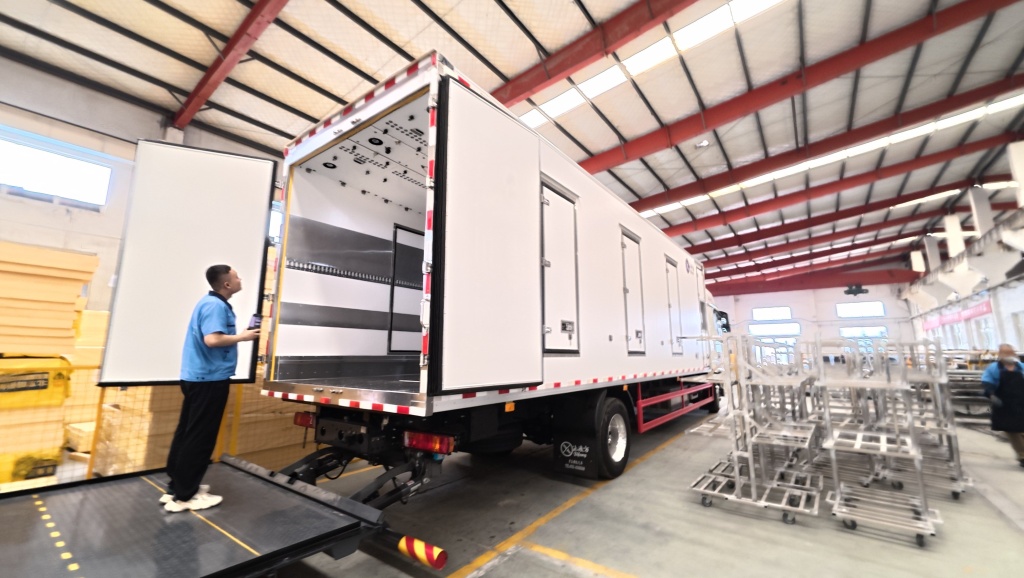
Hydration and Ventilation Balance in Day-Old Chick Transport
Hydration and Ventilation Balance in Day-Old Chick Transport
In short: Hydration and ventilation have to be balanced because they pull in opposite directions. Ventilation removes heat, CO₂, moisture and ammonia, but push it too hard and the air becomes dry enough to dehydrate the chicks. Humidification adds moisture back, but excess humidity plus poor airflow creates a damp, heavy box. The answer is controlled air exchange with sensing: a constant-temperature chick truck holds 22–26 °C and CO₂ at no more than 3,000 ppm while its humidification system manages moisture.


What Is the Hydration and Ventilation Balance?
The hydration and ventilation balance is the relationship between how much air you move through a chick box and how much water vapour that air carries away. Day-old chicks lose water continuously through respiration, and the air around them absorbs that moisture. High air exchange removes moisture efficiently but also dries the incoming air, especially in cold weather — cold air holds less water, so warming it inside the box drops relative humidity further. Low air exchange preserves humidity but allows heat, CO₂ and ammonia to accumulate. Managing the balance means controlling the rate of exchange and adding moisture when the incoming air cannot carry enough.
Key Facts at a Glance
- A constant-temperature chick truck's environmental control system uses temperature, humidity, CO₂ and pressure sensors to manage conditions in the box.
- CO₂ is controlled at no more than 3,000 ppm, with 2,800 ppm as the working target — an indicator of whether air exchange is keeping pace with the load.
- The humidification system uses a high-pressure pump, water mist nozzles, a water tank and stainless steel piping to raise moisture levels when needed.
- The control target band is 22–26 °C, and the truck is rated for outside conditions from −35 °C to +40 °C, which is the range over which ventilation and humidification must work together.
- A bag-type pre-filter captures chick fluff from circulating air; a filter that is loaded with fluff restricts airflow and shifts the balance without any change to the settings.
Humidification System vs Ventilation System
- Primary function — Humidification adds water vapour to the box air; ventilation exchanges box air with outside air.
- Effect on temperature — Humidification is broadly neutral but mist can cool slightly as it evaporates; ventilation removes heat and lowers temperature.
- Effect on CO₂ — Humidification does not reduce CO₂; ventilation is the mechanism that removes it from the box.
- Effect on moisture — Humidification raises humidity directly; ventilation lowers humidity by carrying moisture out with the exhaust air.
- Control method — Humidification is cycled by the control system on sensor readings; ventilation is set through intakes, windows, roof exhaust openings and fan operation.
- Risk if misused — Excessive humidification in poor airflow creates a damp environment; excessive ventilation in cold weather dries the load and wastes heat.
Step-by-Step: How to Balance Hydration and Ventilation
1) Set the temperature band first. Ventilation rate follows temperature: more air is needed to remove heat from a dense load or in warm weather, and less is needed in cold conditions. Establish 22–26 °C as the band you are working to before adjusting anything else.
2) Set ventilation to hold CO₂ within the limit. CO₂ is the clearest measure of whether air exchange matches the load's respiration. Target 2,800 ppm with 3,000 ppm as the ceiling, and treat a sustained rise as a signal to increase air exchange rather than to adjust humidity.
3) Read humidity before adding moisture. Use the humidity sensor rather than judging by feel, and remember that cold incoming air will drop in relative humidity once it warms inside the box.
4) Cycle humidification in short bursts. Run the high-pressure pump and mist nozzles to bring moisture up to target, then stop and let the control system observe the result. Continuous misting with limited airflow wets the load rather than humidifying the air.
5) Protect the airflow path as the load changes. Check the bag-type pre-filter and the ventilation openings during the trip. A filter carrying fluff reduces air exchange, which lowers CO₂ removal and raises humidity — the box drifts away from target with no change in settings.
6) Re-check at each stop and record the readings. Temperature, humidity and CO₂ move together, and the relationships tell you which way to adjust. Logging the readings turns a balancing act into a repeatable routine.
FAQ
Q: Why does humidity matter to day-old chicks in transit?
A: Chicks lose water through respiration, and they arrive from the hatchery with limited reserves. Air that is too dry increases that loss. The humidification system holds moisture at a level that supports the birds while ventilation removes heat and CO₂.
Q: Can I solve humidity problems by ventilating less?
A: Reducing ventilation raises humidity but also allows CO₂ and heat to accumulate, which is a worse trade. The correct response is to keep air exchange at the rate needed for CO₂ control and use the humidification system to correct moisture separately.
Q: What does the CO₂ reading tell me about ventilation balance?
A: It tells you whether air exchange is keeping pace with the birds' respiration. A steady reading at or below 2,800 ppm means exchange is adequate; a sustained rise toward 3,000 ppm means the load needs more air, whatever the humidity reading says.
Q: Does a ventilated chick truck have humidification?
A: Ventilated chick trucks manage conditions through fans, ventilation windows, front intakes, roof exhaust openings and the rear louvred door, and support optional temperature monitoring. They do not carry a humidification system, which is part of the eight-system constant-temperature design.
Q: What happens if the filter clogs with fluff?
A: Airflow drops through the filter, so ventilation effectiveness falls and humidity rises even though the settings have not changed. Checking and cleaning or replacing the bag-type pre-filter is one of the simplest ways to keep the balance on target.
Conclusion
Hydration and ventilation are a single control problem. Ventilation sets how much heat, CO₂ and moisture leaves the box; humidification corrects the moisture level that ventilation cannot. Work to 22–26 °C, hold CO₂ at or below 3,000 ppm, read humidity rather than guessing, and keep the filter and airflow path clear. The result is a box that is neither stale nor dry. Binglingfang's constant-temperature chick trucks include a sensor-driven environmental control system and a high-pressure humidification system built to balance these two demands.
Can Refrigerated Body Panels Be Repaired? FRP Sandwich and Polyurethane Compared
Sep 14, 2026
No next article
Related Articles
Author

Cybercoldchain
Content Writer
Recent Posts
-
Hydration and Ventilation Balance in Day-Old Chick Transport
Sep 14
-
Can Refrigerated Body Panels Be Repaired? FRP Sandwich and Polyurethane Compared
Sep 14
-
Bulk Feed Truck Inspection and Preventive Maintenance Schedule
Sep 12
-
Day-Old Chick Delivery: A One-Page Driver Checklist
Sep 12
-
Biosecurity for Chick Transport Trucks: Cleaning and Disinfection Between Runs
Sep 12