
Can Refrigerated Body Panels Be Repaired? FRP Sandwich and Polyurethane Compared
Can Refrigerated Body Panels Be Repaired? FRP Sandwich and Polyurethane Compared
In short: Yes, refrigerated body panels can usually be repaired, but how much work it takes depends on the construction. FRP sandwich panels are assembled from separate skins and cores, so a damaged area can often be cut back and replaced in sections. Polyurethane integral foam is a continuous injected core, so a repair generally covers a larger area. Both are mature methods with established repair practice.


What Is a Refrigerated Body Panel Repair?
A refrigerated body panel repair is the work of restoring the insulation and both skins after impact, abrasion or a failed joint has damaged part of the box. The goal is not just cosmetic: a panel that has lost its core exposes the load to heat gain, can let moisture into the structure, and will usually show up as a temperature problem long before it becomes a structural one.
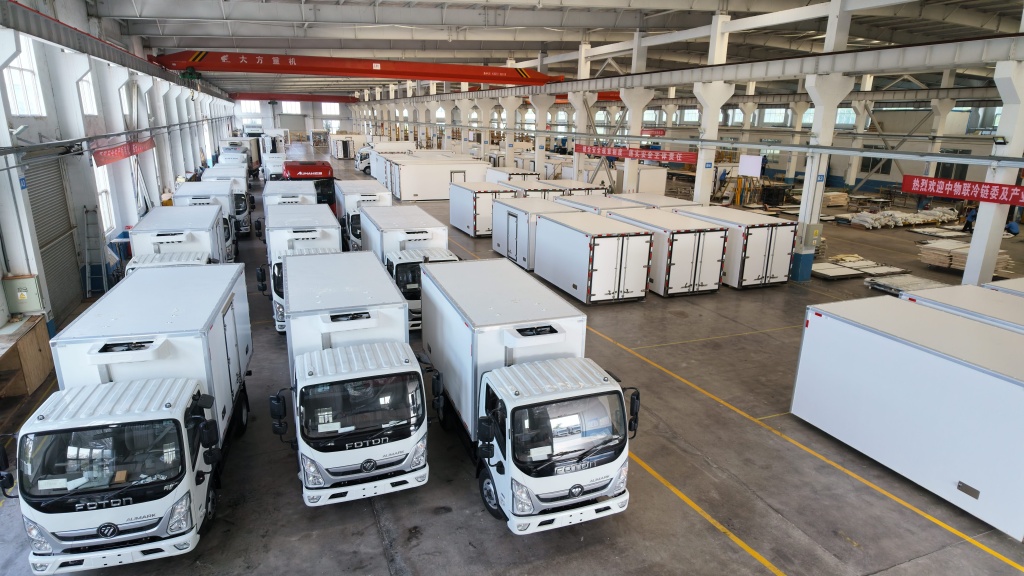
Two construction families dominate the market, and they behave differently after damage. In FRP sandwich construction, skins and pre-cut insulation boards are bonded together, and the panel is assembled from defined sections. In polyurethane integral foam construction, liquid foam is injected between the skins and expands to fill the cavity, producing one continuous core.
Key Facts at a Glance
- FRP sandwich panels are made by dry bonding pre-cut insulation boards between fiberglass-reinforced plastic skins; both this and polyurethane integral foam are mature production lines.
- Sandwich construction does not require a continuous metal skeleton, which is one reason local damage can often be repaired by replacing a defined section.
- Polyurethane integral foam forms a continuous core between the skins, so a repair typically involves rebuilding a larger area around the damage.
- Body weight is a repair consideration: a 4.2 m refrigerated body can be built at roughly 670 kg, and adding heavy patch material in the wrong place affects payload and balance.
- Moisture entering an unrepaired panel is a bigger risk than the dent itself, because a wet or waterlogged core loses insulation performance over time.
- Door gaskets, thresholds and panel joints are the areas most often damaged in service, and they are also the most straightforward to service.
A vs B: Repairing FRP Sandwich vs Polyurethane Integral Foam
- Repair scope — Sandwich panels can often have a local section cut back and replaced; integral foam usually requires rebuilding a wider area to restore a continuous core.
- Access to the core — Sandwich construction exposes pre-cut boards once the outer skin is opened; integral foam exposes expanded foam that must be cut back to sound material.
- Structural framing — Sandwich construction works without a continuous metal skeleton, so repairs do not have to reconnect a metal grid; integral foam relies on the bond between foam and skins.
- Refinishing — Both need the repaired area sealed and finished so the surface behaves like the surrounding panel; a poor seal invites moisture into the repair.
- Typical outcome — Both methods can be restored to serviceable condition by a competent body shop; the practical difference is the size of the work and the time the vehicle is off the road.
Step-by-Step: How to Handle Panel Damage
1) Assess the damage before loading. Note whether the outer skin is cracked, whether the core is exposed, and whether the inner skin or the load space is affected.
2) Take the vehicle out of frozen duty if the core is exposed. Moisture and frost entering an open panel do more long-term damage than the impact that caused it.
3) Photograph and document the area. Clear photos and measurements help the repair shop quote the job and support any insurance claim.
4) Ask the builder or a specialist shop which construction your body uses. The repair method follows the construction method, so this step should not be guessed.
5) Seal temporary damage if the vehicle must keep working. A proper temporary weather seal prevents water ingress, but it is not a substitute for repair.
6) Check the surrounding area after repair. Look at adjacent joints, door frames and gaskets, because impact that damages one panel often disturbs the seal nearby.
FAQ
Q: Can a hole in a refrigerated panel be patched and used?
A: A patch that restores the seal and keeps moisture out will keep the vehicle working, but it rarely restores full insulation performance in that area. Treat it as a temporary fix and arrange a proper repair when the vehicle schedule allows.
Q: Which construction is easier to repair?
A: FRP sandwich construction is generally easier to repair in sections because the panel is built from defined parts. Integral foam can be repaired too, but the work usually covers a larger area to restore a continuous core. Both are well-established repairs.
Q: Does a repaired body lose payload?
A: It can, if heavy materials are added. A 4.2 m refrigerated body can be around 670 kg, so repairs that add substantial weight should be accounted for against the chassis payload rating.
Q: How do I reduce the risk of damage in the first place?
A: Most panel damage comes from loading equipment. Corner protection, careful forklift practice and adequate doorway clearance prevent a large share of it. Training and simple guards are cheaper than panel replacement.
Q: Should I repair or replace a damaged body?
A: Repair usually makes sense when the damage is local and the frame and joints are sound. Replacement is worth considering when damage is widespread, when moisture has spread through the core, or when the body no longer holds temperature after sealing has been checked.
Conclusion
Refrigerated body panels are repairable, and the method follows the construction. FRP sandwich panels can often be restored in sections, while polyurethane integral foam repairs usually cover a larger area. In both cases the urgent issue is moisture, not appearance, so seal the damage quickly and arrange proper repair. If you are choosing between constructions and expect rough service, ask the builder how a repair would be handled before you buy.
Bulk Feed Truck Inspection and Preventive Maintenance Schedule
Sep 12, 2026
Hydration and Ventilation Balance in Day-Old Chick Transport
Sep 14, 2026
Related Articles

Author

Cybercoldchain
Content Writer
Recent Posts
-
Hydration and Ventilation Balance in Day-Old Chick Transport
Sep 14
-
Can Refrigerated Body Panels Be Repaired? FRP Sandwich and Polyurethane Compared
Sep 14
-
Bulk Feed Truck Inspection and Preventive Maintenance Schedule
Sep 12
-
Day-Old Chick Delivery: A One-Page Driver Checklist
Sep 12
-
Biosecurity for Chick Transport Trucks: Cleaning and Disinfection Between Runs
Sep 12