
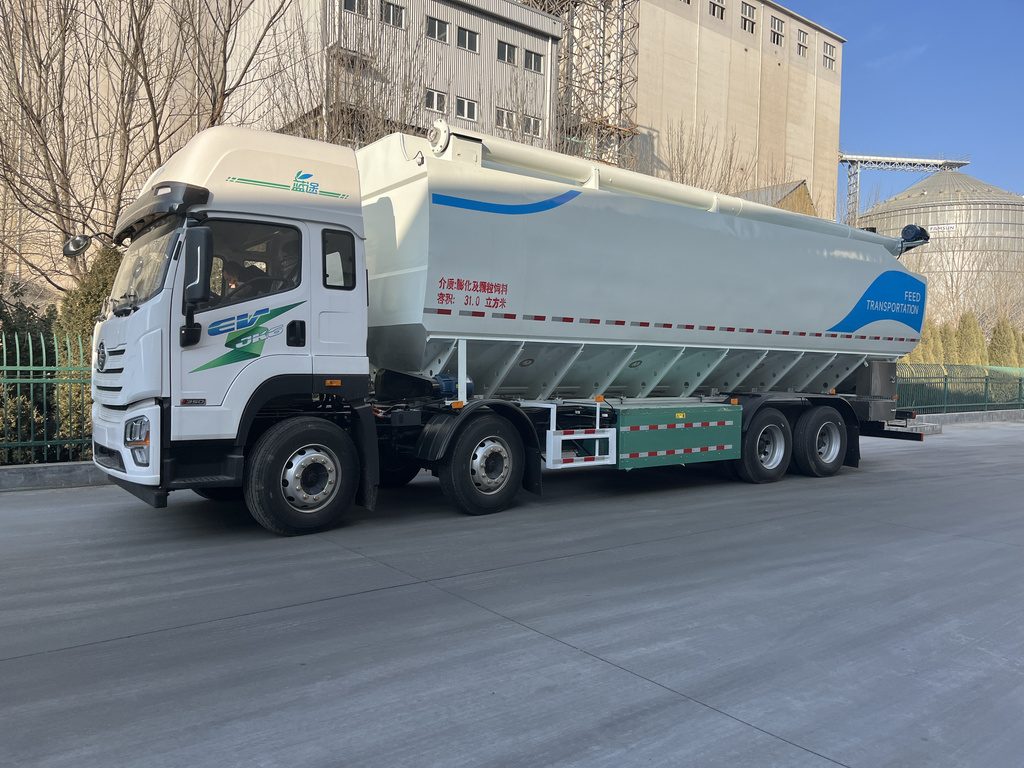
Bulk Feed Truck Inspection and Preventive Maintenance Schedule
Bulk Feed Truck Inspection and Preventive Maintenance Schedule
In short: A bulk feed truck needs three maintenance layers: daily checks before the first load, weekly or per-route servicing of conveyors, seals and fasteners, and seasonal or interval-based overhauls of the discharge system and body structure. The most expensive failures — blower or auger damage, structural cracks, hatch seal failure — are usually visible early if someone is looking on a schedule rather than waiting for a breakdown.


What Is Preventive Maintenance on a Feed Truck?
Preventive maintenance is scheduled work carried out to prevent failure rather than to repair it. On a bulk feed truck, it covers three distinct systems: the chassis and running gear, the discharge equipment such as conveyor drives, blowers and lines, and the body itself with its hatches, seals, dividers and structure.
Feed trucks are hard on equipment in a specific way. The body carries a dense, sometimes abrasive load; the discharge system runs under load for extended periods; hatches are opened and closed many times a day; and the truck works in farmyards that are often wet, dusty and uneven. That combination wears seals, fatigues structure and loads drives. The purpose of a maintenance schedule is to put eyes on those areas often enough to catch wear while it is still routine.
Key Facts at a Glance
- Daily, before first load — tyres and pressures, lights and mirrors, brakes, hatch latches and seals, outlet gates closed, guards secure, discharge drive free, hoses and couplings sound.
- Every unloading cycle — check for unusual noise or vibration from the drive, watch for feed escaping at seals or joints, and confirm the system empties completely.
- Weekly or at a fixed load count — inspect auger flighting and bearings, blower and airlock condition, hydraulic or electrical connections, hinge and latch hardware, and structural welds at body mounts.
- Seasonal or interval-based — full body inspection for cracks and corrosion, divider integrity, seal replacement, drive lubrication, hose replacement, and a full clean-out with interior surface review.
- After any impact or overloading incident — inspect structure, mounts and discharge alignment before the truck returns to service.
- Records — log date, mileage or hours, item inspected, action taken and parts used, so trends are visible and the schedule can be adjusted to the fleet's actual duty.
Reactive Repair vs Preventive Maintenance
- Cost profile — Reactive repair pays in unpredictable large amounts at inconvenient times; preventive maintenance spreads smaller, planned costs across the year.
- Downtime — Reactive failures strand trucks mid-route and disrupt customer deliveries; scheduled maintenance can be planned around the delivery calendar.
- Effect on drive components — Run-to-failure damages sealing surfaces and bearings as well as the failed part; routine service usually catches wear while the parts are still serviceable.
- Effect on the body — Reactive work often starts after a crack has spread or corrosion has pitted the shell; preventive inspection allows local repair at an earlier stage.
- Feed quality impact — Poorly maintained seals and residue-laden interiors affect feed cleanliness; preventive cleaning keeps the body in a state suitable for the loads it carries.
- Fleet planning — Preventive schedules need staffing and parts planning; reactive repair needs a standing contingency and spare vehicle availability.
Step-by-Step: How to Set Up a Maintenance Schedule
1. List the wear items on your actual vehicle. Build the list from your own body and discharge system — every seal, drive, hose, latch, bearing and guard — rather than from a generic template.
2. Assign each item a check interval. Daily items belong on a driver checklist; weekly or load-counted items belong to the workshop; seasonal or interval items belong on a scheduled service plan.
3. Write the checks so anyone can perform them. Each line should say what to look at and what a fault looks like, so drivers and technicians reach the same conclusion.
4. Give drivers the simple half. Drivers can check tyres, latches, seals, guards and hoses before the first load, and report anything unusual as it happens.
5. Keep parts that fail most often in stock. Seals, hoses, fasteners and filters are cheap compared with a mid-route breakdown, and holding them shortens repair time.
6. Review the schedule against real failures. Every unscheduled breakdown is feedback: decide whether the interval was too long or the item was not on the list, then update the schedule.
FAQ
Q: What should be checked daily on a bulk feed truck?
A: Tyres and pressures, lights and mirrors, brakes, hatch latches and seals, outlet gates, guards, the discharge drive, and hoses and couplings. These are quick checks that catch the faults most likely to stop a route that day.
Q: How often should the discharge system be serviced?
A: It depends on duty — the number of loads, the abrasiveness of the feed, and the type of system. Operators who work a known number of loads per week or per month usually use that count as the trigger, alongside a fixed seasonal overhaul.
Q: Can drivers handle maintenance checks themselves?
A: Drivers can and should handle the daily visual checks. Work such as bearing inspection, drive lubrication and structural review belongs with a workshop or the body manufacturer's service network.
Q: What are the warning signs of a serious structural problem?
A: Cracks in the shell or at body mounts, distortion around the outlet, hatch frames that no longer seal, and unusual movement or noise under load. Any of these should be inspected before the truck carries another load.
Q: How do I keep records useful without creating paperwork?
A: Keep one log per vehicle with date, usage, item checked, action taken and parts used. The value is in the trend, so consistency matters more than detail.
Conclusion
Maintenance on a bulk feed truck works most reliably as a routine rather than a reaction. Give drivers a short daily checklist, put the drive, seals and structure on a workshop schedule, and review what actually fails so the intervals stay honest. A truck that is inspected on time delivers feed on time. Binglingfang builds bulk feed bodies with service access designed for this kind of routine work, and can advise on the inspection points that matter most for the configuration you choose.
Day-Old Chick Delivery: A One-Page Driver Checklist
Sep 12, 2026
Can Refrigerated Body Panels Be Repaired? FRP Sandwich and Polyurethane Compared
Sep 14, 2026
Related Articles

Author

Cybercoldchain
Content Writer
Recent Posts
-
Hydration and Ventilation Balance in Day-Old Chick Transport
Sep 14
-
Can Refrigerated Body Panels Be Repaired? FRP Sandwich and Polyurethane Compared
Sep 14
-
Bulk Feed Truck Inspection and Preventive Maintenance Schedule
Sep 12
-
Day-Old Chick Delivery: A One-Page Driver Checklist
Sep 12
-
Biosecurity for Chick Transport Trucks: Cleaning and Disinfection Between Runs
Sep 12