
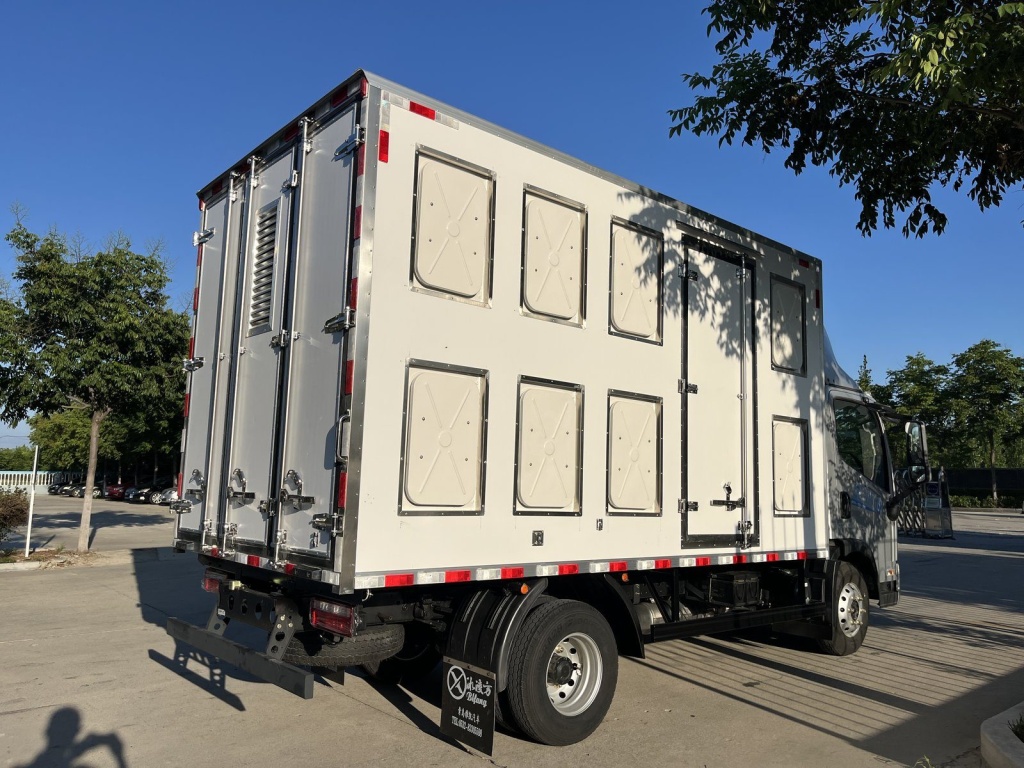
Day-Old Chick Delivery: A One-Page Driver Checklist
Day-Old Chick Delivery: A One-Page Driver Checklist
In short: A chick delivery checklist turns climate control into a few repeated actions: confirm the truck before departure, check the load at every natural stop, and complete a clean handover at the farm. The driver is the one person who can see the load between the hatchery and the farm, so the checklist is what converts training into consistent practice.


What Is a Chick Delivery Driver Checklist?
A chick delivery driver checklist is a short, standard list of checks the driver performs before departure, during the trip and at handover, in a fixed order. Its purpose is to make the important things automatic. Airflow settings, door closures, load security and the condition of the birds are easy to miss under time pressure, and they are exactly the items that fail quietly. A good checklist fits on one page, uses the same order every time, and ends with a record that can be reviewed later.
Key Facts at a Glance
- Constant-temperature chick trucks are controlled to 22–26 °C with CO₂ held at no more than 3,000 ppm, targeting 2,800 ppm — these are the numbers the driver works to.
- Temperature and CO₂ monitoring are available as options, letting the driver see conditions inside the box rather than inferring them from the cab.
- Ventilated chick trucks depend on front intakes, ventilation windows, roof exhaust openings and fans, and on the rear louvred door for through-flow, so settings must be checked before every run.
- Body lengths run from 4.2 m to 9.6 m, carrying 232 to 672 standard chick boxes, so inspection points along the load scale with the truck.
- A 9.6 m constant-temperature truck carries 624 boxes as 24 trolleys at 26 boxes each, and the hydraulic tail lift used for unloading is part of the pre-trip check.
Ventilated Truck Checks vs Constant-Temperature Truck Checks
- Primary reading — On a ventilated truck, the driver confirms openings and fan operation; on a constant-temperature truck, the driver reads temperature and CO₂ against the target band.
- Pre-departure focus — Ventilated trucks need dampers, windows and the rear door set correctly; constant-temperature trucks need the systems started and the setpoints confirmed.
- In-transit focus — Ventilated drivers watch for change in ambient conditions and adjust openings; constant-temperature drivers watch the trend of the readings and the system status.
- Failure response — Ventilated trucks lose airflow if the generator or fan supply fails; constant-temperature trucks fall back to the chassis generator for the fans plus roughly two hours of battery supply.
Step-by-Step: The Driver Checklist
1) Before departure — confirm the truck. Check that ventilation windows and dampers are set for the load and weather, fan guards are clear of fluff, doors close properly, and the load is secured so it cannot shift onto an air path. On a constant-temperature truck, confirm the systems run and setpoints are correct before loading.
2) Before departure — confirm the load. Count and confirm the boxes or trolleys against the delivery documents and check the loading pattern still leaves the airflow lanes open. Confirm the tail lift operates and that trolley stops are engaged.
3) At the first stop — read conditions inside the box. Check the temperature and CO₂ display if fitted, look along the load for shifted boxes blocking vents, and confirm settings still match conditions. Make the first check early — problems found in the first hour are still easy to fix.
4) At every natural stop — repeat in under two minutes. Fuel, rest breaks and checkpoints follow the same short routine: readings, airflow, load security, door seals. Park in shade where possible and keep ventilation running.
5) Approaching the farm — prepare the handover. Confirm the delivery point, unloading sequence, tail lift position and who receives the load. Delivery is a biosecurity moment: follow the farm's entry rules and do not carry equipment between farms without cleaning it.
6) At handover — document and close out. Record arrival time, readings during the journey, any adjustments made, and the condition of the load on arrival. Report anything unusual — a blocked vent, a system alarm, a shifted box — even if the outcome was fine. Records let you spot a pattern before it becomes a problem.
FAQ
Q: How long should the checklist take?
A: The pre-departure checks take a few minutes and happen once. In-transit checks should take under two minutes each and be combined with stops the driver is making anyway. A checklist that adds significant time will be skipped, so brevity is a requirement, not a compromise.
Q: What if the temperature is rising but the display still shows acceptable numbers?
A: Act on the trend. If temperature or CO₂ is climbing steadily, air exchange is not keeping up with the load and the reading will cross the limit later. Check for blocked vents or a shifted load, confirm fan operation, adjust openings, and if the rise continues, contact base before it becomes urgent.
Q: Do ventilated truck drivers need a different checklist?
A: The structure is the same, but the emphasis differs. Ventilated truck drivers focus on the physical airflow setup — front intakes, side and roof windows, fans and the rear louvred door — because there is no active cooling to correct a poor setting.
Q: How do I know the load is still safe when I cannot open the box in transit?
A: Use the monitoring options and the airflow cues you can observe without breaking the load: system status, fan operation, seals and what is visible from the door. If monitoring is not fitted, the inspection stops matter more, not less.
Q: Should the checklist be the same across all trucks in a fleet?
A: It should follow the same sequence and checkpoints, with truck-specific lines added for the ventilation or climate systems fitted. Consistency is what makes the routine reliable when drivers rotate between vehicles.
Conclusion
A chick delivery checklist is short, repeatable and specific. Confirm the truck and load before departure, read conditions inside the box at every natural stop, act on trends rather than thresholds, and close out with a written record at handover. Drivers on ventilated trucks manage openings and fans; drivers on constant-temperature trucks manage setpoints and system status. Binglingfang has built specialized vehicles since 1991 — our team can help fleets set up checklists for the configuration they operate.
Biosecurity for Chick Transport Trucks: Cleaning and Disinfection Between Runs
Sep 12, 2026
Bulk Feed Truck Inspection and Preventive Maintenance Schedule
Sep 12, 2026
Related Articles
Author

Cybercoldchain
Content Writer
Recent Posts
-
Hydration and Ventilation Balance in Day-Old Chick Transport
Sep 14
-
Can Refrigerated Body Panels Be Repaired? FRP Sandwich and Polyurethane Compared
Sep 14
-
Bulk Feed Truck Inspection and Preventive Maintenance Schedule
Sep 12
-
Day-Old Chick Delivery: A One-Page Driver Checklist
Sep 12
-
Biosecurity for Chick Transport Trucks: Cleaning and Disinfection Between Runs
Sep 12