
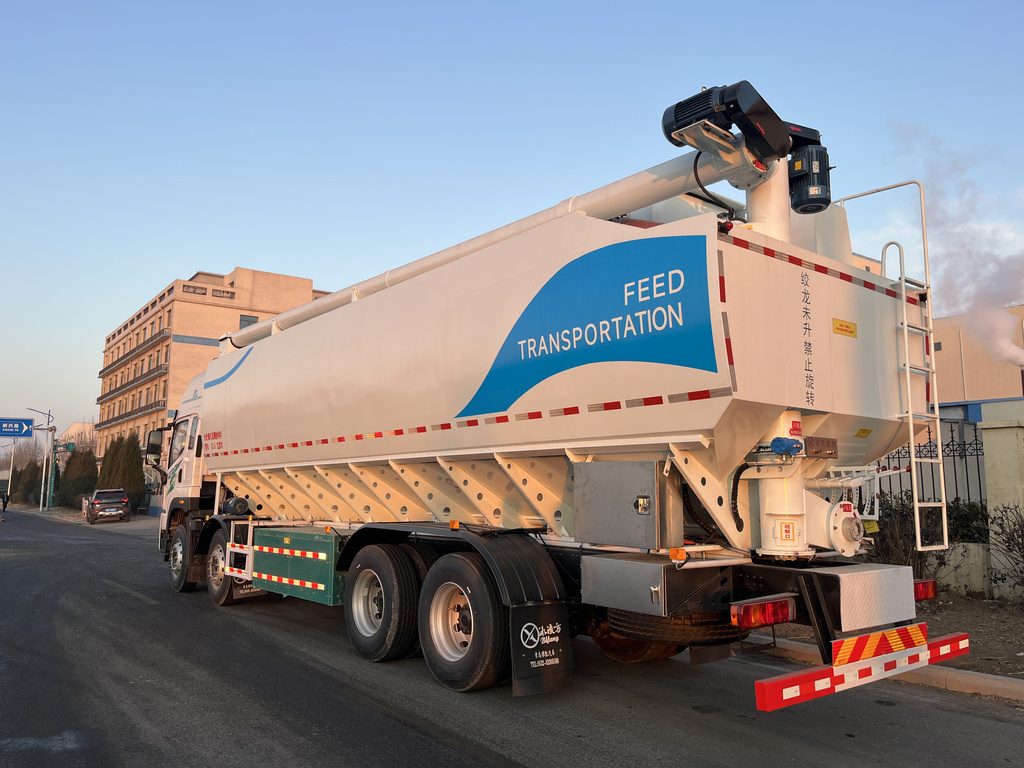
Preventing Bridging and Blockages in Bulk Feed Hoppers
Preventing Bridging and Blockages in Bulk Feed Hoppers
In short: Bridging is a stable arch of feed that forms across a hopper outlet and stops flow, while a blockage is material packed tight in a chute, auger or delivery line. Both usually trace back to four causes: damp or sticky feed, too many fines, hopper geometry that is too shallow, and compaction from vibration during travel. Prevention is mostly about dry feed, correct hopper angles and a consistent unloading routine.


What Is Bridging in a Bulk Feed Hopper?
Bridging is a condition where feed particles interlock or bond across an opening — typically the hopper outlet or a chute throat — forming a self-supporting arch that holds the rest of the load in place. Feed stops moving even though plenty of material remains above. A blockage is different in kind: material has packed into a chute, auger flighting or a pneumatic line and cannot move at all.
Both are flow problems, and both are mostly preventable. The physics is straightforward. Feed flows when the force of gravity on the mass above the outlet is greater than the friction and inter-particle bonding at the outlet. Anything that raises friction or bonding — moisture, fines, pressure, time sitting still — pushes the system toward a bridge. Anything that reduces it — dry feed, steep hopper walls, smooth liners, steady movement — keeps feed flowing.
Key Facts at a Glance
- Moisture — damp feed sticks to walls and to itself; even modest moisture raises cohesion sharply, so covered loading and sealed hatches matter.
- Fines and dust — screenings and crushed pellets pack tightly and bridge more readily than uniform, well-formed pellets.
- Outlet size — a larger outlet relative to particle size clears far more reliably; narrow throats are the first place a bridge forms.
- Hopper slope — steep, smooth hopper walls promote mass flow; shallow slopes encourage rat-holing, where feed drains down a central channel and leaves material on the sides.
- Compaction in transit — road vibration settles the load and increases pressure at the outlet, which is why a load that flowed at the mill can stall at the farm.
- Time and temperature — feed left standing in a warm, humid body firms up; long dwell times between loading and delivery raise the risk.
Rat-Holing vs Bridging
- What happens — In rat-holing, a narrow channel empties down the centre while material clings to the hopper walls; in bridging, an arch forms across the outlet and nothing moves at all.
- Where it shows up — Rat-holing shows up as slow flow and heavy residue on the slopes; bridging shows up as a sudden stop with feed still visible above the outlet.
- Usual cause — Rat-holing points to shallow slopes or sticky, damp feed; bridging points to fines, a narrow outlet or compaction during travel.
- Recovery approach — Rat-holing is usually handled by promoting mass flow — steeper walls, smoother liners, steady discharge; bridging is cleared by breaking the arch from outside the hopper.
- Risk during clearing — A rat-hole can collapse suddenly and bury anyone standing at the outlet; a bridge can give way without warning when prodded. Both demand the same discipline: never stand inside or under a hopper.
- Prevention priority — Rat-holing is prevented through hopper geometry and dry feed; bridging is prevented through outlet sizing, controlling fines and avoiding unnecessary compaction.
Step-by-Step: How to Prevent and Clear Feed Flow Problems
1. Start with dry feed. Confirm moisture at intake, keep hatches closed during transport, and avoid loading feed that has been stored in damp conditions.
2. Control fines at loading. Screen out excessive dust and broken pellets where possible, and avoid filling the body from a height that shatters pellets on impact.
3. Load evenly. Distribute feed across the body rather than dumping it in one spot, which reduces local compaction and pressure at the outlet.
4. Unload steadily and completely. Run a consistent discharge flow and empty each compartment before switching, so feed does not sit packed against the walls.
5. Use the correct clearing method. If flow stops, first reduce pressure at the outlet, then work from outside using the approved access points and flow aids; never enter the hopper or reach into an outlet.
6. Record every event. Note feed type, moisture, time since loading and the stop point, because patterns reveal whether the cause is the product or the body.
FAQ
Q: What causes feed to bridge in a hopper?
A: The usual causes are damp feed, a high proportion of fines, an outlet that is narrow relative to particle size, and compaction from vibration during travel. Aged feed that has been warm and still for hours is the most common trigger.
Q: Is hitting the hopper wall a safe way to clear a blockage?
A: Manual impact on the shell is common practice, but it should be done with the correct tool from outside and only where the structure is designed to take it. Never enter a hopper or reach into an outlet, and never position anyone below the outlet while clearing.
Q: How do I stop feed from sticking to the hopper walls?
A: Keep the feed dry, keep interior surfaces smooth and undamaged, and empty the body completely after each delivery. Where residue is a persistent issue, discuss liner options and hopper angles with the body builder.
Q: Does unloading faster make bridging worse?
A: Running the discharge system flat out can promote rat-holing because the outlet draws only from directly above. A steady, controlled rate tends to draw material more evenly from the whole hopper.
Q: Can body design reduce bridging?
A: Yes. Outlet size, hopper wall slope, interior finish and the position of flow aids are all design decisions. If a particular feed bridges regularly, geometry is the first thing to review with the manufacturer.
Conclusion
Bridging and blockages are rarely a mystery. Moisture, fines, outlet size and compaction explain most of them, and each has a practical countermeasure. Keep feed dry, load it evenly, unload it steadily and completely, and clear stoppages only with the tools and access points the body was designed with. Binglingfang builds bulk feed bodies whose hopper geometry and outlets can be tailored to the feed types you carry, so it is worth describing your product mix when you specify a body.
Bulk Feed Truck Body Materials: Steel, Aluminum and Stainless Compared
Sep 24, 2026
How Feed Moisture and Particle Size Affect Discharge Performance
Sep 26, 2026
Related Articles
Author

Cybercoldchain
Content Writer
Recent Posts
-
GMP+ and FAMI-QS: Is Transport the Weak Link in Feed Safety?
Oct 31
-
Driver Shortages vs Delivery Windows: What Gives First?
Oct 31
-
Telematics for Bulk Feed: Is Bin-Level Data Worth the Investment?
Oct 31
-
Can Reefers Keep Up With 45°C+ Markets—or Do Specifications Need a Rethink?
Oct 31
-
The Hidden Cost of a Late Chick Delivery—Who Should Bear It?
Oct 31