
Biosecurity for Chick Transport Trucks: Cleaning and Disinfection Between Runs
Biosecurity for Chick Transport Trucks: Cleaning and Disinfection Between Runs
In short: Biosecurity for a chick transport truck means a fixed routine between every run: empty the box, blow out chick fluff while it is dry, wash with detergent, apply an approved disinfectant, dry the interior completely, and record what was done. Day-old chicks are immunologically naive, so the truck is one of the few links in the chain you can control directly — and it must be clean before the next load, every time.


What Is Chick Transport Biosecurity?
Chick transport biosecurity is the set of cleaning, disinfection and traffic-control practices that stop a truck from carrying pathogens, fluff, dust and organic debris from one hatchery or farm to the next. The interior of a chick truck collects an unusual mix: down and fluff from thousands of birds, feed dust, droppings, and moisture from respiration. Organic matter is the critical problem, because disinfectants lose much of their effect on dirty surfaces. The order of operations therefore matters as much as the chemicals you choose.
Key Facts at a Glance
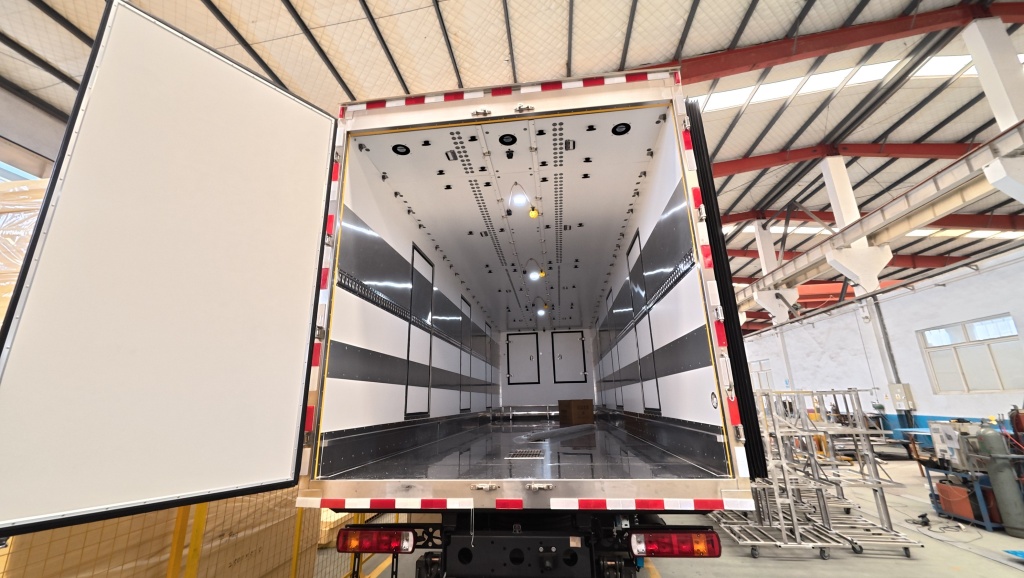
- Chick trucks are built with smooth FRP interior surfaces and stainless steel shelving, which are chosen partly because they can be washed and disinfected repeatedly.
- Constant-temperature chick trucks include a bag-type pre-filter system designed to capture chick fluff from the circulating air.
- Ventilated chick trucks rely on fans plus ventilation windows and side doors, so every vent, window and fan guard is a surface that must be cleaned, not just the floor.
- Load-side fittings such as shelves, trolleys and T-shaped floor channels trap fluff and debris and need to be addressed before washing begins.
- A 9.6 m constant-temperature truck carries 24 trolleys at 26 boxes each, so trolleys and their running surfaces are part of the cleaning scope, not separate equipment.
Dry Cleaning First vs Wet Cleaning First
- Sequence — Dry removal of fluff and debris happens first; wet washing happens second. Reversing the order turns dry fluff into a paste that spreads into every joint.
- Tools — Dry cleaning uses brushes, scrapers and an air blower; wet cleaning uses low-pressure water, detergent and a foam or sprayer.
- Effect on filters — A bag-type pre-filter is cleaned or replaced during the dry stage; washing a loaded filter only drives contamination deeper into the media.
- Effect on electronics — Sensors and control panels are protected before wet cleaning starts, not after water has already reached them.
- Water volume — Dry cleaning first means less water is needed overall, which shortens the drying stage that follows.
Step-by-Step: How to Clean and Disinfect a Chick Truck
1) Empty and inspect. Remove all boxes, trolleys and loose equipment. Walk the box with a light and note where fluff has collected — corners, shelf ends, floor channels, fan guards and vent frames are the usual spots. 2) Blow down and brush out while dry. Use an air blower and brushes to push fluff and debris toward the rear door, working from the roof down so nothing falls onto already-cleaned surfaces. Clean or replace the bag-type pre-filter at this stage, and check the ventilation windows, fan blades and guards for packed fluff.
3) Wash with detergent and water. Apply detergent and wash all interior surfaces — walls, ceiling, floor, shelves, doors and channels — with attention to joints and fasteners. A T-shaped floor channel needs to be flushed through, not just wiped, because debris settles in the groove.
4) Rinse, then apply disinfectant. Rinse away detergent residue, then apply an approved poultry disinfectant at the label rate and let it sit for the full contact time stated on the product. Contact time is where disinfection happens; spraying and immediately rinsing wastes the product and the effort.
5) Dry the box completely. Leave doors, side doors and ventilation windows open in a controlled area and let the interior dry fully. Damp interiors are a growth environment, and moisture left in insulation-adjacent joints is worse than visible surface water.
6) Record and reset. Log the date, the truck, the products used, the contact time and who did the work, then reset the truck: vents, fans and any temperature or CO₂ sensor set back to standard before the next load. A written record is what turns a routine into a verifiable biosecurity programme.
FAQ
Q: Why does dry cleaning come before washing?
A: Because disinfectants work poorly on organic matter. Chick fluff, dust and droppings shield bacteria from contact with the chemical. Removing the dry material first exposes the surface, which is what allows the disinfectant to do its job. Washing first simply moves the contamination around and embeds it in joints.
Q: How do I clean the fluff out of the ventilation system?
A: Start with the bag-type pre-filter: clean or replace it before any wet work. Then clear fan blades and guards with a soft brush, and check ventilation windows, side doors and the rear door louvres for packed material. The front intake and roof exhaust paths should both be clear of obstruction after cleaning.
Q: Can I use a pressure washer inside the box?
A: High pressure can force water into insulation joints, sensor housings and electrical connections, which creates problems that outlast the cleaning benefit. Low pressure with detergent, plus mechanical brushing, is the safer combination for a chick truck interior.
Q: Do I need the same routine after every run?
A: Between loads from different sources, yes — full cleaning and disinfection is the standard. After a partial or local run, a documented assessment decides the level of cleaning needed. The important point is that the decision is written down, not left to memory.
Q: What about the driver and the cab?
A: Biosecurity does not stop at the cargo box. Cab floors, pedals and door handles should be cleaned on the same schedule, and drivers should follow the same footwear discipline as hatchery staff.
Conclusion
Chick truck biosecurity is a sequence, not a chemical. Empty the box, blow out the fluff while it is dry, wash with detergent, disinfect with the correct contact time, dry fully, and write it down. Clean vents, filters and floor channels every time, because those are where contamination accumulates and where airflow is most easily blocked. Binglingfang builds chick trucks with washable FRP interiors, stainless steel shelving and a bag-type pre-filter system on constant-temperature models — details worth specifying if biosecurity is central to how you operate.
Specifying a Refrigerated Truck for Multi-Stop Urban Delivery
Sep 10, 2026
Day-Old Chick Delivery: A One-Page Driver Checklist
Sep 12, 2026
Related Articles
Author

Cybercoldchain
Content Writer
Recent Posts
-
Hydration and Ventilation Balance in Day-Old Chick Transport
Sep 14
-
Can Refrigerated Body Panels Be Repaired? FRP Sandwich and Polyurethane Compared
Sep 14
-
Bulk Feed Truck Inspection and Preventive Maintenance Schedule
Sep 12
-
Day-Old Chick Delivery: A One-Page Driver Checklist
Sep 12
-
Biosecurity for Chick Transport Trucks: Cleaning and Disinfection Between Runs
Sep 12