
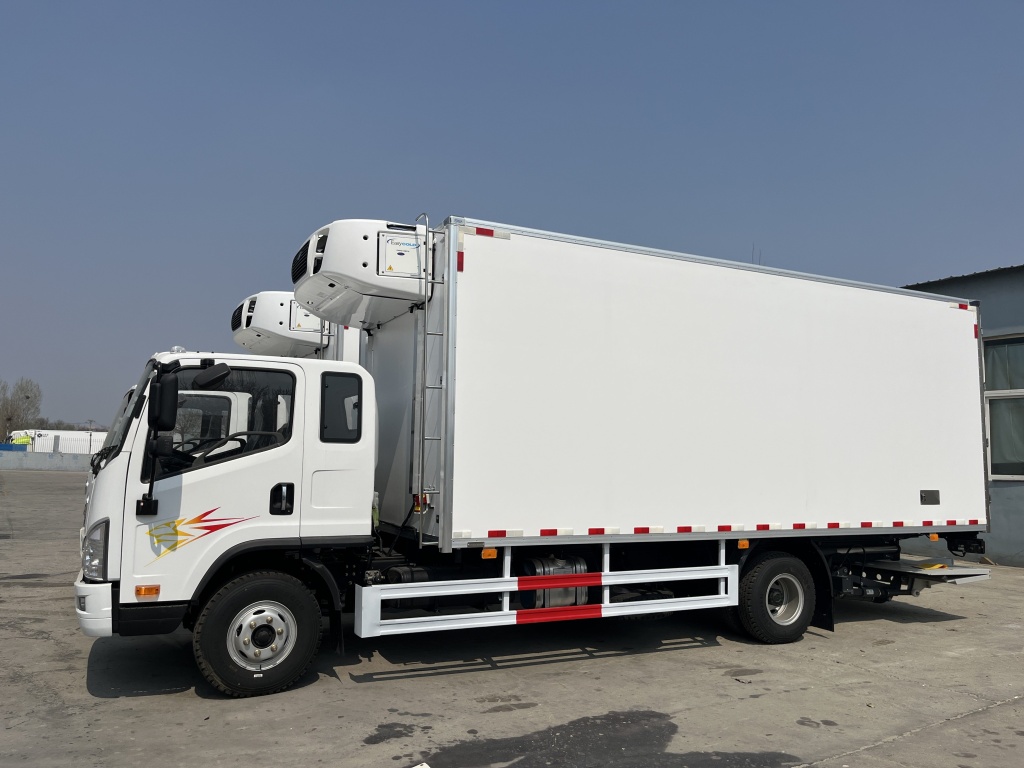
Specifying a Refrigerated Truck for Multi-Stop Urban Delivery
Specifying a Refrigerated Truck for Multi-Stop Urban Delivery
In short: Multi-stop urban delivery punishes a refrigerated body in a specific way: the doors open many times, the vehicle sits in traffic, and the load shrinks as the round progresses. Specify for that pattern — the right box size, side access where the route needs it, a cooling unit sized for frequent door openings, and a driver routine that keeps openings short.
What Is a Multi-Stop Refrigerated Delivery Vehicle?
A multi-stop refrigerated delivery vehicle is a refrigerated truck or van configured to carry chilled or frozen goods to many addresses in one working round, rather than moving one full load between two fixed points. The defining features are frequent door openings, partial unloads throughout the day, and routes that mix slow traffic with short stops.
That operating pattern changes the specification. A body optimised for one dock-to-dock run can be efficient and simple; a multi-stop body has to tolerate repeated access, keep temperature stable with a shrinking partial load, and let one driver work quickly without handling the whole load to reach one carton.


Key Facts at a Glance
- Chilled urban delivery is normally run at 0 to 4 degrees Celsius, with frozen product held near minus 18 degrees Celsius using separate compartments or a dedicated frozen vehicle.
- Door openings are a major heat load. The more stops per round, the more warm air enters, so capacity should reflect the route rather than a single-drop duty cycle.
- Side doors reduce the open time per stop because the driver reaches only the section needed instead of holding the full rear doorway open.
- Box size should match the round. A body that is too large wastes energy cooling empty air in the afternoon; too small and the round cannot be completed in one trip.
- Light weight helps on urban routes because the vehicle stops and accelerates constantly. A 4.2 m refrigerated body can be built at roughly 670 kg.
- Insulated bodies for urban work use the same mature constructions as the rest of the range: FRP sandwich panels and polyurethane integral foam.
A vs B: Side-Door Access vs Rear-Only Access
- Stops per round — Side access suits rounds with many small drops; rear-only access suits fewer, larger drops where most of the load leaves at once.
- Open time per stop — A side door opens a small aperture briefly; a rear doorway exposes the full load space and stays open longer while the driver searches.
- Load security — Side access can be combined with internal dividers or curtains to keep remaining product segregated; rear-only loading leaves the whole load exposed at each stop.
- Body structure — Side access needs framing around the opening in the side wall, adding a little weight; rear-only keeps side panels continuous and slightly simpler.
- Route fit — Kerbside, high-street and residential delivery favour side access; warehouse-to-outlet routes with loading bays favour the rear doorway.
Step-by-Step: How to Specify for Multi-Stop Work
1) Count the stops and the drops per stop. This single number drives door layout, box size and cooling capacity more than any other input.
2) Choose the box size from the round, not the vehicle. Estimate the volume and weight you actually deliver in a day, then leave a modest margin rather than a large one.
3) Decide the door layout from the delivery environment. Side doors for kerbside and residential work, rear doors for loading-bay rounds, and both where the route mixes the two.
4) Size the cooling unit for frequent openings. Tell the supplier how often the doors open and how long they stay open, and size to that duty rather than to a single-drop cycle.
5) Plan load order into the body layout. Heavy and later-stop items go low and deep, early stops near the door, so the driver is not rearranging the load at every address.
6) Set a simple driver routine. Doors closed between stops, unit running as recommended, temperature checked at the start and end of the round, and any excursion reported the same day.
FAQ
Q: How big should an urban refrigerated body be?
A: Sized to your daily round, not to the largest chassis available. A 4.2 m body is a common urban size because it balances volume against manoeuvrability and weight. Oversizing means cooling air you are not selling.
Q: Do I need side doors on a multi-stop vehicle?
A: Not always, but they help when the round has many small drops. If most of the load leaves at two or three stops, a well-organised rear-loaded body is simpler and lighter. Match the door layout to how the round actually unloads.
Q: Can one vehicle handle chilled and frozen deliveries?
A: Yes, with an insulated partition and separate zone control. The trade-off is weight, complexity and reduced volume in each zone. If frozen volume is small, some operators keep a frozen compartment and treat the rest as chilled.
Q: Why does temperature drift during a multi-stop round?
A: Each door opening lets warm air in, and as the load shrinks there is more air to re-cool. That is normal, but the unit should recover between stops. Persistent drift usually points to undersized capacity, worn gaskets or long open-door time.
Q: How can a driver reduce energy use without compromising the load?
A: Keep openings short, group the load so items are reachable, close doors promptly between stops, and avoid running the unit at a lower set point than the product requires. On urban routes these habits make a visible difference to the day's energy use.
Conclusion
Multi-stop urban delivery is a door-opening problem wrapped in a traffic problem. Specify the box size from the round, choose the door layout from the delivery environment, and size cooling capacity for the number of times the doors will open. FRP sandwich and polyurethane integral foam bodies both support that specification, and a light body helps in stop-start city work. Start with a stop count and a daily volume figure, and the rest of the specification usually falls into place.
Chick Transport Truck Total Cost of Ownership: What to Budget
Sep 10, 2026
Biosecurity for Chick Transport Trucks: Cleaning and Disinfection Between Runs
Sep 12, 2026
Related Articles
Author

Cybercoldchain
Content Writer
Recent Posts
-
Hydration and Ventilation Balance in Day-Old Chick Transport
Sep 14
-
Can Refrigerated Body Panels Be Repaired? FRP Sandwich and Polyurethane Compared
Sep 14
-
Bulk Feed Truck Inspection and Preventive Maintenance Schedule
Sep 12
-
Day-Old Chick Delivery: A One-Page Driver Checklist
Sep 12
-
Biosecurity for Chick Transport Trucks: Cleaning and Disinfection Between Runs
Sep 12