
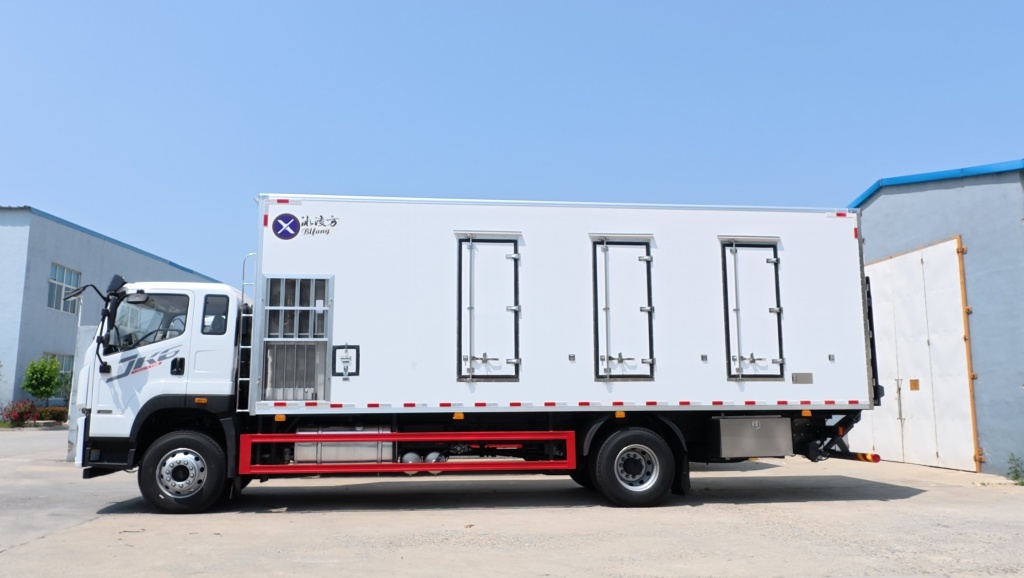
Chick Transport Truck Maintenance Guide – Checklist for Long Service Life
Keep your chick transport truck in top condition with this practical maintenance guide.
**Body — Watch for Moisture Ingress**
Chick trucks get washed and disinfected frequently. If water finds its way through gaps in the body panels, it can damage the insulation over time. After each wash, check the interior walls for water stains. Address any signs immediately — don't wait until the insulation is compromised.
**Vents and Dampers**
Manual dampers on the air inlets can become stiff or fail to close fully over time. Check all dampers regularly — a damper that won't close properly lets air in when it shouldn't, messing up temperature control. Clean dust and chick down off exhaust fan blades. Built-up debris throws off fan balance, increases noise, and shortens fan life.
**Cooling Unit and Heater**
For climate-controlled models, inspect the cooling unit and heater every quarter. Check refrigerant pressure, combustion chamber for carbon buildup, and all lines for leaks. Pay special attention to the auxiliary engine that drives the cooling unit. It needs the same regular maintenance as the main engine — oil, air filter, fuel filter changes on schedule.
**Door Seals**
Door seals on chick trucks wear faster than on regular trucks — frequent opening, washing, and UV exposure all accelerate aging. Test: close the door on a piece of paper. If it slides out easily, the seal needs replacing. Door seals are inexpensive; the losses from a poor seal are not.
**Stainless Steel Shelving**
The shelving is stainless steel — corrosion-resistant and easy to clean. During each wash, check that all welds are sound and mounting bolts are tight. If using strong chemical disinfectants, rinse with clean water and wipe dry.
**Sensors**
Climate-controlled trucks rely on sensor data to regulate temperature and ventilation. A drifting sensor means inaccurate control. Calibrate temperature and CO₂ sensors every six months. Your manufacturer's service team can handle this.
**Washing and Disinfection**
Some chemical disinfectants can damage body materials. Check compatibility before use. After disinfection, keep the doors open and let the cabin dry thoroughly before closing up.
**Maintenance Records**
Keep a logbook for each truck. Record what was done, when, and what parts were used. A well-documented service history not only helps with planning but also adds resale value.
Hatchery Fleet Buying Guide – How to Choose Chick Transport Trucks in Bulk
Jun 19, 2026
Understanding Temperature Control Systems in Refrigerated Trucks
Jun 22, 2026
Related Articles
Author

Cybercoldchain
Content Writer
Recent Posts
-
Hydration and Ventilation Balance in Day-Old Chick Transport
Sep 14
-
Can Refrigerated Body Panels Be Repaired? FRP Sandwich and Polyurethane Compared
Sep 14
-
Bulk Feed Truck Inspection and Preventive Maintenance Schedule
Sep 12
-
Day-Old Chick Delivery: A One-Page Driver Checklist
Sep 12
-
Biosecurity for Chick Transport Trucks: Cleaning and Disinfection Between Runs
Sep 12