
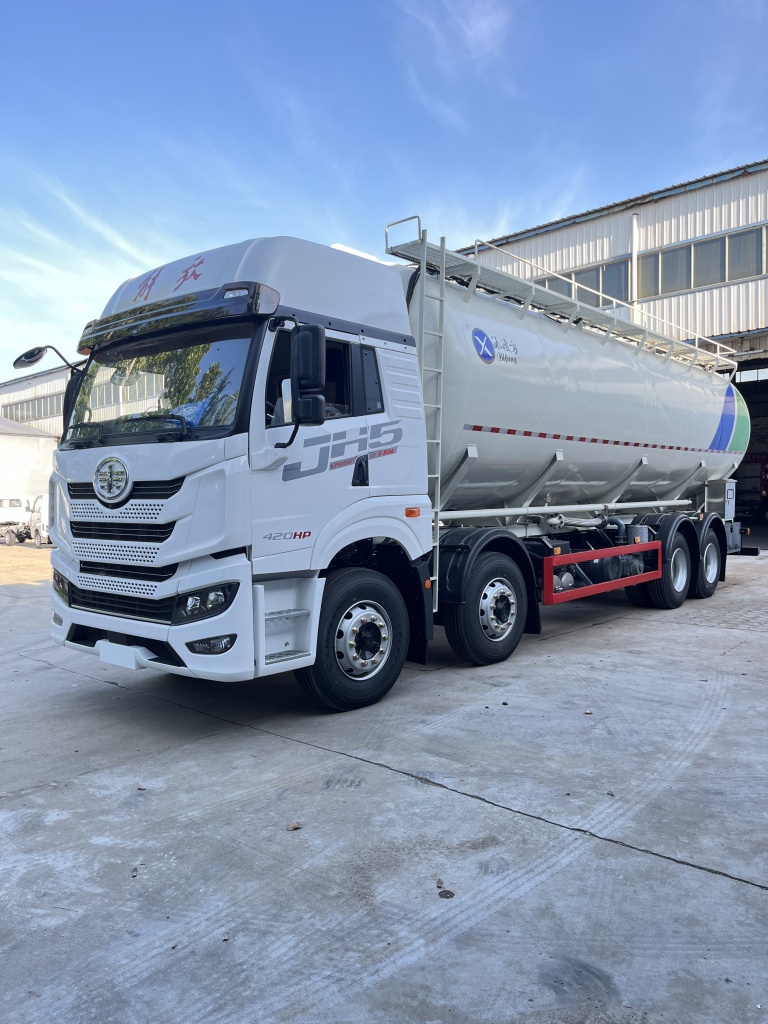
Cleaning Between Feed Types: Cross-Contamination Control in Bulk Trucks
In short: Cross-contamination happens when residue from one feed type ends up in the next load, and in a bulk feed truck the usual carriers are hopper corners, divider edges, outlet throats, auger tubes and delivery hoses. Control comes from a fixed clean-down sequence — empty, purge, sweep, wash where allowed, dry — plus a documented rule for medicated feed that keeps it in a dedicated compartment or a dedicated run.


What Is Feed Cross-Contamination?
Feed cross-contamination is the unintended transfer of feed, additives or medication from one batch or formula into another. In bulk delivery it can occur in several places: through residual material left in the body after unloading, through shared discharge lines and hoses, through dust carried on interior surfaces, and through loading equipment that is not cleaned between fills.
Contamination matters for product quality, animal performance and regulatory compliance, and medicated feed raises the stakes because withdrawal periods and species restrictions depend on the feed being what the label says it is. Good practice treats the truck body as part of the feed manufacturing chain rather than as transport equipment, which means it gets the same discipline applied to mixing lines at the mill: defined cleaning steps, defined sequences, and a written record of what was done.
Key Facts at a Glance
- Residue hot spots — hopper corners, the top and bottom edges of dividers, outlet throats, auger flighting and the inside of delivery hoses hold the most residue.
- Dry cleaning first — most carryover is removed by running the discharge system empty, opening clean-out points, and brushing or scraping interior surfaces before any wet cleaning.
- Water needs care — wet washing is effective but leaves moisture behind, and damp feed residue is exactly what promotes mould and sticking, so drying matters as much as washing.
- Sequencing rule — the standard approach is to deliver medicated feed last on a load, or to use a dedicated compartment and discharge path for it.
- Dust as a carrier — fine dust settles on ledges and in the body after emptying; it can carry additives even when the visible bulk product is gone.
- Records — a simple log of load, clean-down and next product is the evidence that a contamination control plan was followed.
Dry Clean vs Wet Wash
- Time — Dry cleaning is fast and can be done at the farm gate or yard; wet washing takes longer because surfaces must be washed, rinsed and dried.
- Effectiveness on bulk residue — Dry cleaning removes the bulk of loose feed quickly; wet washing reaches fine material packed into corners and texture on the walls.
- Effectiveness on additives and dust — Wet washing handles dust and soluble additives better; dry cleaning can leave fine dust behind on ledges and seams.
- Effect on the body — Dry cleaning is gentle on coatings and seals; repeated wet washing can stress coatings, joints and electrical components unless the body is built for it.
- Moisture risk — Dry cleaning leaves no moisture but can leave residue; wet washing risks damp corners if drying is rushed.
- Typical use — Dry cleaning fits routine switches between similar plain feeds; wet washing fits medicated feed, species changes and any residue-sensitive transition.
Step-by-Step: How to Clean a Bulk Feed Truck Between Loads
1. Empty the system completely. Run the discharge until flow stops, then run it again briefly to clear the lines, and empty each compartment in turn.
2. Remove loose material by hand. Open clean-out hatches and sweep, scrape or vacuum hopper corners, divider edges, outlet throats and auger tubes.
3. Purge the delivery line. Clear the hose or pipe of residual feed, then check the inside of the hose, which is a common blind spot.
4. Wash where the body and the feed allow. If wet cleaning is permitted, wash interior surfaces with suitable products, rinse, and pay attention to joints and seams rather than only flat panels.
5. Dry fully before loading. Leave hatches open in a well-ventilated position until surfaces are dry, since damp interiors cause both mould and bridging.
6. Record and confirm. Log the previous product, the clean-down method and the next product, and confirm the loading plan keeps medicated or restricted feed in the correct compartment.
FAQ
Q: Is dry cleaning enough between feed types?
A: It is usually enough between similar plain feeds, provided the system is emptied properly and residue is physically removed. For medicated feed, species changes or additive-sensitive products, a wet wash plus verified drying is the safer standard.
Q: How do I handle medicated feed in a bulk truck?
A: Give it a dedicated compartment and, where possible, a dedicated discharge path. Deliver it last, clean thoroughly afterwards, and keep a written record. Check your local feed regulations, which set specific requirements for medicated feed handling and sequencing.
Q: Where does residual feed collect most often?
A: Divider edges, hopper corners, outlet throats, auger flighting and the inside of delivery hoses. Hoses are often missed because they are not part of the body shell.
Q: Does washing a feed body cause problems?
A: It can if the body is not built for frequent wet cleaning, or if it is not dried properly afterwards. Water in seams and corners promotes corrosion, and damp interiors make feed stick on the next load.
Q: How do I prove my contamination control works?
A: Keep a simple record for each load: last product, cleaning method performed, next product, and who carried it out. Where regulations apply, retain the records for the required period and make them available on request.
Conclusion
Cross-contamination control in a bulk feed truck is mostly discipline. Empty the system fully, physically remove residue from the places feed hides, decide when dry cleaning is enough and when a wash is required, and dry the body before it is reloaded. Treat medicated feed as a special case with its own compartment and its own clean-down. Binglingfang builds bulk feed bodies with clean-out access and compartment arrangements that make this routine practical, and it is worth specifying your feed types and cleaning requirements at the design stage.
How to Match a Cooling Unit to Your Refrigerated Truck Body
Sep 29, 2026
Is the Cold Chain Really Broken at the Loading Dock?
Oct 24, 2026
Related Articles

Author

Cybercoldchain
Content Writer
Recent Posts
-
GMP+ and FAMI-QS: Is Transport the Weak Link in Feed Safety?
Oct 31
-
Driver Shortages vs Delivery Windows: What Gives First?
Oct 31
-
Telematics for Bulk Feed: Is Bin-Level Data Worth the Investment?
Oct 31
-
Can Reefers Keep Up With 45°C+ Markets—or Do Specifications Need a Rethink?
Oct 31
-
The Hidden Cost of a Late Chick Delivery—Who Should Bear It?
Oct 31