
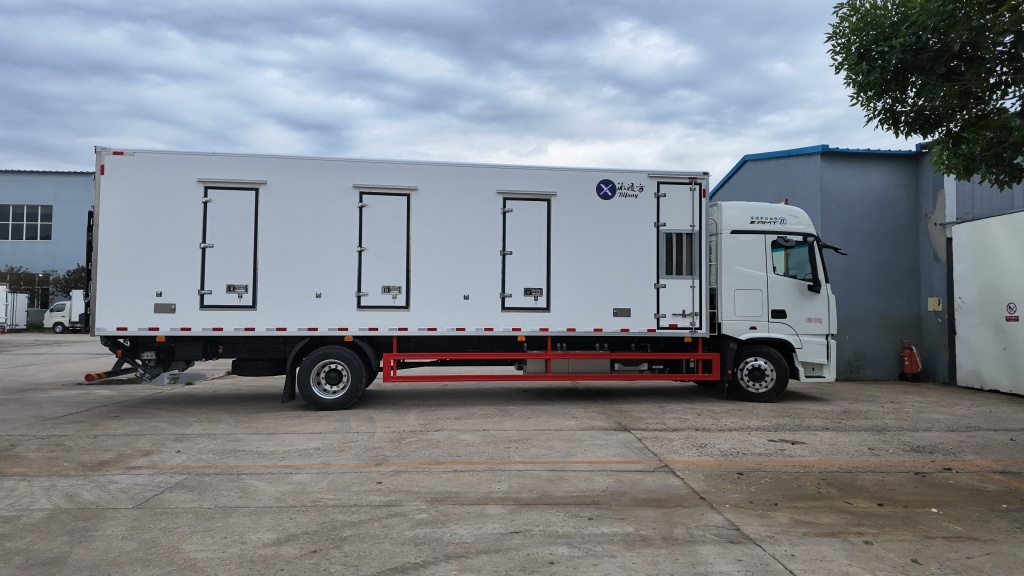
Chick Transport Truck Total Cost of Ownership: What to Budget
Chick Transport Truck Total Cost of Ownership: What to Budget
In short: Total cost of ownership for a chick transport truck is the purchase price plus everything you spend to keep it delivering: fuel and energy, scheduled maintenance, consumables, downtime cost and the resale value at the end. The configuration you choose — ventilated or constant-temperature, body length, option list — moves every one of those lines, so the cheapest purchase is rarely the lowest-cost truck over its working life.
What Is Chick Transport Truck Total Cost of Ownership?
Total cost of ownership, usually shortened to TCO, is the full cost of operating an asset over its service life, not just the price on the order form. For a chick truck that means the chassis and body, the ventilation or climate systems, energy consumption, maintenance and consumables, days when the truck is unavailable, and the value recovered when you sell it.
TCO matters more in chick transport than in much of haulage, because the load is perishable and time-critical. A truck that holds 22–26 °C reliably and delivers to a fixed window protects revenue. A cheaper truck that struggles in summer heat can cost more in rejected loads and damaged customer relationships than it saved at purchase.


Key Facts at a Glance
- A constant-temperature chick truck has eight systems, including an independent engine for refrigeration and fuel-fired heating, which add to energy consumption but reduce reliance on the driver's judgement.
- A ventilated chick truck runs on fans and ventilation windows and can carry an independent diesel generator with an optional 220 V supply, to keep air moving when the truck is stationary.
- Ventilated capacity by body length is 232 boxes at 4.2 m, 464 at 6.8 m, 536 at 7.8 m and 672 at 9.6 m with the standard 640 × 480 × 170 mm box.
- A constant-temperature truck is available in 6.8 m, 7.8 m and 9.6 m lengths, and a 9.6 m truck carries 624 boxes as 24 trolleys at 26 boxes each.
- Maintenance scope differs by type: constant-temperature trucks have an auxiliary engine and belt-driven systems, and a 9.6 m truck comes with two spare belts and one set of auxiliary engine filters.
Ventilated Truck vs Constant-Temperature Truck Cost Profile
- Purchase price — A ventilated truck carries fans, windows and optional heaters, so the purchase price is lower; a constant-temperature truck carries eight systems and costs more up front.
- Energy consumption — A ventilated truck's demand is mainly fans and any generator; a constant-temperature truck adds refrigeration and fuel-fired heating, so energy use is higher per trip.
- Maintenance scope — Ventilated maintenance centres on fans, dampers, windows and doors; constant-temperature trucks add auxiliary engine servicing, filters and belts.
- Downtime exposure — A ventilated truck failure usually means reduced airflow and a shortened route; a constant-temperature truck has a chassis generator backup for the fans plus roughly two hours of battery supply, but needs specialist repair when systems fail.
Step-by-Step: How to Budget a Chick Truck TCO
1) Start with the purchase configuration, written down. List the body length, the ventilation or climate system, and the options you need — hydraulic tail lift, monitoring, generator, heating or auxiliary AC. Every option changes both purchase price and running cost.
2) Estimate fuel and energy per trip, not per month. Work out consumption for a typical route using the systems your configuration requires. A constant-temperature truck draws on refrigeration and fuel-fired heating; a ventilated truck draws on fans and any generator. Per-trip figures let you compare routes and seasons.
3) Build the maintenance schedule from the truck's actual components. For a ventilated truck that means fans, dampers, windows, doors and seals. For a constant-temperature truck it adds the auxiliary engine, its filters and belts, the humidification pump and nozzles, filter media and sensors. Price the schedule, don't just list it.
4) Put a number on downtime. Take the annual cost of the truck and divide it by the working days it should run. That is your daily exposure when it is unavailable. For a single-truck operation, a service day can mean a missed delivery, so the true cost includes the fallback you used.
5) Estimate resale and compare on total, not sticker. Apply a realistic resale value, subtract it from total spend, and compare configurations on the net figure. Then check the result against your delivery commitments: if a configuration cannot hold 22–26 °C on your summer routes, the cheapest option is not the lowest-cost one.
FAQ
Q: What is usually the largest cost in a chick truck's life?
A: Fuel and energy, plus the purchase price, typically dominate — but the balance depends on your routes and configuration. Time-critical loads add a third factor: the cost of failed or delayed deliveries, which is why reliability belongs in the calculation.
Q: Is a ventilated truck always cheaper to run?
A: Its energy and maintenance profiles are simpler, because it uses fans, windows and optional heaters rather than refrigeration and fuel-fired heating. But if its capability does not match your routes, those savings are offset by limitations in hot or cold weather.
Q: How do I budget for a constant-temperature truck's maintenance?
A: Build the schedule from its components: the auxiliary engine and its filters, belts, the humidification pump and nozzles, filter media, sensors and door seals. A 9.6 m truck comes with two spare belts and one set of auxiliary engine filters.
Q: Should I count the generator as a cost or a benefit?
A: Both. It adds purchase cost, fuel consumption and a maintenance item, so it raises TCO. It also provides ventilation when the truck is stationary — the situation where loads are most at risk.
Q: Does body length affect total cost of ownership?
A: Yes, in both directions. Longer bodies carry more boxes, so cost per box falls. But a longer body may need a larger chassis with higher fuel consumption, and for constant-temperature trucks small bodies carry a disproportionate share of equipment.
Conclusion
Budget a chick truck on everything after the order form: energy, maintenance, consumables, downtime and resale, measured against the routes you actually run. Match the configuration to the job — ventilated for short and moderate routes, constant-temperature where distance and climate demand control to 22–26 °C — and compare options on cost per box delivered rather than sticker price. Binglingfang has built specialized vehicles since 1991; our team can help you work through the configuration choices that drive your total cost.
Meat Hook Refrigerated Truck Bodies: Design, Airflow and Loading
Sep 10, 2026
Specifying a Refrigerated Truck for Multi-Stop Urban Delivery
Sep 10, 2026
Related Articles

Author

Cybercoldchain
Content Writer
Recent Posts
-
Hydration and Ventilation Balance in Day-Old Chick Transport
Sep 14
-
Can Refrigerated Body Panels Be Repaired? FRP Sandwich and Polyurethane Compared
Sep 14
-
Bulk Feed Truck Inspection and Preventive Maintenance Schedule
Sep 12
-
Day-Old Chick Delivery: A One-Page Driver Checklist
Sep 12
-
Biosecurity for Chick Transport Trucks: Cleaning and Disinfection Between Runs
Sep 12