
Single Truck or Fleet? Logistics Planning for Growing Hatcheries
Single Truck or Fleet? Logistics Planning for Growing Hatcheries
In short: The move from one chick truck to a fleet is triggered by demand, not by ambition: you need a second truck when your delivery volume, route spread or delivery windows can no longer be met by a single vehicle without compromise. Plan around boxes per trip, trips per day and the route reachable within a working day — and carry enough capacity that one truck being serviced does not stop deliveries.


What Is Chick Transport Fleet Planning?
Chick transport fleet planning is the work of matching vehicle capacity to delivery requirements over time. A single truck usually starts as a good fit: one vehicle, one driver, routes that fit within a working day. Growth changes the picture in three ways. Volumes rise, so each trip carries more boxes or you need more trips. Delivery radius expands, so one truck cannot complete all drops in the working window. And reliability matters more, because with one truck, a breakdown is a complete delivery failure rather than a delay.
Fleet planning asks how many trucks, of what body length, with what backup arrangement. Answer it in that order — count first, size second, resilience third.
Key Facts at a Glance
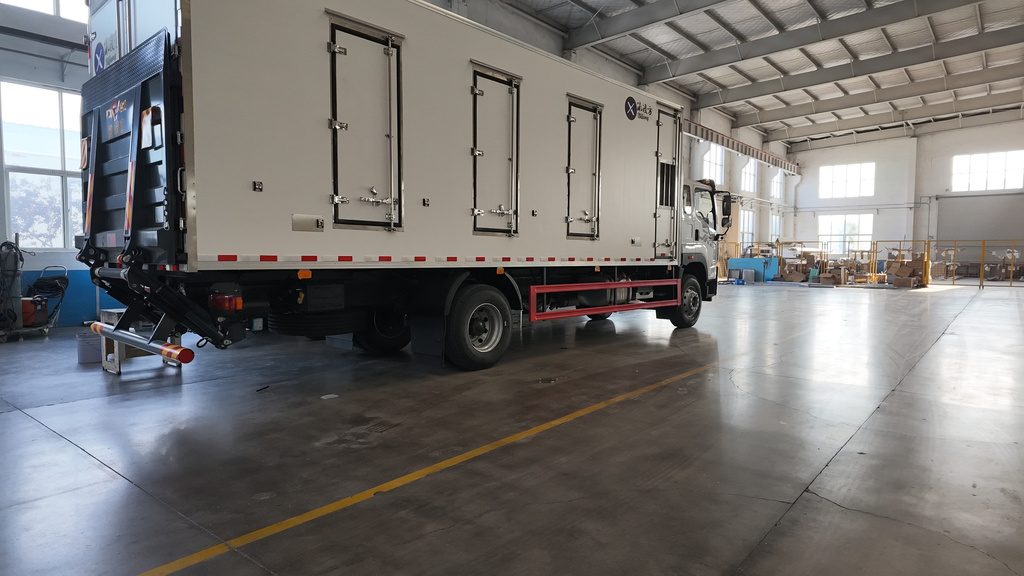
- Ventilated chick trucks are offered in 4.2 m, 6.8 m, 7.8 m and 9.6 m body lengths, carrying 232, 464, 536 and 672 standard 640 × 480 × 170 mm chick boxes.
- Constant-temperature chick trucks are offered in 6.8 m, 7.8 m and 9.6 m lengths, with 9.6 m carrying 624 boxes as 24 trolleys at 26 boxes each.
- Longer constant-temperature bodies are preferred in domestic operation, because the environmental equipment takes up a meaningful share of the smaller bodies and reduces value per box.
- A 9.6 m constant-temperature truck carries a hydraulic tail lift as standard and ships with two spare belts and one set of auxiliary engine filters.
- Constant-temperature trucks control 22–26 °C and CO₂ at no more than 3,000 ppm, which is what makes fixed delivery windows achievable at scale.
One Large Truck vs Two Smaller Trucks
- Capacity per driver — One 9.6 m truck carries 672 boxes in ventilated form on a single trip; two smaller trucks carry a similar total but need two drivers.
- Route flexibility — Two smaller trucks can serve two different delivery regions on the same day; one large truck serves one route well.
- Loading and unloading time — A large truck concentrates handling into one dock event; two trucks split it, which can shorten the time to first delivery.
- Backup cover — If one of two trucks fails, half the fleet still runs; if a single large truck fails, capacity drops to zero.
- Cost per box — Larger bodies typically spread purchase and operating cost over more boxes, while smaller bodies cost more per box carried.
- Where each fits — Large bodies suit concentrated high-volume routes; smaller bodies suit dispersed drops across a wide area.
Step-by-Step: How to Plan a Growing Chick Fleet
1) Calculate boxes per delivery day. Take your weekly hatchery output and divide it into the days you deliver. That baseline volume decides the minimum number of trips.
2) Match trips to body length. Divide the day's boxes by the capacity of the body you are considering. If the result is more than one trip per driver shift, you either need a larger body or a second vehicle.
3) Check the route against the working window. Map your delivery points and total drive time. If a full route cannot be completed within the driver's working hours, the answer is more vehicles rather than longer days.
4) Choose body length with value in mind. For constant-temperature trucks, going below 7.8 m means the environmental equipment takes a larger share of the box, reducing boxes per unit of cost. Where routes allow it, a longer body is usually the more efficient buy.
5) Plan for one truck being out of service. With two trucks, a vehicle under maintenance leaves you half capacity — often enough to cover with longer hours on the remaining route. With one truck, budget for a rental or contracted haulier in advance.
6) Standardise the fleet where you can. Common body length, common ventilation or environmental system and common loading method let drivers rotate between vehicles and make maintenance predictable. Keep a defined spare parts set for each vehicle type.
FAQ
Q: When exactly does a hatchery need a second truck?
A: When a single vehicle can no longer complete the deliveries within the working window, or when the load regularly exceeds what one truck carries safely. The trigger is found by simple arithmetic: daily boxes divided by truck capacity, compared against driver hours.
Q: Is it better to buy one large truck or two smaller ones?
A: It depends on route shape. One large truck is efficient for a concentrated, high-volume route. Two smaller trucks are better when you serve separate areas, need backup cover, or must reach the first delivery quickly. Many fleets run a large body for the main route and a smaller truck for secondary drops.
Q: Why is a small constant-temperature truck less efficient?
A: Because the eight systems take up space that would otherwise carry boxes. On smaller bodies that equipment is a larger share of total volume, reducing boxes delivered per unit of cost.
Q: What backup should a single-truck operation have?
A: At minimum, an arrangement you can activate on the day: a rental vehicle, a contracted transport partner, or a neighbouring operator who can absorb a load. Agree it before you need it, not during a breakdown.
Q: Do ventilated and constant-temperature trucks mix in one fleet?
A: They can, and often do. Ventilated trucks handle short and moderate routes efficiently, while constant-temperature trucks cover long hauls and demanding conditions. Standardising loading patterns and box counts simplifies scheduling.
Conclusion
Fleet decisions follow from arithmetic: boxes per day, boxes per trip, trips per working window. Get those three numbers right and the vehicle count follows. Then size the bodies for value — remembering that constant-temperature trucks below 7.8 m give up a larger share of space to equipment — and build in backup cover so one service visit does not stop delivery. Binglingfang has manufactured specialized vehicles since 1991 across two production bases, and can help match a fleet plan to the routes and volumes you expect.
Why Refrigerated Truck Body Weight Matters for Payload and Fuel Use
Sep 21, 2026
Specifying a Refrigerated Truck for Pharmaceutical and Vaccine Transport
Sep 21, 2026
Related Articles
Author

Cybercoldchain
Content Writer
Recent Posts
-
GMP+ and FAMI-QS: Is Transport the Weak Link in Feed Safety?
Oct 31
-
Driver Shortages vs Delivery Windows: What Gives First?
Oct 31
-
Telematics for Bulk Feed: Is Bin-Level Data Worth the Investment?
Oct 31
-
Can Reefers Keep Up With 45°C+ Markets—or Do Specifications Need a Rethink?
Oct 31
-
The Hidden Cost of a Late Chick Delivery—Who Should Bear It?
Oct 31