
Sanitation SOP for Refrigerated Food Transport: A Step-by-Step Cleaning Routine
Sanitation SOP for Refrigerated Food Transport: A Step-by-Step Cleaning Routine
In short: A workable sanitation routine for a refrigerated food body follows a fixed order: empty the box, dry-clean debris, pre-rinse, apply detergent, rinse, disinfect, final rinse, then dry fully and record what was done. The sequence matters more than the brand of chemicals, because cleaning a cold, wet surface out of order leaves residue behind.


What Is a Refrigerated Transport Sanitation SOP?
A sanitation standard operating procedure for refrigerated transport is a written, repeatable routine for cleaning and disinfecting the cargo space between loads. It covers what gets cleaned, in what order, with what chemicals, and how the job is recorded. Food safety frameworks such as HACCP and GMP rely on documented procedures rather than on good intentions, and transport sanitation is part of the same chain of evidence.
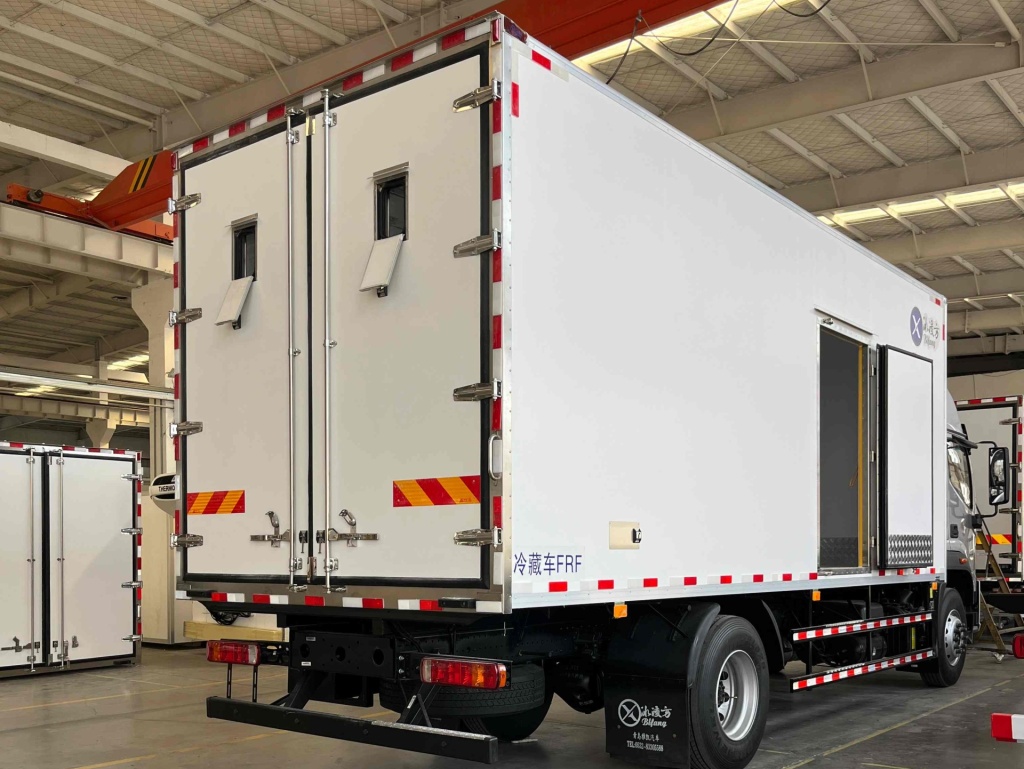
A refrigerated box has features that make cleaning easier if they are used properly: a defined floor drainage channel, stainless steel surfaces in many builds, and removable or accessible fittings. It also has one feature that makes cleaning harder: it is cold, and cleaning agents work more slowly at low temperature.
Key Facts at a Glance
- Chilled food transport runs at 0 to 4 degrees Celsius and frozen transport at around minus 18 degrees Celsius, so cleaning is usually done with the unit off and the box allowed to warm slightly.
- A defined floor drainage channel lets wash water and residue leave the box rather than pooling under pallets.
- Stainless steel floors and linings are easier to clean and rinse than porous surfaces, which is why they are common in food and hygiene-sensitive bodies.
- Door gaskets, thresholds, floor channels and corners are the areas that hold residue, so they belong on the routine rather than in a periodic deep clean.
- Insulated bodies for food service are built with the same mature constructions used across the range: FRP sandwich panels and polyurethane integral foam.
- Every cleaning step produces evidence. A short written or digital record of time, chemicals and operator supports inspections and complaint investigations.
A vs B: Daily Wash-Down vs Periodic Deep Clean
- Frequency — Daily wash-down follows every load that has contacted exposed food; periodic deep clean is scheduled weekly or monthly depending on volume.
- Scope — Daily work covers floor, walls up to working height, doors, gaskets and drainage; the deep clean adds roof, evaporator area, fittings and behind fixed equipment.
- Chemicals — Daily work uses a food-safe detergent and a suitable disinfectant; the deep clean may add a descaling or heavy-duty product where residue has built up.
- Equipment — Daily work needs a hose, brushes and PPE; the deep clean may need a pressure washer used carefully so water is not driven into panel joints.
- Time and temperature — Daily work is short and can be done cold; the deep clean is longer and usually benefits from a box that has been allowed to warm to a workable temperature.
Step-by-Step: How to Clean a Refrigerated Body
1) Empty the box completely. Remove pallets, crates, straps and any loose fittings so all surfaces are reachable, and check the drainage channel for debris.
2) Dry-clean first. Sweep or scrape solid residue into a bin before using water, because washing solids spreads them into corners and channels.
3) Pre-rinse with water. Use a moderate pressure and work from the roof down and from the front to the door so residue travels toward the drainage channel.
4) Apply food-safe detergent and scrub. Pay attention to gaskets, thresholds, corners and floor channels, and let the detergent sit for the contact time stated on the label.
5) Rinse and disinfect. Remove all detergent residue first, then apply a suitable disinfectant at the recommended concentration, again respecting the stated contact time.
6) Dry fully, then record the job. Leave the doors open in a ventilated area until surfaces are visibly dry, since a box closed while damp develops odours and frost problems, then note the date, the load type, the chemicals used, the operator and any residue that could not be removed.
FAQ
Q: How often should a refrigerated food body be cleaned?
A: After every load that has contacted exposed food, plus a scheduled deeper clean at a frequency set by your food safety plan and the type of cargo. High-risk products and warm weather justify more frequent cleaning, not less.
Q: Can I use a pressure washer inside the box?
A: Used with care and at moderate pressure, yes, but avoid directing the jet at panel joints, door gaskets and electrical fittings. Water forced into a joint can reach the core, and that causes more damage than the residue being removed.
Q: Why does the box still smell after cleaning?
A: Usually because drainage, gaskets or corners were not fully cleaned or the box was closed while damp. Check the floor channel for trapped residue, clean the gaskets thoroughly and dry the box before closing the doors.
Q: Is a stainless steel floor really easier to clean?
A: Yes. Stainless surfaces are smooth and non-porous, so residue rinses off more completely than from textured or worn surfaces. The floor channel and door area still need attention because that is where water and residue collect.
Q: Do I need written records for a small fleet?
A: Records help even with one vehicle. They show what was done and when, they help you spot recurring problems, and they give you something concrete to produce if a customer or inspector asks about your cleaning routine.
Conclusion
Sanitation in refrigerated food transport is a sequence, not an event. Empty, dry-clean, pre-rinse, wash, rinse, disinfect, dry and record — done in that order, on a schedule you actually follow. The right body features help: a clear drainage channel, stainless surfaces and accessible fittings. Both FRP sandwich and polyurethane integral foam bodies support the same routine, because hygiene depends on surfaces, corners and habits rather than on the core.
Preventing Condensation and Ice Build-up in Refrigerated Truck Bodies
Sep 23, 2026
Bulk Feed Delivery Route Planning for Feed Mills and Distributors
Sep 24, 2026
Related Articles
Author

Cybercoldchain
Content Writer
Recent Posts
-
GMP+ and FAMI-QS: Is Transport the Weak Link in Feed Safety?
Oct 31
-
Driver Shortages vs Delivery Windows: What Gives First?
Oct 31
-
Telematics for Bulk Feed: Is Bin-Level Data Worth the Investment?
Oct 31
-
Can Reefers Keep Up With 45°C+ Markets—or Do Specifications Need a Rethink?
Oct 31
-
The Hidden Cost of a Late Chick Delivery—Who Should Bear It?
Oct 31