
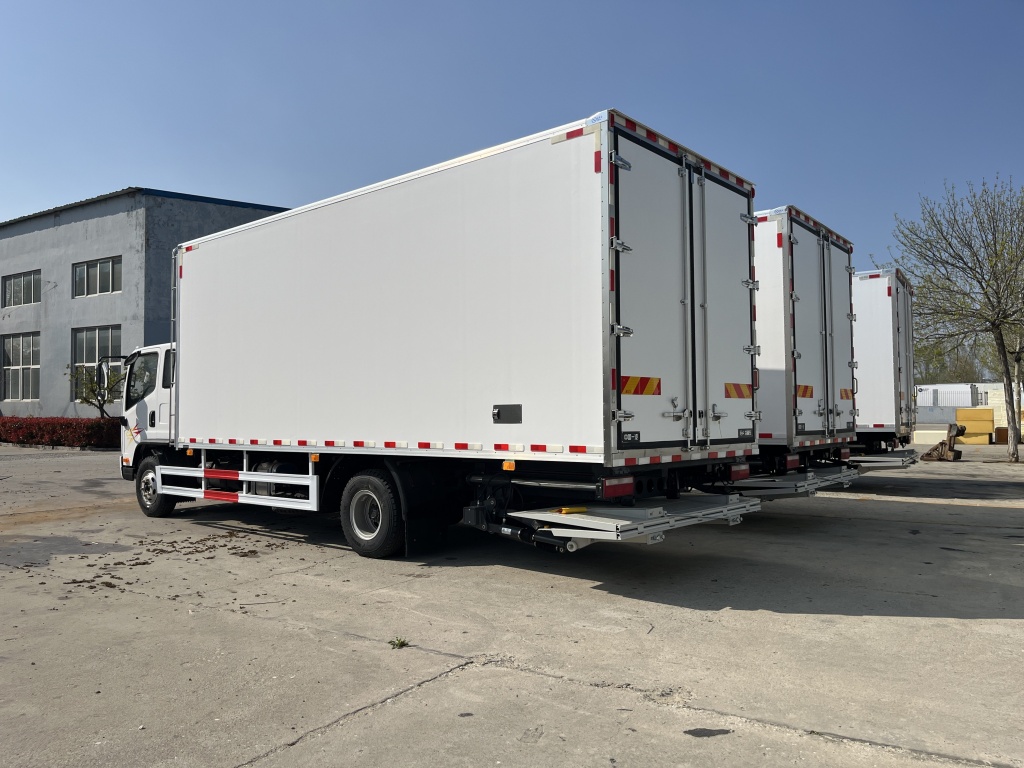
Preventing Condensation and Ice Build-up in Refrigerated Truck Bodies
Preventing Condensation and Ice Build-up in Refrigerated Truck Bodies
In short: Condensation and ice come from moist air meeting cold surfaces. Warm, humid air enters through door openings and worn gaskets, and it leaves water on the walls and floor or frost on the evaporator. Prevention is mostly about sealing, drainage, defrost discipline and drying the box after wash-down.


What Is Condensation in a Refrigerated Body?
Condensation in a refrigerated body is the water that forms when warm, moisture-carrying air meets a surface below its dew point. Inside a reefer box, that happens on door frames, on the evaporator coil, and on any panel area where warm air reaches a cold surface. Ice build-up is the same process taken further: when the surface is below freezing, the moisture turns to frost instead of running off as water.
The consequences are practical rather than theoretical. Water on the floor creates slip and hygiene problems, frost on the evaporator reduces airflow and cooling performance, and repeated wetting and drying at panel joints is the kind of cycling that shortens the life of any insulated structure.
Key Facts at a Glance
- Chilled product runs at 0 to 4 degrees Celsius, which most often produces liquid condensation; frozen product near minus 18 degrees Celsius produces frost and ice.
- The temperature gap between the box interior and a warm, humid outside day is what drives moisture into the box through open doors and sealing defects.
- Doors are the main entry point for moist air. Gaskets, latches and hinges are wear items and should be checked on a routine schedule.
- A defined floor drainage channel lets wash water and condensate leave the box instead of collecting under cargo.
- A closed-cell core rated at 95 percent or higher resists moisture pick-up better than an open-cell structure; this is a product parameter quoted by the manufacturer.
- Both FRP sandwich and polyurethane integral foam bodies need the same operational care against moisture, because the weak points are seals, drainage and doors rather than the core itself.
A vs B: Preventing Liquid Condensation vs Preventing Frost
- What you see — Liquid condensation shows as water on walls, floor and door frames; frost and ice show as white build-up on the evaporator and around door seals.
- Main cause — Liquid condensation is driven by short door openings and humid ambient air; frost is driven by moisture freezing on surfaces below zero.
- Defrost routine — Chilled boxes rarely need a deep defrost cycle; frozen boxes need regular defrost so ice does not block airflow across the coil.
- Drainage needs — Wet condensation needs an open floor channel that drains freely; frost needs the channel to stay clear so melted water can leave after defrost.
- Check frequency — Chilled boxes benefit from end-of-shift checks; frozen boxes need drain and defrost checks more often when ambient humidity is high.
Step-by-Step: How to Prevent Moisture Problems
1) Inspect door gaskets every week. Run a hand along the seal with the door closed and look for light gaps, hardening or deformation, and adjust or replace as needed.
2) Keep the floor drainage channel clear. Remove debris after each wash-down so water leaves the box instead of pooling under the load.
3) Load with gaps between items. Air must be able to circulate past the cargo; packed loads trap moisture and create cold spots where ice forms.
4) Run the defrost cycle as recommended. Ice on the coil reduces airflow and makes the unit work harder, and it does not clear itself in a frozen box.
5) Dry the box after washing. Leave doors open in a dry, ventilated area until panels and floor are visibly dry, then close up to save energy.
6) Record what you find. Note where water or frost appears, because patterns near one door or one corner usually point to a specific seal or drain problem.
FAQ
Q: Why is there water on the floor when nothing has leaked?
A: Water on the floor is usually condensation, not a leak. Warm, moist air enters when the doors open, meets cold surfaces, and releases moisture that runs to the lowest point. A clear drainage channel and shorter door openings reduce it.
Q: Is ice build-up normal in a frozen body?
A: Some frost on the evaporator is a normal part of refrigeration, and that is why units have defrost cycles. Ice becomes a problem when it blocks airflow or builds at door seals, because then cooling performance and sealing both degrade.
Q: Does the insulation core absorb water?
A: A closed-cell polyurethane core rated at 95 percent or higher resists moisture pick-up better than an open-cell structure. That resistance is one reason closed-cell foam is common in insulated bodies. Panel joints and door seals still need maintenance.
Q: Do side doors make condensation worse?
A: Any additional opening is another path for moist air. A side door that opens briefly for one carton may let in less moisture than a full rear doorway held open, so good door discipline often matters more than the number of doors.
Q: My box smells musty. What is the cause?
A: Standing moisture under a load, usually combined with a blocked drainage channel or a box closed while still wet. Clean, clear the channel, dry the box fully and check the door seals before the next load.
Conclusion
Condensation and ice are manageable when you treat them as an operational issue rather than a fault in the box. Sealing, drainage, defrost, airflow around the load and drying after wash-down cover most of the ground. Both FRP sandwich and polyurethane integral foam bodies respond to the same routine, because the moisture enters through doors and joints, not through a well-built core. Start with a weekly gasket check and a clear floor channel, and most wet-floor complaints disappear.
Specifying a Refrigerated Truck for Pharmaceutical and Vaccine Transport
Sep 21, 2026
Sanitation SOP for Refrigerated Food Transport: A Step-by-Step Cleaning Routine
Sep 23, 2026
Related Articles

Author

Cybercoldchain
Content Writer
Recent Posts
-
GMP+ and FAMI-QS: Is Transport the Weak Link in Feed Safety?
Oct 31
-
Driver Shortages vs Delivery Windows: What Gives First?
Oct 31
-
Telematics for Bulk Feed: Is Bin-Level Data Worth the Investment?
Oct 31
-
Can Reefers Keep Up With 45°C+ Markets—or Do Specifications Need a Rethink?
Oct 31
-
The Hidden Cost of a Late Chick Delivery—Who Should Bear It?
Oct 31