
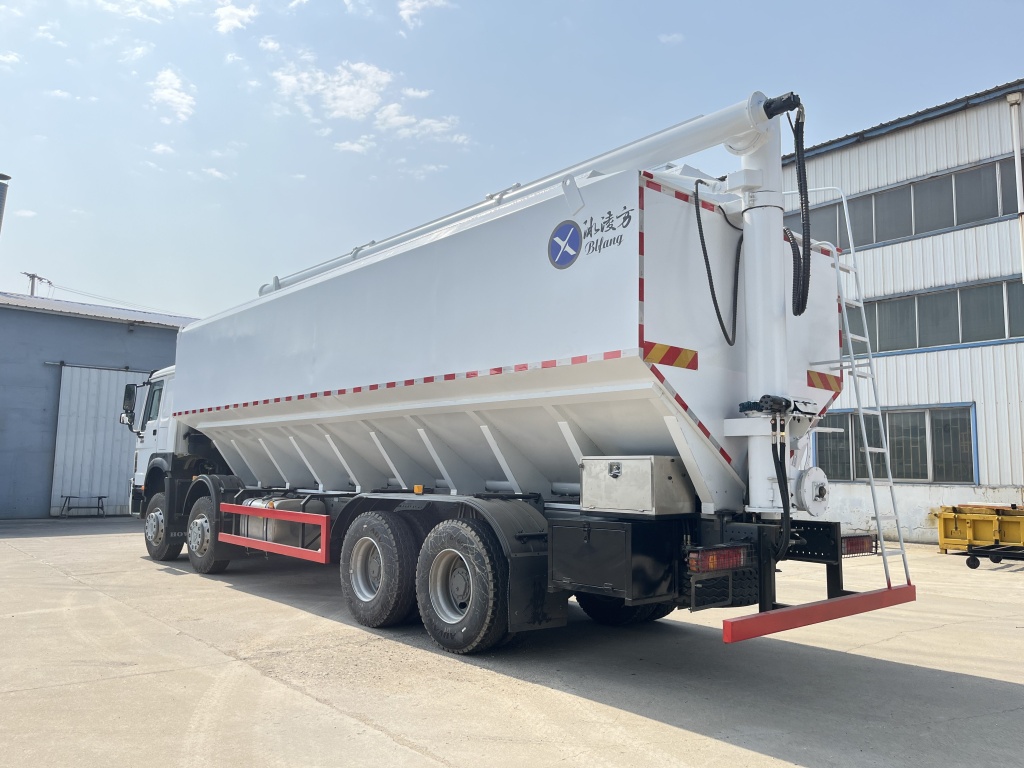
Multi-Species Feed: How Serious Is the Medication Segregation Risk?
In short: More serious than most fleets treat it, and less dramatic than the worst-case stories suggest. The risk is not usually a tanker full of the wrong feed; it is a small carryover into a non-target species or a withdrawal-period feed, delivered without anyone knowing. Because the effect is invisible at delivery, segregation depends entirely on process discipline and records rather than on inspection at the farm gate.


What Is Medication Segregation in Feed Transport?
Medication segregation is the set of controls that prevent medicated feed, or feed containing a specific additive, from contaminating feed intended for a different species, a different production stage, or a period when medication must be absent. In bulk transport it involves sequencing loads deliberately, cleaning and flushing compartments between certain products, keeping dedicated equipment where risk is highest, and recording what was carried where. It is a chain-of-custody problem expressed as an engineering one.
Why This Debate Matters
As farms diversify and feed mills serve more species from the same plant, the number of product transitions per truck per day increases. Every transition is a potential carryover point: compartments, augers, discharge boots, hose ends and even the seals and handles a driver touches. Regulatory expectations around medicated feed are generally strict about preventing carryover into non-target animals, and customers increasingly ask for assurance rather than assuming it. The commercial dimension is just as sharp: a withdrawal-period feed that contains traces of the wrong medication can affect a sale, a certification or an export consignment long before anyone traces it back to a trailer.
Key Facts at a Glance
- Carryover risk concentrates in discharge equipment — augers, boots, hose interiors and valves — rather than in the open compartment alone.
- Sequence matters: loading the most sensitive product first, or dedicating a compartment to it, reduces exposure without extra cleaning.
- Flushing with a sacrificial batch is a recognised control, but the flush material itself must be managed and accounted for.
- Cleaning is not the same as flushing, and neither is the same as drying; residual moisture can affect the next load.
- Dry, dusty products are harder to fully remove than they appear, because fines lodge in joints and seams.
- Records must link product, compartment, sequence and cleaning action; without that link, segregation cannot be demonstrated after the fact.
Two Sides: A vs B
- Dedicated versus sequenced — One view holds that high-risk products need dedicated compartments or vehicles; the other holds that strict sequencing, cleaning and flushing can manage the risk within a shared fleet.
- Cleaning intensity — Some operations clean thoroughly between every product change; others clean only at defined risk transitions, arguing that excessive cleaning adds moisture and time without reducing meaningful exposure.
- Who decides — Quality teams tend to want rules fixed centrally; drivers and dispatchers argue that local judgement is needed because the day never matches the plan.
- Record granularity — Detailed per-compartment records are defended as the strongest evidence; lighter recording is defended as more likely to be completed accurately under time pressure.
- Flush handling — Some treat flush material as a controlled product with a defined destination; others see it as waste, which is where documentation often collapses.
- Visibility to the customer — Publishing segregation procedures builds confidence with integrators; keeping them internal avoids inviting scrutiny of imperfections.
Step-by-Step: How to Build a Workable Segregation Protocol
- Rank products by risk. Classify every product by species sensitivity, medication status and withdrawal requirements, then define transitions that require action.
- Design the sequence. Plan loads so that sensitive products follow clean compartments, not the other way round, and reflect this in dispatch rather than leaving it to the driver.
- Specify cleaning by transition. Write down exactly what must be done between each class of product, including which equipment is included.
- Control the flush. Define the flush material, quantity and destination, and record it as a product movement rather than an informal practice.
- Verify, don't assume. Use a check that goes beyond visual inspection at the points where residue actually persists.
- Close the record. Link load, compartment, cleaning action, seal and delivery in one traceable line, and audit it monthly.
FAQ
Q: Is visual inspection enough to confirm a compartment is clean?
A: Rarely. Visual checks miss fines in seams, residue in discharge equipment and material behind fittings. They are a useful first step, not a verification method on their own.
Q: Can the same truck carry medicated and non-medicated feed?
A: Many fleets do, using sequencing, cleaning and flushing controls. The acceptability depends on the products involved, the applicable rules and the sensitivity of the receiving operation.
Q: What is the difference between cleaning and flushing?
A: Cleaning removes residue physically; flushing runs a quantity of material through the system to capture what remains. Flushing is a control measure, not a substitute for cleaning, and produces material that must be handled deliberately.
Q: Where does cross-contamination most often occur?
A: In the discharge path — augers, boots, hoses and valves — because those are the parts that retain product and receive the least attention during a quick turnaround.
Q: How long must segregation records be kept?
A: Requirements vary by jurisdiction and customer, so the retention period should be set against the strictest rule that applies to your trade, not the most convenient one.
The Bottom Line
Medication segregation is serious because its failures are silent: no alarm sounds when a trace of the wrong premix enters a withdrawal-period load. The controls that work are unglamorous — risk ranking, deliberate sequencing, defined cleaning, managed flush and records that can be produced months later. Technology helps only where the process is already explicit. If a customer asked you today to prove the last five loads into a sensitive species were clean, could you reconstruct the sequence from your records?
Monsoon Logistics: Are Feed Fleets Underestimating Humidity Damage?
Oct 28, 2026
CO₂, Humidity or Airflow: Which Ventilation Metric Matters on Chick Trucks?
Oct 28, 2026
Related Articles
Author

Cybercoldchain
Content Writer
Recent Posts
-
GMP+ and FAMI-QS: Is Transport the Weak Link in Feed Safety?
Oct 31
-
Driver Shortages vs Delivery Windows: What Gives First?
Oct 31
-
Telematics for Bulk Feed: Is Bin-Level Data Worth the Investment?
Oct 31
-
Can Reefers Keep Up With 45°C+ Markets—or Do Specifications Need a Rethink?
Oct 31
-
The Hidden Cost of a Late Chick Delivery—Who Should Bear It?
Oct 31