
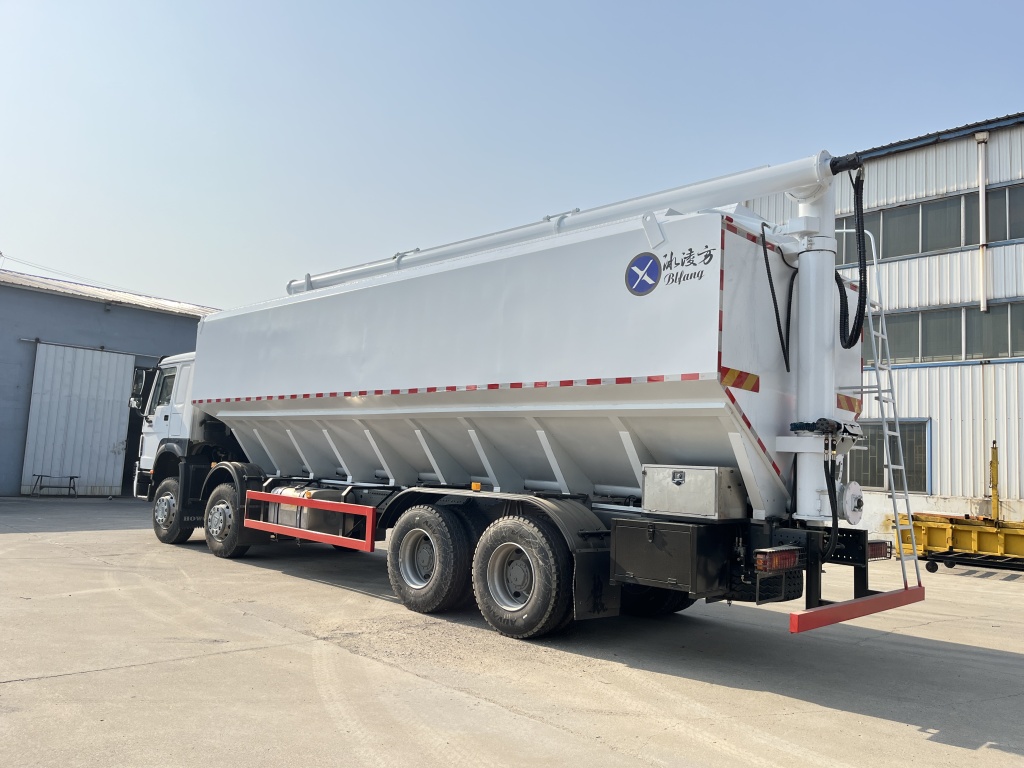
Maintaining Feed Quality During Bulk Transport
Maintaining Feed Quality During Bulk Transport

Feed quality is not just about what goes into the formulation — it is also about how the feed reaches the animal. Bulk feed transport can introduce risks of contamination, moisture damage, nutrient degradation, and physical breakdown that compromise feed value. Here is how to protect feed quality throughout the transport process.
The Risks to Feed Quality During Transport
Moisture Intrusion
Moisture is the greatest enemy of bulk feed. When feed gets wet:
A feed transport truck must be watertight. This means properly sealed roof hatches, gasketed compartment dividers, and weatherproof discharge ports. Regular inspection of seals and gaskets is essential — a small leak can ruin an entire load.
Cross-Contamination
Different feed formulations must remain separate during transport. A compartment that previously held medicated feed requires thorough cleaning before loading non-medicated feed.
Key prevention measures:
Physical Degradation
Feed pellets and crumbles can break down during transport due to:
Physical breakdown creates fines and dust, which reduces feed efficiency — animals sort against fines and may leave them uneaten.
Best Practices for Feed Quality Protection
1. Proper Truck Specifications
The vehicle itself must be designed for feed quality protection:
2. Pre-Load Inspection
Before each load, verify:
3. Controlled Discharge
During pneumatic unloading:
4. Loading and Unloading Temperature Considerations
Feed temperature affects condensation risk:
5. Cleaning Between Loads
A clean feed truck is the foundation of feed quality:
6. Pest Prevention
Feed attracts rodents, birds, and insects:
The Cost of Quality Failure
Feed quality failures during transport are expensive: < < < < <
| Problem | Cost Impact |
|---|---|
| Contaminated feed requiring disposal | Full load value + disposal cost + lost production time |
| Mold-affected feed causing illness | Veterinary costs, production losses, potential mortality |
| Cross-contamination of medicated feed | Drug residues in non-target animals, regulatory issues |
| Excessive fines from pellet degradation | Reduced feed conversion, animal sorting against fines |
Conclusion
Maintaining feed quality during bulk transport requires attention to three areas: the vehicle itself, the procedures for loading and unloading, and the diligence of the operator. A well-designed feed truck with proper seals, smooth interior surfaces, and effective cleanout features provides the foundation. But even the best truck requires consistent practices — pre-load inspections, proper discharge technique, and thorough cleaning between loads — to deliver feed in optimal condition.
For feed mills and livestock operations, investing in quality transport equipment and training operators on best practices pays returns in feed conversion efficiency, animal health, and customer satisfaction.
What Is a Bulk Feed Transport Truck and How Does It Work?
Jun 26, 2026
Chick Transport Truck Inspection Checklist: What to Check Before Every Trip
Jul 1, 2026
Related Articles
Author

Cybercoldchain
Content Writer
Recent Posts
-
Hydration and Ventilation Balance in Day-Old Chick Transport
Sep 14
-
Can Refrigerated Body Panels Be Repaired? FRP Sandwich and Polyurethane Compared
Sep 14
-
Bulk Feed Truck Inspection and Preventive Maintenance Schedule
Sep 12
-
Day-Old Chick Delivery: A One-Page Driver Checklist
Sep 12
-
Biosecurity for Chick Transport Trucks: Cleaning and Disinfection Between Runs
Sep 12