
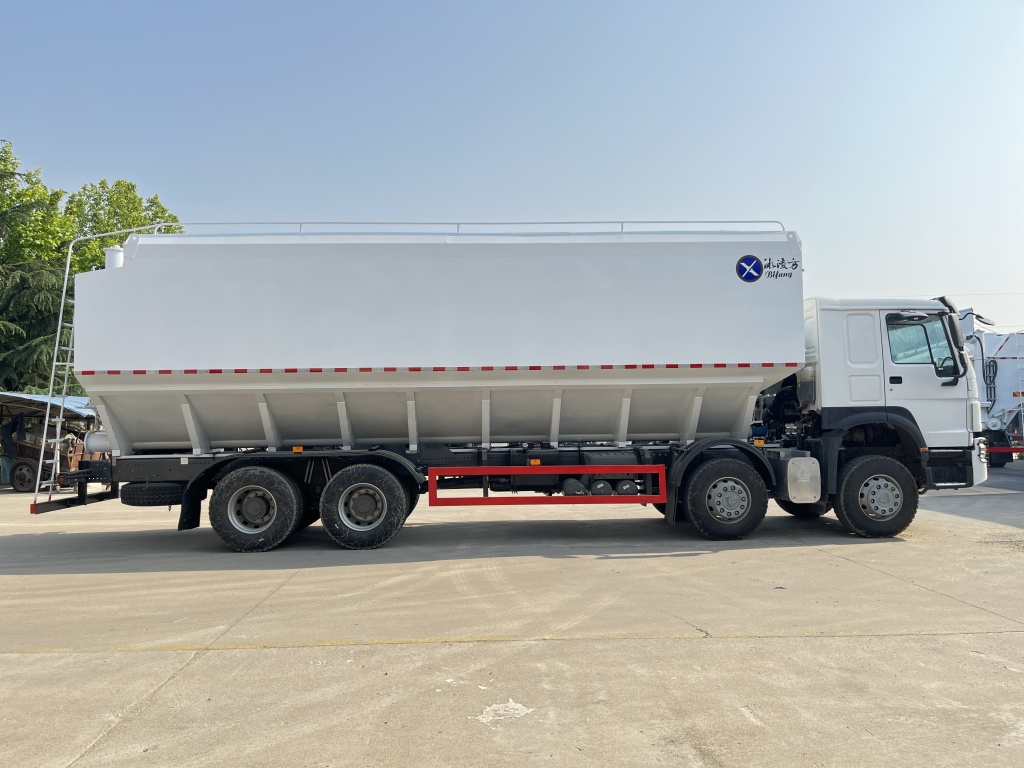
What Is a Bulk Feed Transport Truck and How Does It Work?
What Is a Bulk Feed Transport Truck and How Does It Work?


In the modern animal feed industry, efficient bulk transport is essential. Bulk feed transport trucks are specialized vehicles designed to move large quantities of animal feed from production facilities to farms, feedlots, and aquaculture operations. Unlike bagged feed delivery, bulk transport offers significant advantages in efficiency, cost, and labor.
What Is a Bulk Feed Transport Truck?
A bulk feed transport truck is a purpose-built vehicle equipped with a sealed cargo body and an integrated discharge system for loading and unloading feed. The cargo body is typically divided into multiple compartments, allowing different feed formulations to be transported in a single trip without mixing.
Key characteristics include:
How It Works
Loading
Feed is loaded into the truck at the production facility through roof-mounted hatches or fill ports. The compartments are filled sequentially, each storing a specific feed formulation. Electronic weighing systems allow precise measurement of each compartment's load.
Transport
During transport, the sealed body protects the feed from rain, dust, and pests. The smooth interior surfaces and compartment dividers prevent cross-contamination between different feed types.
Unloading
Bulk feed trucks use one of two primary discharge methods:
Pneumatic systems are more common for longer-distance delivery and for reaching tall feed silos, while auger systems are simpler and lower maintenance.
Who Uses Bulk Feed Transport Trucks?
< < < < < <
| Customer Type | Typical Use |
|---|---|
| Poultry farms | Daily feed delivery to automatic feeding systems |
| Livestock operations | Bulk feed for cattle, pigs, and sheep |
| Aquaculture | Specialized floating and sinking feed transport |
| Feed mills | Distribution to retail locations and farms |
| Dairy operations | Consistent supply of balanced feed rations |
Advantages Over Bagged Feed Delivery
< < < < < < <
| Aspect | Bulk Feed Truck | Bagged Feed Delivery |
| Labor | Minimal — one operator | Heavy manual handling required |
| Efficiency | 20-40 tons per load | Limited by bag weight and handling |
| Cost per ton | Lower — bulk pricing | Higher — packaging + labor |
| Waste | Minimal | Bag disposal, spillage |
| Speed | Fast pneumatic discharge | Slow manual unloading |
| Protection | Sealed, weather-resistant | Bags can tear or get wet |
Key Components of a Quality Bulk Feed Truck
1. Corrosion-resistant body: Feed is abrasive and can cause wear over time. Aluminum or stainless steel construction is preferred.
2. Effective sealing: Gaskets and seals prevent moisture ingress and feed leakage.
3. Multiple compartments: Typically 3-5 compartments for flexibility in loading.
4. Reliable discharge system: Pneumatic blowers should provide adequate air pressure and volume for the typical delivery distance.
5. Weighing system: On-board scales for accurate load measurement.
6. Safety features: Emergency shutoffs, pressure relief valves, and access platforms.
Conclusion
Bulk feed transport trucks are an essential link in the modern feed supply chain, replacing labor-intensive bagged delivery with efficient bulk handling. When properly specified and maintained, these vehicles reduce costs, improve delivery speed, and maintain feed quality from production to consumption. For feed mills, large farms, and livestock operations, investing in bulk feed transport is a logical step toward operational efficiency.
Key Considerations When Buying a Bulk Feed Delivery Truck
Jun 25, 2026
Maintaining Feed Quality During Bulk Transport
Jun 28, 2026
Related Articles
Maintaining Feed Quality During Bulk Transport
Jun 28, 2026
Author

Cybercoldchain
Content Writer
Recent Posts
-
Hydration and Ventilation Balance in Day-Old Chick Transport
Sep 14
-
Can Refrigerated Body Panels Be Repaired? FRP Sandwich and Polyurethane Compared
Sep 14
-
Bulk Feed Truck Inspection and Preventive Maintenance Schedule
Sep 12
-
Day-Old Chick Delivery: A One-Page Driver Checklist
Sep 12
-
Biosecurity for Chick Transport Trucks: Cleaning and Disinfection Between Runs
Sep 12