
Vehicle Homologation: Why Do Importers Still Get Surprised?
In short: Importers are surprised because homologation is treated as a Customs problem when it is actually a specification problem. A vehicle built to the wrong drive configuration, emission level or body dimension cannot be fixed at the port — only rebuilt. The cheapest approval is the one designed in before the chassis is ordered.


What Is Vehicle Homologation?
Homologation is the process by which a vehicle is shown to meet the technical requirements of the country where it will be registered. It covers the chassis as much as the body: emissions standard, drive hand, lighting and marking, tyre and axle ratings, noise, brake performance, and increasingly telematics and refrigerant choices.
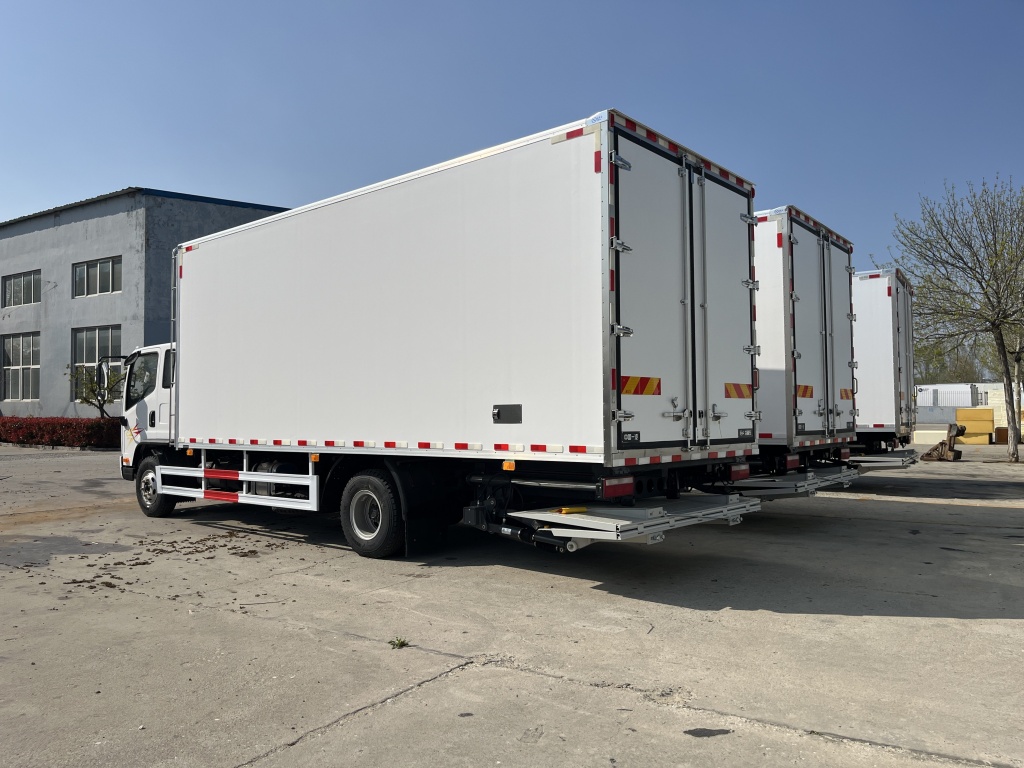
For a converted vehicle such as a chick transport truck, two approvals usually interact. The base chassis carries its own type approval, and the body conversion must not invalidate it. That interaction is where most surprises originate, because the converter works to one set of rules and the importer registers under another.
Why This Debate Matters
Special vehicle trade has become faster and more fragmented. A buyer can compare three suppliers on price in an afternoon, place an order, and discover six weeks later that the chosen drive configuration is not registrable, or that the body width exceeds a national limit that nobody mentioned.
The commercial damage is asymmetric. A delay of a few weeks is absorbed by the buyer's schedule; a rejection at the port is absorbed by whoever holds the bill of lading. By then the vehicle exists, the money has moved, and the remaining options are modification in a workshop that may not have the parts, or re-export.
There is a structural reason the problem persists: the information that prevents it is boring. Nobody enjoys reading a type-approval annex, and the person who does is rarely in the room when the specification is agreed. The industry keeps paying for that gap, one shipment at a time.
Key Facts at a Glance
- Homologation attaches to the chassis as well as the body, so a change of chassis brand mid-order can reopen an approval that was already closed.
- Drive hand, emission standard and lighting are national requirements; they are not preferences to be negotiated between buyer and factory.
- CKD (completely knocked down) shipment can reduce duty exposure in some markets, but it shifts assembly quality and conformity responsibility to the importing side.
- Body dimensions matter: a 9.6 m body carrying 672 boxes on a ventilated unit, or 624 boxes as 24 carts on a constant-temperature unit, must fit within national length and width limits.
- Cooling and ventilation equipment adds electrical load, which affects alternator sizing and, in some markets, the vehicle's approved configuration.
- Equipment specified for −35 °C to +40 °C ambient is a performance statement, not a regulatory one; local rules may still require separate approval of the refrigeration unit.
Two Sides: A vs B
- Whose job it is — Factory view: the importer knows the local rules and should supply them. Importer view: the manufacturer ships to many markets and should know what is registrable.
- When to raise it — Early view: clarify requirements before the quotation, because that is when changes are free. Late view: homologation is a documentation step after production, handled by an agent.
- Standard versus adapted build — Standard view: a proven configuration is cheaper and faster to deliver. Adapted view: a vehicle that cannot be registered is not cheap at any price.
- CKD versus built-up — CKD view: lower duty and local assembly content. Built-up view: factory-controlled conformity, fewer assembly variables, faster delivery.
- Who carries the risk — Contract view: the buyer warrants that the specification meets local law. Commercial view: the seller who recommended the configuration shares the consequence.
Step-by-Step: How to De-Risk an Import Order
- Get the registration requirement in writing first. Ask the importer to obtain a written statement of the applicable standard from the registration authority, not a verbal assurance from a dealer.
- Freeze drive hand, emission level and dimensions in the specification. Put them in the contract annex with the chassis model, not in an email thread.
- Check the body against national dimension limits. Length, width and height limits are often stricter than road design suggests, and a body built to the chassis maximum may exceed them.
- Confirm who signs the conformity documents. Decide in advance whether the factory, the converter or the importer certifies the finished vehicle, and price that responsibility.
- Plan the approval test slot before shipping. Testing capacity is often the real queue; booking it after arrival adds weeks that no amount of paperwork recovers.
- Keep one configuration per market. Variation multiplies approval work. Where possible, standardise on a single chassis and body combination per destination.
FAQ
Q: Can homologation be handled after the vehicle arrives?
A: Sometimes, but at the worst possible cost. Modifications made after shipment are expensive and may not satisfy the authority that rejected the vehicle in the first place.
Q: Is a chassis approval enough for the finished truck?
A: No. The body conversion can change weight distribution, dimensions and electrical load. Many markets require the completed vehicle to be assessed as a whole.
Q: Why does CKD not automatically solve the problem?
A: CKD changes where assembly happens, not which rules apply. The finished vehicle still needs to conform, and assembly quality now depends on the importing workshop.
Q: What single question prevents most surprises?
A: "Which document will the registration authority read, and who signs it?" If nobody can answer before the order, the order is not ready.
The Bottom Line
Homologation surprises are almost always specification failures wearing a customs uniform. The work that prevents them is unglamorous — written requirements, frozen configurations, and a named signatory for conformity — and it costs a fraction of a rejected shipment. Importers who treat approval as a design input rather than an afterthought stop being surprised. So, for those who have shipped special vehicles: what did you learn too late, and who should have told you?
Feed Truck Economics: Is Depreciation the Number Fleets Ignore?
Oct 28, 2026
Measuring Feed Loss in Transit: Do Fleets Even Know Their Real Loss Rate?
Oct 31, 2026
Related Articles
Author

Cybercoldchain
Content Writer
Recent Posts
-
GMP+ and FAMI-QS: Is Transport the Weak Link in Feed Safety?
Oct 31
-
Driver Shortages vs Delivery Windows: What Gives First?
Oct 31
-
Telematics for Bulk Feed: Is Bin-Level Data Worth the Investment?
Oct 31
-
Can Reefers Keep Up With 45°C+ Markets—or Do Specifications Need a Rethink?
Oct 31
-
The Hidden Cost of a Late Chick Delivery—Who Should Bear It?
Oct 31