
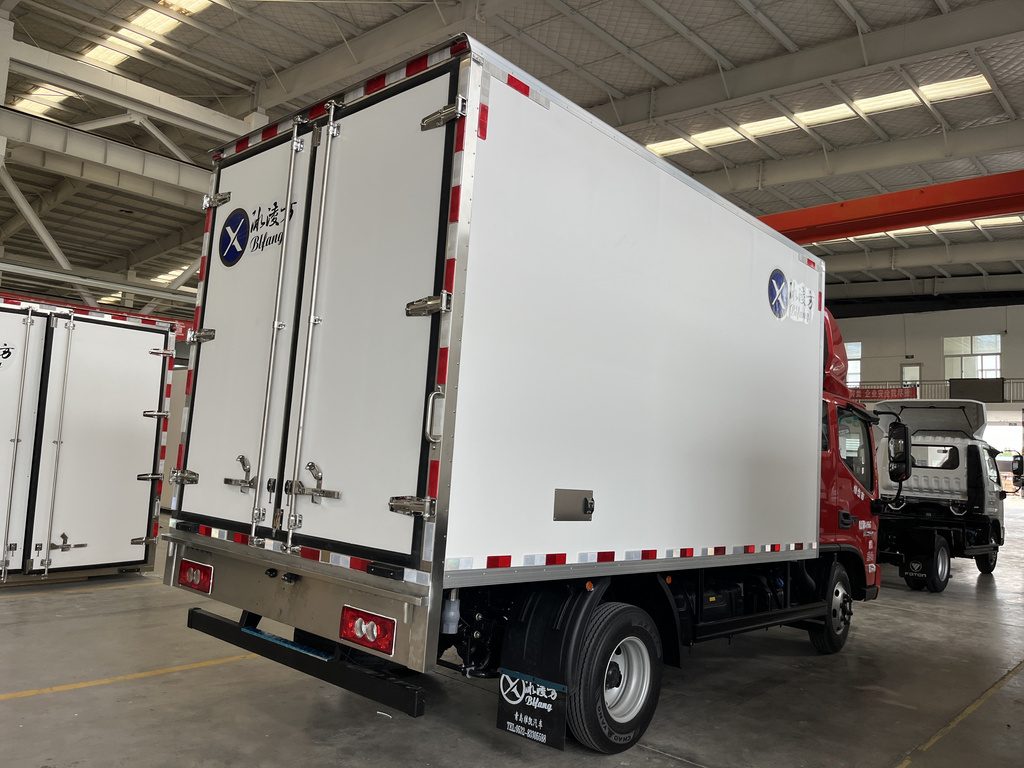
Seafood Haul: Is Corrosion the Real Reason Fleets Replace Bodies Early?
In short: Corrosion is usually the symptom, not the cause. Bodies that carry seafood fail early because water stays where it should not — in floor joints, behind kick plates, inside cut edges and around fasteners. Salt accelerates the process, but a body that drains and dries will outlast an identical body that ponds water, regardless of the panel material.


What Is Washdown Corrosion in a Refrigerated Body?
Washdown corrosion is the deterioration that follows repeated cleaning with water, detergent and sometimes chlorinated sanitiser in an environment that also carries salt. It appears in three forms: rust staining on steel fittings, white or chalky breakdown at aluminium surfaces, and delamination where moisture has entered a panel edge or a joint.
The distinction that matters is between surface attack and structural attack. Staining is cosmetic and can be managed for years. Structural attack starts at a cut edge, fastener or floor-to-wall junction, travels inside the panel, and eventually separates skin from core. By the time it shows outside, the damage is advanced — which is why fleets conclude a body "failed suddenly" when it had been failing since the first season.
Why This Debate Matters
Seafood is one of the few cargoes that combines a cold requirement with a wet, salty operating environment and a hygiene regime that demands frequent washing. A chilled body at 0 °C to 4 °C is washed between loads, sometimes daily, and the water carries salt from the product and from the road.
Replacement decisions get made on incomplete evidence. A fleet sees rust at the rear frame, concludes the material was wrong, switches supplier — then repeats the outcome because drainage and sealing were never addressed. The fix is often cheaper than a new body, and hygiene auditors now look at cleanability, not just temperature records.
Key Facts at a Glance
- Seafood moves either chilled, typically in a 0 °C to 4 °C band, or frozen at around -18 °C or colder; the chilled case is the one that sees the most washdown.
- Stainless grades differ in chloride resistance — 316-type is specified for salt exposure where 304-type would be stressed, so fitting selection matters as much as panel selection.
- FRP skins do not rust, but cut edges and fastener holes are entry points unless they are sealed during assembly.
- Polyurethane integral foam with closed-cell content of at least 95% and conductivity near 0.022 W/(m·K) resists moisture uptake far better than open-cell alternatives; FRP sandwich dry-bonding is a mature construction with different edge-sealing demands.
- Standing water is the main accelerant: a floor that cannot drain leaves chlorides in contact with joints long after the washdown ends.
- A 4.2 m body weighs around 670 kg, mostly lightweight material — which is why local reinforcement at high-moisture points matters.
Two Sides: Material vs Design
- Where failure starts — Material camp: the wrong skin or the wrong grade of steel is the root cause, and upgrading solves it; Design camp: identical materials fail or survive depending on drainage, sealing and joint geometry.
- Repairability — Material side: stainless and aluminium can be welded or patched locally; Design side: FRP sandwich panels can be repaired as sections, but only if the edge is re-sealed afterwards.
- Weight and payload — Material side: heavier, corrosion-resistant structures cost payload but reduce lifetime cost; Design side: a lighter body with better detailing keeps payload and still avoids ponding.
- Hygiene and cleanability — Material side: smooth, non-porous surfaces are the priority for audits; Design side: radiused corners, sloped floors and removable kick plates matter more than the surface.
- Cost of the fix — Material side: upgrading specification is a known line item at purchase; Design side: better drainage and sealed edges are engineering attention — cheap to specify, hard to retrofit.
- Resale value — Material side: buyers inspect surfaces and assume the structure follows; Design side: buyers who know the trade inspect floors, rear frames and door bottoms first.
Step-by-Step: How to Make a Seafood Body Last
- Specify drainage first. A floor that slopes to an adequately sized drain, with no flat pockets, removes the conditions corrosion needs. Ask for the slope in the drawing, not in conversation.
- Seal every cut edge and penetration at build. Panel edges, fastener holes, cable entries and probe glands need sealing during assembly. A hole sealed later has already taken water.
- Isolate dissimilar metals. Where aluminium meets steel, use isolating washers or non-metallic separators. Galvanic attack at a joint is fast, localised and invisible until the fitting fails.
- Choose fittings for the environment, not the catalogue. Hinges, latches, kick plates and drain hardware sit in the wettest part of the body and show distress first. Specify chloride-resistant grades where water collects.
- Write a washdown procedure that keeps water out of joints. Rinse, detergent, rinse, dry. High-pressure jets aimed at door seals and floor joints push water exactly where you do not want it.
- Inspect quarterly and repair immediately. Check the rear frame, door bottoms, floor-to-wall fillets and around the drain. Early delamination is a small repair; late delamination is a new panel.
FAQ
Q: Is stainless steel the answer for seafood bodies?
A: It solves surface corrosion where used, but adds weight and cost and does not fix a floor that holds water. Durable seafood bodies combine resistant surfaces with disciplined drainage.
Q: Can a fibreglass body handle daily washdown?
A: Yes. FRP skins are widely used in washdown work. The weak points are edges, joints and fasteners, so construction quality decides the outcome more than the material name.
Q: Does foam core absorb water?
A: Closed-cell polyurethane with at least 95% closed-cell content resists uptake well. If water reaches an open edge, any core can degrade — which is why sealing matters more than the datasheet figure.
Q: How often should a seafood body be inspected?
A: Quarterly suits high-utilisation fleets, plus an inspection after any panel damage. Focus on water paths rather than appearance.
Q: Is it worth repairing a delaminated panel?
A: Often yes, if caught early and the repair re-seals the edge. Once moisture spreads across a large area, replacement is the more honest option.
The Bottom Line
Corrosion gets blamed because it is visible, but water management decides whether it starts. The material choice sets the ceiling on durability; drainage, sealing and fitting selection decide whether you ever reach it. Fleets that replace bodies early usually have a detailing problem they are about to buy again.
When your last body was retired, was the failure at a surface — or at a joint nobody could see?

Author

Cybercoldchain
Content Writer
Recent Posts
-
GMP+ and FAMI-QS: Is Transport the Weak Link in Feed Safety?
Oct 31
-
Driver Shortages vs Delivery Windows: What Gives First?
Oct 31
-
Telematics for Bulk Feed: Is Bin-Level Data Worth the Investment?
Oct 31
-
Can Reefers Keep Up With 45°C+ Markets—or Do Specifications Need a Rethink?
Oct 31
-
The Hidden Cost of a Late Chick Delivery—Who Should Bear It?
Oct 31