
Pharma Cold Chain Audits: Are Small Fleets Being Priced Out of Compliance?
In short: The requirements are not unreasonable — they are written around patient safety, and most of them are good practice. What squeezes small fleets is that compliance cost is largely fixed: a ten-vehicle operator writes almost the same SOPs, mapping reports and deviation procedures as a hundred-vehicle one. The problem is proportionality of delivery, not the standard itself.


What Is a Pharma Cold Chain Audit?
A pharmaceutical cold chain audit is an assessment of whether a carrier can demonstrate control over temperature-sensitive product from pickup to delivery. It is usually built on good distribution practice principles, and it examines four things: qualified equipment, validated routes, documented process, and evidence that deviations are detected and handled.
"Qualified equipment" means the body and unit have been shown to hold the band under defined conditions, usually through a temperature mapping exercise. "Validated route" means the carrier can show a specific lane, with its seasonal conditions and stop pattern, maintains that band. "Documented process" covers procedures, training records and a deviation log. Deviation handling is where auditors spend most time, because it reveals whether the paperwork describes reality or an aspiration.
Why This Debate Matters
Pharmaceutical distribution is shifting towards smaller, more frequent shipments, and that pushes volume towards regional carriers who have never built a quality system. At the same time, auditors have become more rigorous about subcontracted transport, so a small fleet that wants pharmaceutical work cannot avoid the process requirements by remaining a subcontractor.
The argument splits cleanly. One camp says the standard must not bend, because an excursion in a vaccine shipment is a public health event, not a commercial inconvenience. The other says a regime designed for national distributors is applied to ten-truck operators with no proportional pathway, which concentrates the market and reduces regional redundancy.
Key Facts at a Glance
- Many vaccines and biologics sit in a 2 °C to 8 °C band; some need around -20 °C, and a few require ultra-low storage — so one fleet may need several qualified configurations.
- Temperature mapping is a per-body, per-configuration exercise: a body mapped empty is not automatically qualified when it is loaded differently or fitted with a different unit.
- Data loggers used as evidence need calibration traceability; an uncalibrated logger produces a record that an auditor can reasonably reject.
- GDP-style requirements include written procedures, training records, deviation logs and corrective action follow-up — documents that take time to write and time to maintain.
- Much of that effort is fixed: an SOP for ten trucks is not a tenth the length of one for a hundred.
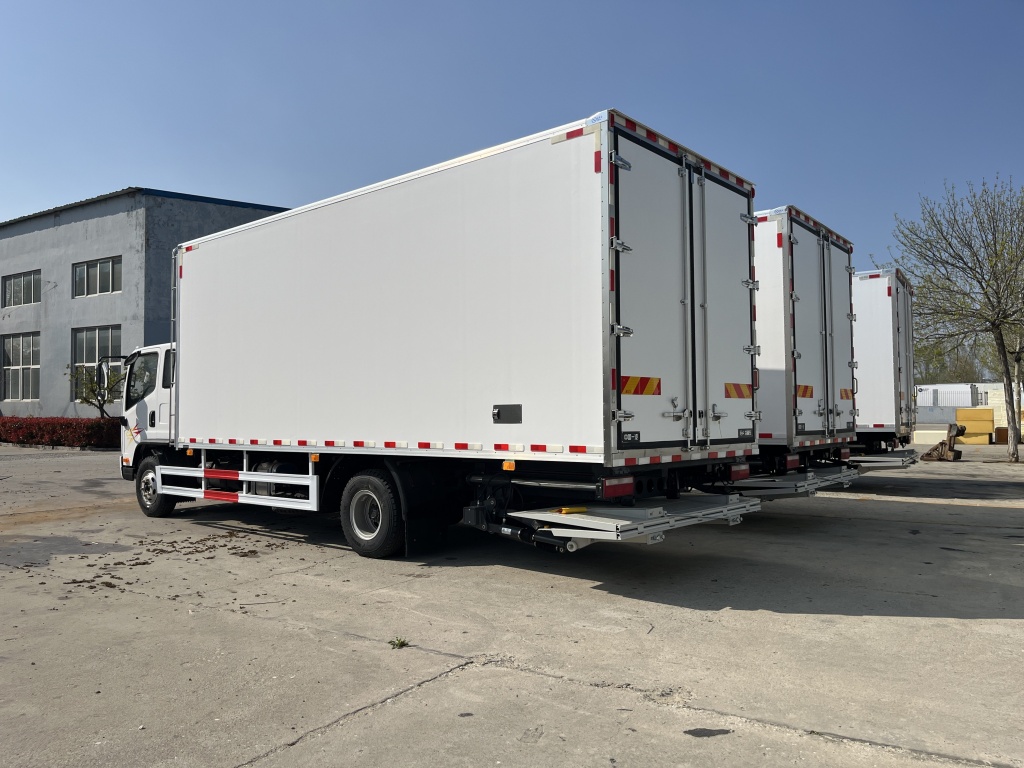
- A 4.2 m body of around 670 kg typically serves thin regional routes, where the fixed cost of qualification per delivery is highest.
Two Sides: Standards vs Proportionality
- Starting point — Standards camp: patient safety does not scale with carrier size, so the evidence bar should not either; Proportionality camp: the same risk can be controlled with lighter evidence on a short regional lane than on a multi-day international one.
- Cost structure — Standards side: quality systems cost money in every industry, and pharma rates should reflect that; Proportionality side: the cost is mostly fixed, so it lands hardest on the smallest operator.
- Subcontracting — Standards side: a subcontractor carries the same product risk and should meet the same requirements; Proportionality side: requiring full qualification of every subcontractor pushes small carriers out and encourages informal arrangements.
- What technology changed — Standards side: digital loggers and telematics make evidence cheaper than a decade ago; Proportionality side: cheaper sensors do not write SOPs, train drivers, or manage a deviation file.
- Audit outcome — Standards side: a failed audit removes a carrier that cannot demonstrate control; Proportionality side: it often removes a competent carrier whose weakness was documentation, not refrigeration.
- Market effect — Standards side: consolidation improves consistency and traceability; Proportionality side: it reduces regional capacity and leaves thin lanes dependent on fewer providers.
Step-by-Step: How a Small Fleet Can Pass Without a Big Budget
- Qualify the lanes you want, not the whole operation. Choose the pharmaceutical routes with real revenue and build evidence for those first. A narrow, well-documented scope beats a broad, thin one.
- Write documents once, as templates. SOPs, training records and deviation forms should be reusable across vehicles and drivers.
- Map each body configuration properly, then reuse the report. Group bodies that are genuinely identical in construction and unit, and map a representative one.
- Buy calibration, not just loggers. A traceable certificate is the difference between data and evidence. Keep certificates with device records.
- Build a deviation process before you need it. A one-page form, a named owner, a stated timeframe and a follow-up check demonstrates control — and it is what auditors test.
- Train drivers with records, not with a briefing. Short, signed, repeated training on door discipline, escalation and record keeping does more for an audit outcome than another piece of equipment.
FAQ
Q: Do I need a full-time quality manager to pass a GDP audit?
A: Not necessarily. Many small fleets assign quality responsibility to an existing operations manager with clear procedures and external support for mapping and calibration. What matters is that the responsibility is named and exercised.
Q: Can I use one temperature mapping report for several vehicles?
A: Only where the bodies, units and configurations are genuinely the same. Auditors accept grouping when the justification is documented; they reject it when it is assumed.
Q: Is a telematics system enough on its own?
A: No. It generates records, which is valuable, but audits also examine procedures, training, deviation handling and calibration. Telematics supports a quality system; it does not replace one.
Q: Are small fleets held to a different standard?
A: In principle no, which is the crux. In practice auditors apply some judgment on scope, but do not plan on leniency.
Q: What is the cheapest way to start?
A: Pick one lane, document it completely, and use that file as the template. One defensible route beats a partial attempt at the whole network.
The Bottom Line
The audit standard exists for a reason that is hard to argue with: an uncontrolled excursion in a vaccine shipment is a patient safety event. But applying a national-distributor process to a ten-truck operator without any proportional pathway is a market design choice, not a safety requirement. Small fleets can pass — by narrowing scope, templating documents and buying calibration rather than volume.
If a regional carrier can prove control on one lane but not on paper for ten, is that a safety failure or an administrative one?
CO₂, Humidity or Airflow: Which Ventilation Metric Matters on Chick Trucks?
Oct 28, 2026
Seafood Haul: Is Corrosion the Real Reason Fleets Replace Bodies Early?
Oct 28, 2026
Related Articles


Author

Cybercoldchain
Content Writer
Recent Posts
-
GMP+ and FAMI-QS: Is Transport the Weak Link in Feed Safety?
Oct 31
-
Driver Shortages vs Delivery Windows: What Gives First?
Oct 31
-
Telematics for Bulk Feed: Is Bin-Level Data Worth the Investment?
Oct 31
-
Can Reefers Keep Up With 45°C+ Markets—or Do Specifications Need a Rethink?
Oct 31
-
The Hidden Cost of a Late Chick Delivery—Who Should Bear It?
Oct 31