
Can Cold Chain Growth Be Sustainable—or Is Lightweighting Just Greenwashing?
In short: Lightweighting is a genuine engineering lever, but it is a means, not a result. A lighter body reduces energy only if the saved mass survives the duty cycle and the panel still performs thermally. Marketed as a standalone virtue, it becomes a claim without a baseline — the practical definition of greenwashing.


What Is Lightweighting in Refrigerated Transport?
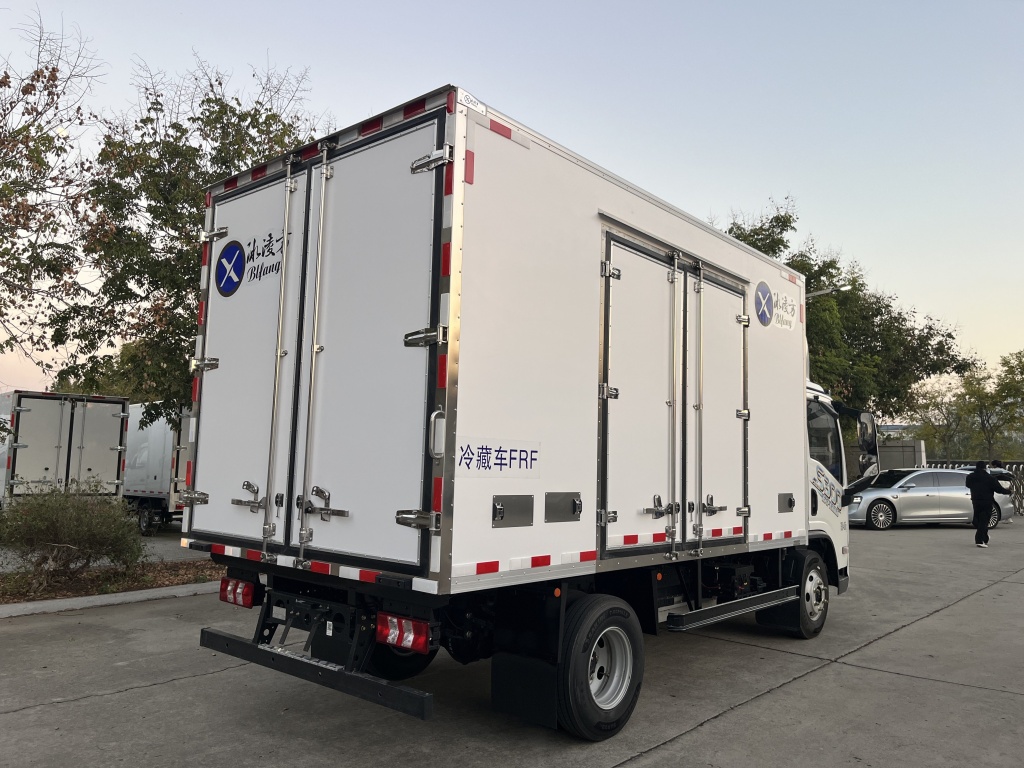
Lightweighting is the practice of reducing the mass of a vehicle or body while maintaining its function. In refrigerated transport it usually means thinner panels with better insulation, lighter structural members, or skin and core changes that remove kilograms without removing thermal performance.
The concept is straightforward; the accounting is not. Mass saved in the body can be spent on payload, which increases revenue per trip, or on nothing at all. Only the first case reduces energy per unit of delivered goods. A lighter body carrying the same load over the same route delivers a marginal fuel benefit; a lighter body carrying more load may deliver none per pallet, because the vehicle is now heavier overall.
That is why the meaningful metric is not kilograms removed, but energy and emissions per pallet delivered across the asset's life.
Why This Debate Matters
Sustainability language has moved from marketing to procurement. Shippers ask carriers for emissions data per shipment, and carriers ask body suppliers for weight and thermal figures to pass upstream. A weight number is easy to quote and hard to verify, which makes it attractive.
The cold chain also has a structural problem lightweighting does not solve: refrigeration load. A body that loses heat slowly needs less compressor work, and a unit that leaks refrigerant can have a climate impact unrelated to fuel. A credible claim must address mass, insulation, refrigerant, duty cycle and asset life, not one measurable variable.
Key Facts at a Glance
- A 4.2 m refrigerated body can weigh around 670 kg, so weight claims need a stated boundary: body only, body plus unit, or complete vehicle with chassis.
- Polyurethane integral foam with closed-cell content of at least 95% and conductivity near 0.022 W/(m·K) allows the same thermal performance from a thinner panel — the main route to mass reduction without losing insulation.
- FRP sandwich dry-bonding is a mature alternative with different mass and repair characteristics; neither construction is inherently the lower-impact choice without a life-cycle comparison.
- Refrigeration load scales with heat ingress, so a well-insulated body reduces unit running hours — an in-service saving that often outweighs a modest mass difference.
- Refrigerant leakage can dominate the climate impact of a refrigeration unit over its life, which means unit selection and service discipline belong in any sustainability claim.
- Repairability extends asset life, and avoiding a new body avoids embedded manufacturing emissions — a factor weight figures never capture.
Two Sides: Lightweight Camp vs Life-Cycle Camp
- What is being optimised — Lightweight camp: fuel burn tracks mass, so removing kilograms reduces energy on every kilometre; Life-cycle camp: refrigeration load, refrigerant loss and asset life usually move the total more than a few hundred kilograms.
- Measurement — Lightweight side: mass is objective, auditable and comparable across suppliers; Life-cycle side: a figure without a functional unit and boundary cannot be compared, and invites selective claims.
- Durability — Lightweight side: modern cores and skins hold performance at lower thickness; Life-cycle side: thinner panels tolerate less damage, and a body replaced early erases the saving.
- Payload effect — Lightweight side: more payload means fewer trips for the same goods, a real system gain; Life-cycle side: if the extra payload fills the vehicle every trip, energy per vehicle-kilometre rises and the gain narrows.
- Refrigerant — Lightweight side: unit efficiency is a separate procurement decision; Life-cycle side: a leaking high-impact refrigerant can outweigh years of fuel savings, so it belongs in the same conversation.
- End of life — Lightweight side: composite bodies are increasingly recoverable; Life-cycle side: mixed-material panels are hard to separate, and disposal is part of the footprint.
Step-by-Step: How to Test a Sustainability Claim
- Demand a functional unit. Ask for impact per pallet delivered or per pallet-kilometre, not per vehicle or per kilogram of body. Otherwise the number cannot be compared.
- Ask for the baseline. A weight saving means nothing unless measured against a named reference body with the same dimensions, insulation and unit.
- Check the boundary. Body only, body plus refrigeration unit, or complete vehicle? A claim that stops at the body often excludes the larger contributors.
- Test the durability assumption. Ask what happens to the claimed performance after impact damage, five years of washdown, and a repair. A saving that vanishes after one panel repair is not a life-cycle saving.
- Include refrigerant and service. Ask which refrigerant the unit uses and what leakage assumption underpins the claim. It is often the largest factor and the most frequently omitted.
- Ask about repair and end of life. Whether a body can be repaired section by section, and how it is separated at disposal, determines whether the asset's life can be extended.
FAQ
Q: Is a lighter body always more sustainable?
A: No. It reduces energy per kilometre, but the gain depends on duty cycle and can be offset by reduced durability or by using the extra payload to run heavier.
Q: Does better insulation matter more than weight?
A: Usually at least as much, because refrigeration load is continuous while mass only matters when the vehicle moves. Evaluate the two together.
Q: Can a body be both light and durable?
A: Yes, within limits. Thinner panels with high-performance closed-cell foam can hold thermal targets, but they tolerate less damage, so joint design and repair strategy matter more.
Q: How should a carrier respond to a customer asking for emissions per shipment?
A: Provide a method as well as a number: the functional unit, boundary, duty cycle assumed and refrigerant included. A transparent method is more defensible than a precise-looking figure.
Q: Is composite body disposal a real problem?
A: It is a real consideration. Mixed FRP-and-foam panels are harder to separate than single-material structures, which is one reason repairability and asset life carry weight.
The Bottom Line
Lightweighting is legitimate engineering, and better insulation is one of the more honest efficiency gains available in refrigerated transport. What turns it into greenwashing is the missing baseline: a weight figure presented as an outcome, with no functional unit, boundary or durability assumption. The defensible claim is energy per pallet over the asset's life, refrigerant included.
When a supplier quotes a weight saving, what would you need to see before you repeated the claim to your own customer?
Quick Commerce Is Rewriting Last-Mile Cold Chain—Is Your Fleet Ready?
Oct 24, 2026
Africa's Poultry Boom: Can Transport Infrastructure Keep Up?
Oct 26, 2026
Related Articles
Author

Cybercoldchain
Content Writer
Recent Posts
-
GMP+ and FAMI-QS: Is Transport the Weak Link in Feed Safety?
Oct 31
-
Driver Shortages vs Delivery Windows: What Gives First?
Oct 31
-
Telematics for Bulk Feed: Is Bin-Level Data Worth the Investment?
Oct 31
-
Can Reefers Keep Up With 45°C+ Markets—or Do Specifications Need a Rethink?
Oct 31
-
The Hidden Cost of a Late Chick Delivery—Who Should Bear It?
Oct 31