
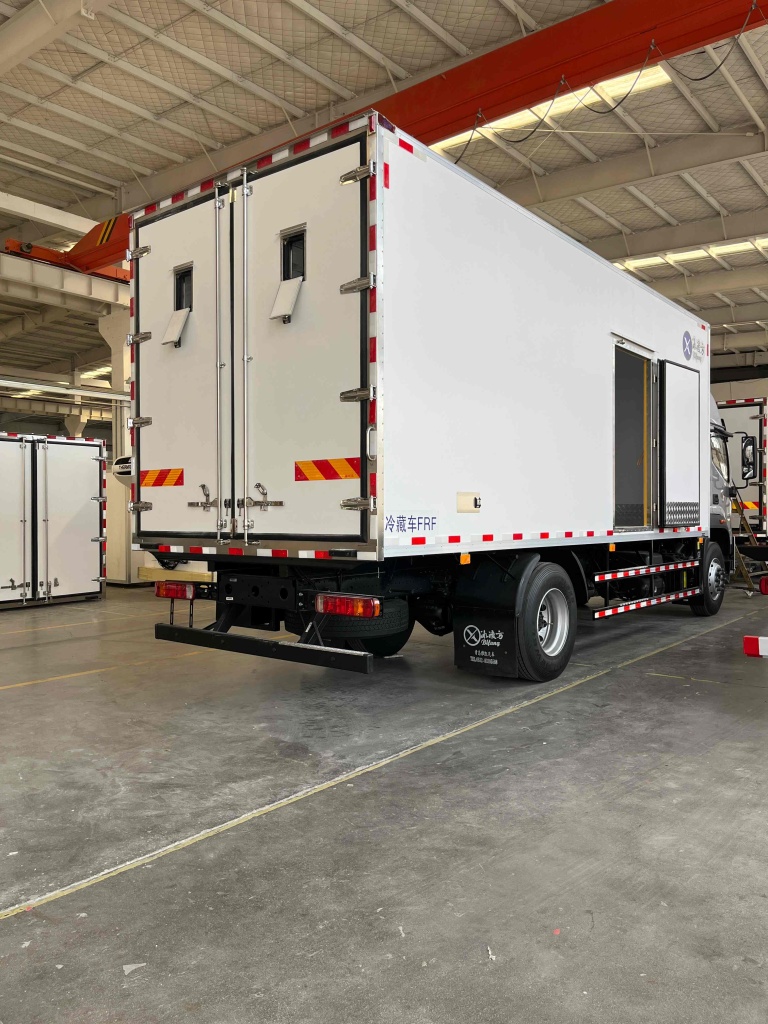
Who Really Pays for Reefer Fuel? Idle Time, Door Openings and Cost per Pallet
In short: Fuel cost per pallet is mostly a handling and routing number, not an engine number. A well-specified unit on a badly run route will burn more than a modest unit on a disciplined one. That makes it a contract argument as much as an engineering one, because the party controlling the doors is rarely the party paying for the diesel.


What Is Cost per Pallet?
Cost per pallet is total refrigerated transport energy cost divided by the number of pallets actually delivered in saleable condition. The denominator matters as much: pallets rejected at the door still consumed fuel, so a rate built on loaded pallets flatters the operation.
The numerator is broader than most rate cards admit. It includes fuel burned while driving, fuel burned while stationary, energy for defrost cycles, and the cost of the temperature margin built in because loading practice is inconsistent. Idle time is the component most often invisible in pricing, because it hides inside a flat per-kilometre rate.
Why This Debate Matters
Energy is one of the few reefer costs that moves with the market rather than with your maintenance programme. When diesel or electricity prices shift, carriers absorb the change until a contract reopens, and shippers discover that a per-pallet rate quietly assumed a certain stop density and a certain holding time.
The debate sharpens because the two parties control different variables. The shipper decides packaging, pallet height, loading window and how many drops a route contains. The carrier decides equipment specification, unit setpoint policy and driver training. Any honest cost-per-pallet conversation has to separate those, or it turns into a negotiation about who is to blame rather than where the litres go.
Key Facts at a Glance
- Frozen cargo is commonly held at -18 °C or colder, chilled cargo at roughly 0 °C to 4 °C; a colder setpoint widens the gap the unit must close after every door event.
- Each door opening admits humid ambient air. The moisture must be removed at the evaporator, which adds latent load and drives more frequent defrost cycles.
- Polyurethane integral foam with closed-cell content of at least 95% and conductivity around 0.022 W/(m·K) is a mature benchmark; FRP sandwich dry-bonding is an equally established alternative with different weight and repair characteristics.
- A 4.2 m refrigerated body can weigh in the region of 670 kg, and every additional kilogram of body is payload the vehicle cannot earn from.
- Stop density changes energy per pallet more than distance does, because each stop combines a door event, a pull-down and often a period of low-speed running.
- Defrost is not free: it consumes energy and temporarily interrupts cooling, so a route with high door frequency pays twice.
Two Sides: Shipper-Pays vs Carrier-Absorbs
- Where the cost originates — Shipper-pays camp: the route shape, loading window and packaging choices set the load, so the party designing them should carry the cost; Carrier-absorbs camp: the carrier quotes a rate and owns delivery, so efficiency is a professional obligation.
- Controllability — Shipper side: a shipper can consolidate drops and pre-cool cargo, both of which cut energy immediately; Carrier side: a carrier can train drivers, tune setpoints and specify better bodies without waiting for a customer decision.
- Measurement — Shipper side: without door-event and idle data, a carrier cannot prove where the fuel went, so the claim is unverifiable; Carrier side: without a shared baseline, any surcharge looks like opportunistic pricing.
- Incentive effect — Shipper side: charging for accessorials rewards the carrier for being inefficient; Carrier side: a flat rate rewards the shipper for adding stops at no cost.
- Contract reality — Shipper side: most tenders compare one number per pallet and ignore stop density; Carrier side: carriers who price honestly lose to those who assume ideal conditions and recover later through claims.
- Practical middle — Shipper side: a fuel and accessorial clause indexed to measured events; Carrier side: a base rate plus a published schedule of door and dwell charges.
Step-by-Step: How to Build a Defensible Cost per Pallet
- Meter energy at the unit. Record fuel or kWh per trip, not per month. Monthly averages hide the routes that are actually expensive.
- Count delivered pallets, not loaded pallets. Rejections belong in the denominator, otherwise good months mask bad routes.
- Log door events per stop with duration. This is the single most explanatory dataset in a reefer operation, and it costs almost nothing to collect.
- Split working hours from standby hours. Idle with the unit running is a different cost line from driving, and it needs its own line in the rate card.
- Attribute fixed and variable costs separately. Body depreciation is fixed; fuel, defrost and door recovery are variable. Mixing them makes every conversation unproductive.
- Publish the assumptions. Stop density, holding time at each drop, setpoint and ambient band. A rate without assumptions cannot be compared, only argued over.
FAQ
Q: Should a carrier charge for door openings?
A: Many do, usually as a dwell or multi-drop accessorial. It is defensible when the charge is tied to measured events and published in advance, and contentious when it appears as a surprise line on an invoice.
Q: Does a thicker body pay for itself in fuel?
A: It depends on route and climate. Thicker insulation reduces heat ingress continuously, so the benefit grows with holding time and ambient temperature. On short urban drops with frequent openings, door discipline often matters more.
Q: Is idling with the unit running ever unavoidable?
A: Sometimes, for example while waiting at a dock with cargo on board. The useful question is not whether it happens but whether it is measured, priced and reduced where possible.
Q: How do I compare two carriers fairly?
A: Give both the same route profile, stop count, holding times and setpoint, and ask for the assumptions behind the rate. A single per-pallet number without those inputs is not comparable.
Q: Does refrigeration unit efficiency dominate the total?
A: Less than most people expect on multi-drop work. Unit efficiency sets the baseline; door events, defrost and stop density decide how far above it you run.
The Bottom Line
Reefer fuel is paid for by whoever signs the contract, but it is generated by whoever controls the doors, the pallet heights and the drop list. Until cost per pallet is broken into measured components, the argument stays rhetorical: each side can prove it is being treated unfairly.
If your rate card had to show one honest number for door events, what would it be — and who would object to it?
Automation and Traceability: Will Bulk Feed Delivery Ever Be Fully Digital?
Oct 27, 2026
Seasonal Capacity: Should Hatcheries Own Trucks or Contract Them?
Oct 28, 2026
Related Articles
Author

Cybercoldchain
Content Writer
Recent Posts
-
GMP+ and FAMI-QS: Is Transport the Weak Link in Feed Safety?
Oct 31
-
Driver Shortages vs Delivery Windows: What Gives First?
Oct 31
-
Telematics for Bulk Feed: Is Bin-Level Data Worth the Investment?
Oct 31
-
Can Reefers Keep Up With 45°C+ Markets—or Do Specifications Need a Rethink?
Oct 31
-
The Hidden Cost of a Late Chick Delivery—Who Should Bear It?
Oct 31