
5 Key Features to Check Before Buying a Chick Transport Truck
Don't waste money on the wrong chick transport truck. Here are 5 critical features every buyer should check.
**1. Ventilation System**
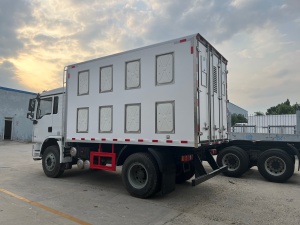
Ventilation is the core function of any chick transport truck. Chicks generate heat and CO₂ continuously during transport. Without adequate airflow, the cabin quickly becomes unlivable.
Standard ventilated trucks include: front air inlets (with manual dampers), roof ventilation windows with exhaust fans, and T-shaped floor ventilation channels. When inspecting a truck, check that the inlet area is sufficient and the manual dampers operate smoothly.
Climate-controlled models handle this automatically through their environment control system.
**2. Insulation Performance**
Chick transport bodies use the same construction as refrigerated trucks — FRP (fiberglass reinforced plastic) skin with insulation core material.
Binglingfang offers two processes:
- FRP sandwich panel (dry-bond method): FRP inner/outer skins with pre-cut insulation board, bonded with adhesive and pressed together. Flexible, good for custom builds.
- Polyurethane in-situ foaming: Liquid PU injected between the skins, expanding and curing into a seamless insulation layer. Better thermal performance, stronger structural integrity.
For hot or extremely cold climates, consider the PU foaming option.
**3. Side Door Quantity and Placement**
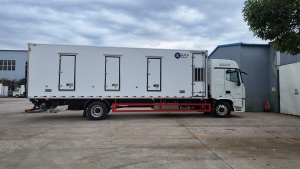
Side door count varies by truck length. Binglingfang's ventilated models: 4.2m = 1 door per side, 6.8m = 2 per side, 7.8m = 2 standard (optional 3), 9.6m = 3 standard (optional 5).
More doors speed up loading/unloading but can compromise insulation sealing. Choose based on your actual operational frequency.
**4. Shelving Structure**
Shelves are made of stainless steel in a two-tier configuration. Check load capacity and verify the spacing works with your standard chick box size (640×480×170mm). Removable or adjustable shelving adds flexibility.
**5. Monitoring System (Recommended)**
A video monitoring system with temperature probes lets the driver see real-time conditions inside the cabin from the cab. Adding CO₂ and ammonia detection helps detect ventilation issues early. Install these at the factory — retrofitting is more expensive and complicated.
Essential Features of a Day-Old Chick Transport Truck
Jun 2, 2026
Choosing the Right Chick Transport Truck Size: 4.2m to 9.6m
Jun 5, 2026
Related Articles
Author

Cybercoldchain
Content Writer
Recent Posts
-
Hydration and Ventilation Balance in Day-Old Chick Transport
Sep 14
-
Can Refrigerated Body Panels Be Repaired? FRP Sandwich and Polyurethane Compared
Sep 14
-
Bulk Feed Truck Inspection and Preventive Maintenance Schedule
Sep 12
-
Day-Old Chick Delivery: A One-Page Driver Checklist
Sep 12
-
Biosecurity for Chick Transport Trucks: Cleaning and Disinfection Between Runs
Sep 12