
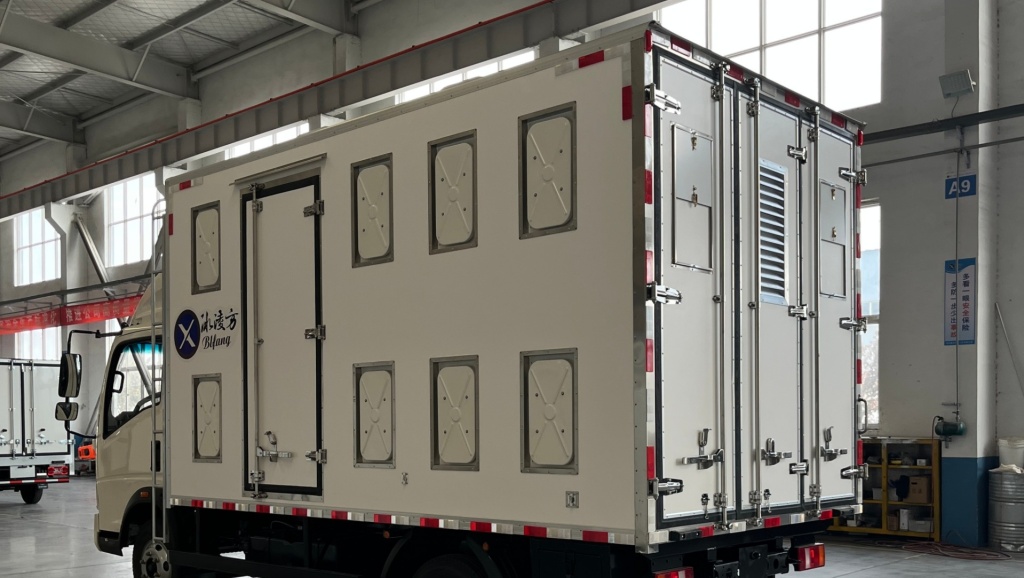
Why Chick Trucks Use FRP Insulated Bodies — Same as Reefer Trailers
If you've ever looked at a refrigerated trailer and a chick transport truck side by side, you might have noticed the body construction looks the same. That's because it is.
FRP (fiber-reinforced plastic) sandwich panels have been the standard in temperature-controlled transport for decades. Two layers of FRP with a polyurethane foam core in the middle. On a chick truck, every panel is 80mm thick — roof, floor, walls, rear door.
FRP doesn't rust, which matters when you're cleaning chicken waste off the interior every day. It's about 30% lighter than a metal body, so you can carry more payload. And if a panel gets damaged, you patch it — no need to replace the whole thing. Most FRP bodies outlast the chassis they're mounted on.
Specifications
- Material: FRP (fiber-reinforced plastic) + PU foam
- Panel thickness: 80mm everywhere — roof, floor, walls, door
- Construction: Outer FRP + PU foam core + inner FRP
- Weight: ~30% lighter than metal body of same size
- Rust: Zero — it's non-metallic
- Repair: Local patches possible, no full replacement needed
Key Features
- Same panels reefer trailers use — decades of proven use
- 80mm is the standard thickness for insulated transport bodies
- No rust, no corrosion from cleaning chemicals or chick waste
- Lighter than metal means more chicks per trip
- Good insulation helps both constant temp and ventilated models
- Small dents and cracks can be patched
- Smooth interior walls are easy to wash down between loads
- FRP bodies typically last longer than the truck chassis
Applications
Standard on all chick transport models. Also used in refrigerated cargo, frozen food delivery, and any temperature-sensitive logistics.
9.6m Ventilated Chick Truck — Maximum Capacity for Long Routes
May 27, 2026
Climate-Controlled vs Standard Chick Transport Truck – Complete Guide
Jun 1, 2026
Related Articles

Author

Cybercoldchain
Content Writer
Recent Posts
-
Hydration and Ventilation Balance in Day-Old Chick Transport
Sep 14
-
Can Refrigerated Body Panels Be Repaired? FRP Sandwich and Polyurethane Compared
Sep 14
-
Bulk Feed Truck Inspection and Preventive Maintenance Schedule
Sep 12
-
Day-Old Chick Delivery: A One-Page Driver Checklist
Sep 12
-
Biosecurity for Chick Transport Trucks: Cleaning and Disinfection Between Runs
Sep 12