
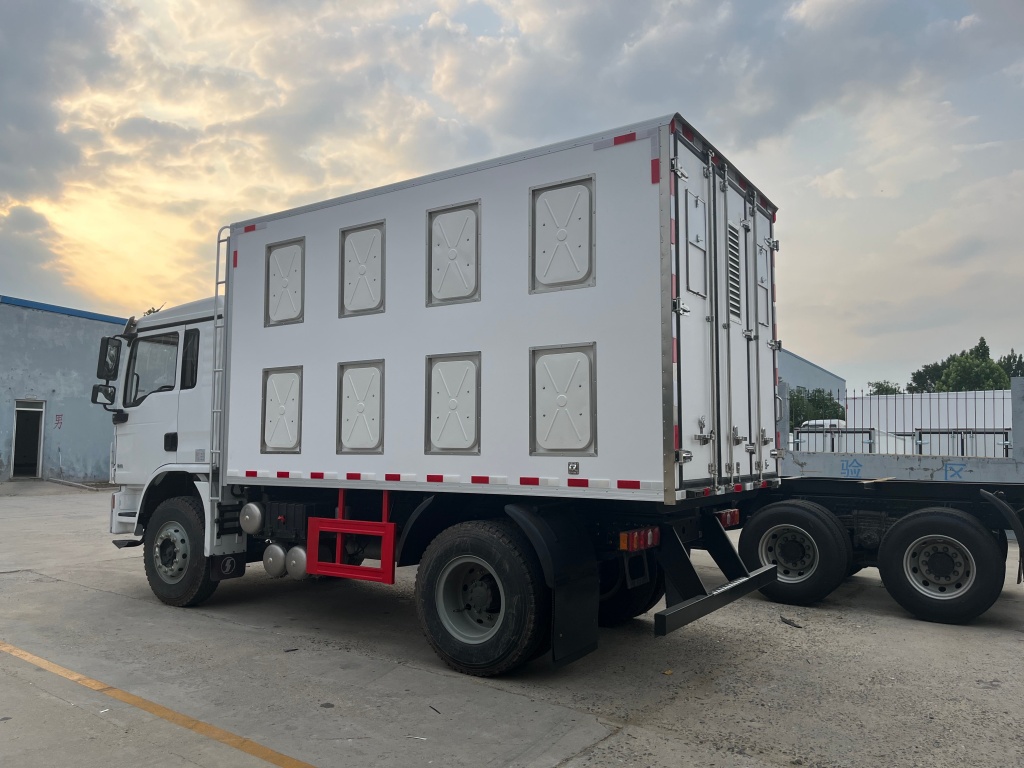
Hatchery Fleet Buying Guide – How to Choose Chick Transport Trucks in Bulk
When a hatchery buys trucks in bulk, the decision criteria differ from a single operator buying one truck. Here's what to consider when building a fleet.
**1. Configuration Standardization**
Keep the fleet as standardized as possible. Same model, same options, same setup. Benefits: shared spare parts, simplified maintenance, and drivers can switch trucks without relearning controls. Agree on a standard specification list for each batch — climate-controlled or ventilated, which options, consistent across all units.
**2. Capacity vs Turnaround Time**
Don't guess the number of trucks needed. Calculate based on daily hatch volume and per-truck cycle time.
Simple formula: Daily hatch volume (boxes) ÷ single truck capacity (boxes) × turnaround days = minimum trucks needed
Example: 2,000 boxes/day output, 232 boxes per trip (4.2m model), 2-day turnaround: 2,000 ÷ 232 × 2 ≈ 18 trucks. Add 1-2 backup units for maintenance and emergencies.
**3. After-Sales Response Time**
Chicks can't wait. If a truck breaks down and the next shipment is scheduled for tomorrow, every hour of delay means potential losses. Before placing a bulk order, confirm: warranty period, spare parts delivery time, and whether the manufacturer can provide a loaner truck in emergencies.
**4. Driver Training Costs**
Climate-controlled trucks simplify driver training (set temperature, automatic operation). A mixed fleet of climate-controlled and ventilated trucks requires separate training for each type. Fewer truck variants = lower training costs and fewer operational errors.

**5. Total Cost of Ownership**
Don't fixate on the purchase price. Consider the full lifecycle — acquisition + fuel + maintenance + depreciation + mortality losses. A climate-controlled truck costs more upfront but over a 3-5 year period running long-haul routes, reduced mortality losses can more than offset the initial price difference.
Fiberglass Refrigerated Truck Bodies: A Smart Investment for Cold Chain Logistics
Jun 18, 2026
Chick Transport Truck Maintenance Guide – Checklist for Long Service Life
Jun 20, 2026
Related Articles
Author

Cybercoldchain
Content Writer
Recent Posts
-
Hydration and Ventilation Balance in Day-Old Chick Transport
Sep 14
-
Can Refrigerated Body Panels Be Repaired? FRP Sandwich and Polyurethane Compared
Sep 14
-
Bulk Feed Truck Inspection and Preventive Maintenance Schedule
Sep 12
-
Day-Old Chick Delivery: A One-Page Driver Checklist
Sep 12
-
Biosecurity for Chick Transport Trucks: Cleaning and Disinfection Between Runs
Sep 12