

Why Ventilation Matters in Day-Old Chick Transport
Why Ventilation Matters in Day-Old Chick Transport
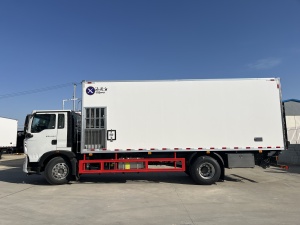
When transporting day-old chicks, maintaining proper ventilation inside the cargo compartment is arguably more important than temperature control. Here's why airflow should be your top priority.
The Science Behind Chick Transport
Day-old chicks are metabolically active. During transport, each box of chicks generates heat and exhales carbon dioxide. Without adequate ventilation, the air inside the compartment quickly becomes:
When CO₂ levels exceed 3000 PPM and oxygen levels drop, chicks become lethargic and stressed, leading to higher mortality upon arrival.
Passive + Active Ventilation: The Best Approach
A well-engineered chick transport truck uses a dual ventilation strategy:
Passive Ventilation
While the truck is moving, forward motion forces air through strategically placed intake vents on the front panel. This natural airflow:
Active Ventilation
When the truck is stationary at traffic lights, during loading/unloading, or in slow-moving traffic, passive ventilation alone is insufficient. Active fans mounted on the roof and rear panel:
Cross-Ventilation Design
The most effective chick transport bodies are designed to create a cross-ventilation effect:
1. Front air intakes allow fresh air to enter
2. Rear door louvers and roof vents create exhaust points
3. Side vents at both upper and lower levels provide additional air exchange points
4. Floor ventilation channels (T-shaped) allow airflow beneath the chick boxes, preventing moisture buildup
Ventilation in Different Conditions
A good ventilation system should be adaptable:
| Condition | Ventilation Strategy |
|---|---|
| Highway driving | Passive ventilation sufficient |
| City traffic | Active fans engaged |
| Hot weather | Maximum airflow, all vents open |
| Cold weather | Controlled fresh air intake, prevent drafts on chicks |
| Loading/unloading | Active fans at full power |
The Cost of Poor Ventilation
Inadequate ventilation during chick transport can lead to:
Conclusion
When selecting a chick transport truck, prioritize the ventilation system over fancy temperature control features. A truck with well-designed passive and active ventilation will reliably deliver healthy chicks across all seasons and conditions. Look for adjustable air intakes, quality exhaust fans, and a body design that promotes even airflow through every inch of the cargo space.
Best Temperature for Day-Old Chick Transport in Summer – 22°C to 26°C Guide
Jun 8, 2026
Chick Truck Body Materials Guide – FRP Sandwich vs Polyurethane Foam
Jun 10, 2026
Related Articles

Author

Cybercoldchain
Content Writer
Recent Posts
-
Hydration and Ventilation Balance in Day-Old Chick Transport
Sep 14
-
Can Refrigerated Body Panels Be Repaired? FRP Sandwich and Polyurethane Compared
Sep 14
-
Bulk Feed Truck Inspection and Preventive Maintenance Schedule
Sep 12
-
Day-Old Chick Delivery: A One-Page Driver Checklist
Sep 12
-
Biosecurity for Chick Transport Trucks: Cleaning and Disinfection Between Runs
Sep 12